
Manufacturing Cream vs Half-and-Half: Which is Best for Sauce Reductions, Whipping Volume, and High-Heat Stability?
Heat Stability and Performance in High Temperature Cooking
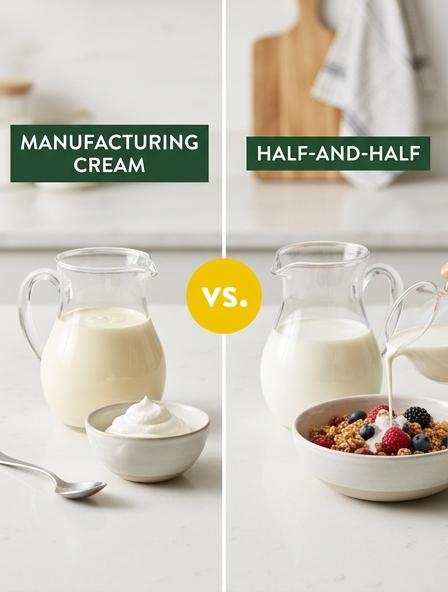
The primary difference in culinary performance between manufacturing cream and half-and-half lies in their fat-to-protein ratio. Manufacturing cream, typically containing 36% to 40% milkfat, provides exceptional heat stability. This high fat concentration acts as a buffer, preventing milk proteins from clumping or curdling, even when the liquid is subjected to a rolling boil.
In contrast, half-and-half is far more susceptible to "breaking" under intense heat or when introduced to acidic ingredients like wine or citrus. Its lower fat content (10.5% to 18%) cannot protect the proteins from denaturing.
- Manufacturing Cream: Maintains emulsion during long reduction processes and high-heat sautéing.
- Half-and-Half: Best reserved for low-heat applications or finishing dishes after they are removed from the burner.
Professional chefs prefer manufacturing cream when whisking a rich peppercorn sauce over a high-flame burner to ensure a glossy, emulsified finish that never separates or turns grainy.
Butterfat Content and Nutritional Profiles for Family Meals
Choosing between manufacturing cream and half-and-half depends on the desired richness of your home-cooked meals. Manufacturing cream is a high-fat powerhouse, typically containing over 40% butterfat, which provides the stability needed for professional-grade whipped textures and thick sauces.
| Product Type | Butterfat Range | Best Culinary Use |
|---|---|---|
| Manufacturing Cream | 40% – 45% | Stable whipping and thickening |
| Half-and-Half | 10.5% – 18% | Coffee and light enrichment |
In contrast, half-and-half offers a lighter nutritional profile by blending equal parts milk and cream. This significantly reduces total fat and calories, making it a versatile choice for daily consumption where heavy emulsification is unnecessary. You might prefer whisking half-and-half into your morning scrambled eggs for a fluffy lift, while saving the dense manufacturing cream for a rich, restaurant-quality ganache or a velvety pasta carbonara.
Thickness and Coating Capabilities in Sauce Reductions
The primary difference between manufacturing cream and half-and-half lies in their fat content, which dictates their performance during reduction. Manufacturing cream, often containing 40% milkfat or higher, is specifically designed to withstand intense heat. Its high lipid concentration allows it to thicken rapidly, achieving a luxurious "nappe" consistency that coats the back of a spoon without the risk of curdling or breaking.
- Manufacturing Cream: High fat-to-protein ratio provides superior emulsion stability and a glossy finish.
- Half-and-Half: Lower fat content (10.5–18%) requires longer reduction times and is prone to separating under high temperatures.
While half-and-half is suitable for lighter liquids, it lacks the structural integrity needed for heavy pan sauces. You will prefer manufacturing cream when crafting a decadent, restaurant-style peppercorn sauce that clings perfectly to a seared steak without ever breaking down on the plate.
Texture Variations in High Fat versus Light Dairy Bases
The primary difference between manufacturing cream and half-and-half is the lipid concentration, which directly dictates mouthfeel and culinary stability. Manufacturing cream, often exceeding 40% milkfat, creates a dense, viscous texture and a velvety coating on the palate. In contrast, half-and-half (a blend of milk and cream) contains only 10.5% to 18% fat, resulting in a thin, pourable consistency.
- Manufacturing Cream: High viscosity, superior aeration for stable foams, and high resistance to curdling under heat.
- Half-and-Half: Light body, quick dispersion in liquids, and a refreshing rather than heavy finish.
The structural integrity of high-fat bases allows for the creation of stiff peaks and emulsified sauces that won't break. Lighter dairy bases lack this structural "body," making them better suited for subtle enrichment rather than thickening.
You might opt for manufacturing cream when whisking a thick, decadent pastry filling, whereas half-and-half is what people love for achieving a balanced, silky texture in their daily cup of coffee.
Role of Stabilizers in Maintaining Smooth Consistencies
In the production of manufacturing cream and half-and-half, stabilizers are essential for achieving a uniform texture and preventing phase separation. While manufacturing cream relies on its high milkfat content for structure, half-and-half requires assistance to maintain its body. Stabilizers act as emulsifying agents that bind fat and water molecules, ensuring the dairy remains homogenous throughout its shelf life and resistant to temperature fluctuations.
- Carrageenan: Prevents fat globules from separating and settling during storage.
- Sodium Citrate: Acts as a pH buffer to prevent protein coagulation in acidic environments.
- Guar Gum: Enhances viscosity to provide a rich mouthfeel similar to heavier creams.
Professional baristas rely on these stabilized formulations to ensure that when half-and-half hits a steaming cup of acidic dark roast, it creates a perfectly smooth, golden swirl rather than breaking apart into unappealing white flakes.
Whipping Structure and Volume for Dessert Preparation
The fundamental difference between manufacturing cream and half-and-half lies in their lipid concentration, which directly dictates their aeration potential. Manufacturing cream, typically containing 40% or more milkfat, possesses the structural integrity necessary to trap air bubbles and significantly increase in volume during mechanical agitation.
- Manufacturing Cream: High fat density ensures stable, stiff peaks and long-lasting volume suitable for decorative piping and structural fillings.
- Half-and-Half: Containing only 10.5% to 18% fat, it lacks the necessary globule network to sustain a foam structure, remaining liquid regardless of whipping time.
For high-volume dessert production, fat content is the key to achieving the desired overrun and mouthfeel. Professional pastry chefs rely on manufacturing cream to ensure a delicate chocolate mousse maintains its height and velvety texture until the final plate is served to the guest.
Impact of Fat Concentration on Flavor and Mouthfeel
The primary distinction between manufacturing cream and half-and-half lies in their lipid content, which directly dictates sensory perception. Manufacturing cream, typically containing over 40% milkfat, provides a dense, velvety viscosity that coats the palate and mellows sharp flavors. In contrast, half-and-half-a blend of milk and cream-offers a lighter profile with a cleaner finish, balancing richness with fluidity.
- Manufacturing Cream: Characterized by intense buttery notes, high structural stability, and a luxurious, lingering mouthfeel.
- Half-and-Half: Delivers a subtle creaminess that enhances body without overpowering delicate aromatic profiles.
Because fat molecules act as flavor carriers, higher concentrations effectively reduce the perception of bitterness while extending the duration of sweet notes. Culinary professionals prefer heavy manufacturing cream for creating stable, decadent ganaches, while coffee enthusiasts love a splash of half-and-half to smooth out their morning brew without masking the bean's natural acidity.
Resistance to Curdling when Mixed with Acidic Ingredients
When comparing manufacturing cream to half-and-half, fat content is the primary factor determining stability against acid. Manufacturing cream typically contains over 36% milkfat, whereas half-and-half contains only 10.5% to 18%. In the presence of acidic ingredients like lemon juice, wine, or tomatoes, milk proteins tend to clump, leading to curdling. Higher fat concentrations act as a physical buffer, coating the proteins and preventing them from bonding together.
- Manufacturing Cream: Superior stability; high fat protects against protein denaturation.
- Half-and-Half: Higher risk of "breaking" or graininess in acidic environments.
You will achieve a perfectly smooth, restaurant-quality finish by choosing manufacturing cream when whisking a rich sauce for an acidic lemon-garlic chicken dish.
Preservation and Shelf Life for Household Storage
Understanding the storage nuances between manufacturing cream and half-and-half is essential for maintaining dairy freshness. Manufacturing cream, containing roughly 40% butterfat, typically offers a slightly more stable shelf life when refrigerated compared to half-and-half. The higher fat content in manufacturing cream acts as a minor buffer against rapid spoilage, whereas the higher lactose and water content in half-and-half makes it more susceptible to bacterial activity.
| Dairy Product | Typical Shelf Life (Opened) | Storage Recommendation |
|---|---|---|
| Manufacturing Cream | 10–14 Days | Rear of fridge (34°F–38°F) |
| Half-and-Half | 7–10 Days | Airtight container; avoid door |
Both products should be kept in the coldest part of the refrigerator to prevent enzymatic breakdown. You will love freezing manufacturing cream in ice cube trays as a convenient use-case for adding instant richness to your morning coffee or savory pan sauces without any waste.
Application Differences in Savory and Sweet Dish Preparation
The primary distinction between manufacturing cream and half-and-half lies in heat stability and fat concentration. Manufacturing cream, boasting over 40% milkfat, is engineered for professional environments where high-heat reduction is necessary. It resists curdling when boiled or mixed with acidic bases, making it ideal for thick savory sauces and stable pastry fillings. Conversely, half-and-half contains only 10.5% to 18% fat, often breaking or curdling if subjected to prolonged boiling or high acidity.
- Manufacturing Cream: Ideal for heavy reductions, commercial baking, and stable whipped toppings.
- Half-and-Half: Best for enriching coffee, light custard bases, and lower-calorie creamy soups.
You might rely on manufacturing cream for a silky, restaurant-quality Alfredo sauce that never separates, whereas half-and-half is the perfect choice for adding a touch of richness to your favorite morning coffee blend.
Manufacturing Cream vs Half-and-Half source and external links
- Manufacturing cream is a high-fat dairy ingredient used primarily in commercial food production for its exceptional stability and richness. Manufacturing Cream
- Half-and-half is a popular dairy blend consisting of equal parts whole milk and light cream, commonly used as a coffee whitener and in various recipes. Half-and-Half