
Malt Syrup vs Molasses: Which is Best for Baking, Flavor, and Nutrition?
Flavor Profiles and Sensory Characteristics
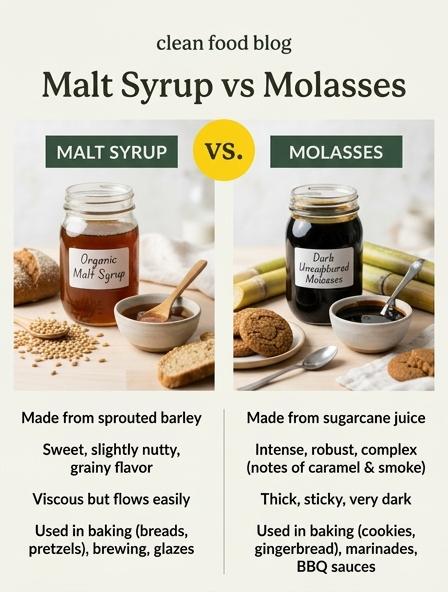
Understanding the sensory profiles of malt syrup and molasses is essential for balancing culinary compositions. Malt syrup, typically derived from sprouted barley, delivers a mellow, earthy sweetness. Its flavor is defined by toasty, nut-like undertones and a distinct bready aroma reminiscent of roasted cereal or ale. Because it is less sweet than refined sugar, it provides a subtle, savory depth without overpowering other ingredients.
Conversely, molasses offers a bold, bittersweet intensity. As a byproduct of the sugar refining process, it possesses a thick viscosity and a complex palate featuring smoky, sulfurous, and even metallic notes. While light molasses is milder, blackstrap varieties are exceptionally robust and pungent.
- Malt Syrup: Biscuity, malty, mild, and grain-forward.
- Molasses: Dark, spicy, bittersweet, and highly aromatic.
Artisan bakers typically prefer the toasted notes of malt syrup when boiling bagels to achieve that authentic, old-world aroma and golden-brown crust.
Nutritional Values and Mineral Density
When comparing the nutritional density of malt syrup and molasses, the latter is the clear winner regarding micronutrient concentration. Malt syrup, derived from sprouted barley, is composed primarily of maltose and offers a steady release of energy with modest amounts of B vitamins and potassium. However, molasses-specifically the blackstrap variety-is a concentrated byproduct of sugar refining that retains an impressive mineral profile.
| Nutrient | Barley Malt Syrup | Blackstrap Molasses |
|---|---|---|
| Primary Sugar | Maltose | Sucrose/Glucose/Fructose |
| Iron Content | Low | Very High |
| Key Minerals | Potassium, Manganese | Calcium, Magnesium, Selenium |
While malt syrup provides a milder, grain-like sweetness, molasses functions as a functional food for those seeking to supplement their diet naturally. Home bakers often choose a dark, sulfur-free molasses when making traditional ginger snaps to achieve that signature robust flavor and dense mineral kick that defines the perfect chewy cookie.
Impact on Yeast Activity and Dough Rise
Barley malt syrup and molasses influence yeast fermentation differently based on their sugar compositions. Malt syrup is primarily composed of maltose, a complex sugar that yeast consumes steadily. This results in a consistent, controlled rise and excellent structural development, making it a favorite for long-fermentation recipes.
In contrast, molasses contains simpler sugars like sucrose, glucose, and fructose, which provide an immediate energy boost to yeast. However, molasses is also acidic and mineral-rich. While light molasses can speed up the initial proofing stage, the high mineral content in blackstrap varieties can sometimes create osmotic pressure that slows yeast activity if used in large quantities.
- Barley Malt Syrup: Promotes a slow, steady rise and superior crust browning.
- Molasses: Offers a rapid initial fermentation but can affect gluten strength due to its acidity.
You might reach for malt syrup when aiming for the perfect, chewy rise of a professional bagel, whereas molasses is your best choice for a fast-acting, moist lift in a dark gingerbread or hearty pumpernickel.
Browning Performance in Oven Cooking
Both malt syrup and molasses act as effective browning agents, but they achieve results through distinct chemical processes. Barley malt syrup is high in maltose, which interacts with proteins to facilitate the Maillard reaction. This produces a consistent, savory, matte crust often found in professional artisan baking.
Molasses relies more on caramelization due to its high concentration of sucrose and fructose. The presence of minerals and natural acids causes it to darken rapidly under high heat, creating a rich, glossy, and moist appearance.
- Malt Syrup: Provides steady browning and a traditional "baked" aroma, ideal for yeast-leavened goods.
- Molasses: Delivers intense, dark coloration and a soft texture due to its hygroscopic nature.
You might reach for malt syrup to achieve the perfect golden sheen on a batch of boiled bagels, while molasses is the superior choice for the deep, mahogany finish required for a classic ginger cake.
Texture and Crust Development in Bread
The choice between malt syrup and molasses fundamentally alters the crumb structure and exterior finish of baked goods. While both act as sweeteners, their chemical profiles interact differently with yeast and flour proteins.
- Barley Malt Syrup: Rich in maltose, it promotes a steady fermentation, resulting in a soft, airy crumb and a thin, professional-looking golden crust with a distinct sheen.
- Molasses: Being highly hygroscopic, it retains significant moisture, leading to a denser, more humid interior. Its high mineral and sugar content causes rapid caramelization, producing a thick, dark, and rustic crust.
Malt syrup is essential for the enzymatic activity required in lean doughs, whereas molasses provides the weight and depth necessary for heavy, artisanal loaves. Each syrup dictates the final "mouthfeel" of the bread through these varying moisture-retention properties.
You might prefer malt syrup when aiming for the signature snap of a New York-style bagel, while molasses is your best bet for a moist, dark rye that stays fresh for days.
Moisture Retention and Freshness in Cakes
Both malt syrup and molasses serve as powerful humectants, significantly extending the shelf life of cakes by binding water molecules within the crumb. Molasses is highly hygroscopic due to its invert sugar content, which actively pulls moisture from the air to keep bakes dense and fudgy. Malt syrup, rich in maltose, provides a more subtle moisture-binding effect that specifically prevents starch retrogradation, the primary cause of staling.
- Molasses: Provides a heavy, moist texture ideal for dense gingerbreads and spice cakes.
- Malt Syrup: Offers a long-lasting, soft crumb for lighter sponges and yeasted tea cakes.
Home bakers often choose molasses for a moist, spice-heavy holiday loaf, while professionals use malt syrup as the secret to a delicate sponge that stays remarkably fresh on the counter for days.
Viscosity and Consistency in Sauces and Glazes
When comparing malt syrup and molasses, their physical behavior in the kitchen defines the final texture of your dish. Malt syrup is exceptionally viscous and tacky, functioning as a heavy-duty binding agent. It provides a distinct "cling" that allows glazes to adhere to surfaces without running off. Molasses, particularly blackstrap, is also dense but carries a higher moisture content and a smoother flow, making it easier to whisk into cold base liquids.
- Malt Syrup: High dextrin content results in a thick, honey-like stretch and a high-gloss finish.
- Molasses: Dense sugar concentration provides body and weight, contributing to a syrupy, coat-the-spoon mouthfeel.
While both ingredients increase the thickness of a reduction, malt syrup is the superior choice for achieving a professional-grade sheen. Home chefs often prefer whisking barley malt syrup into a soy-based marinade to create a thick, mirror-like lacquer on grilled salmon that stays intact even under high heat.
Health Impact and Caloric Comparison
When evaluating the health impact of malt syrup versus molasses, their nutritional density and glycemic response are the primary differentiators. Both sweeteners provide approximately 60 calories per tablespoon, but they affect the body differently. Barley malt syrup is primarily composed of maltose and possesses a high glycemic index (GI), leading to rapid blood sugar spikes. In contrast, molasses-specifically blackstrap-contains significant levels of essential minerals that malt syrup lacks.
- Malt Syrup: High glycemic index (~105); contains trace B vitamins but few minerals.
- Molasses: Moderate glycemic index (~55); rich in iron, calcium, magnesium, and potassium.
While malt syrup is the preferred choice for feeding yeast in professional bagel baking, many home cooks choose blackstrap molasses to add a robust, mineral-rich depth to their morning slow-cooked oats or traditional gingerbread recipes.
Color and Visual Presentation in Cooked Dishes
The choice between malt syrup and molasses fundamentally alters the aesthetic of a finished dish. While both contribute to browning via the Maillard reaction, their pigment concentrations offer distinct visual results:
- Malt Syrup: Produces a warm, golden-bronze glow with a translucent, glossy finish.
- Molasses: Imparts a deep, dark mahogany or near-black color, resulting in a dense, opaque appearance.
Molasses is responsible for the iconic, rich darkness found in gingerbread and traditional baked beans. In contrast, malt syrup is the secret to the polished, amber crust seen on professional-grade bagels and pretzels. You will love using malt syrup as a glaze for roasted carrots when you want a shimmering, honey-colored finish that highlights the vegetable's natural color without masking it in a dark, heavy syrup.
Digestive Properties and Nutrient Absorption
Comparing malt syrup and molasses reveals distinct differences in how the body processes their sugars and utilizes their micronutrients. Barley malt syrup is composed primarily of maltose, which requires specific enzymes for breakdown but is generally free of fructose, making it easier for those with fructose malabsorption to digest. In contrast, molasses is a concentrated byproduct of sugar refining, offering a unique profile of bioavailable minerals.
- Malt Syrup: Provides a steady release of energy and contains small amounts of B-vitamins and amino acids that support metabolic function.
- Molasses: Features high concentrations of iron, magnesium, and potassium, which are essential for oxygen transport and muscle recovery.
While malt syrup offers a gentler glycemic response for some, the high magnesium content in blackstrap molasses acts as a natural stool softener to aid regularity. Health-conscious bakers often swap refined sugars for blackstrap molasses in gingerbread recipes to boost the iron content while adding a robust, bittersweet depth of flavor.
Malt Syrup vs Molasses source and external links
- Barley malt syrup is a dense, dark brown sweetener derived from sprouted barley that adds a distinctively rich and toasted flavor to baked goods like barley malt syrup.
- Commonly used in gingerbread and barbecue sauces, molasses is a thick, viscous byproduct resulting from the refining of sugarcane or sugar beets into sugar.