
Malabar Peppercorns vs Red Pepper Flakes: Which is Best for Aromatic Complexity, Heat Stability, and Digestive Health?
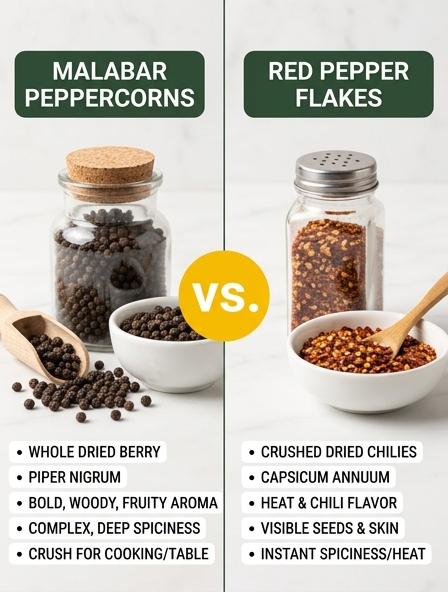
Floral Pungency Contrasted With Direct Capsaicin Heat
The distinction between Malabar peppercorns and red pepper flakes lies in their chemical makeup and sensory delivery. Malabar peppercorns, sourced from India's Malabar Coast, derive their heat from piperine. This compound offers a complex, floral pungency that builds gradually, often accompanied by citrus and woody undertones. In contrast, red pepper flakes are made from dried Capsicum peppers, where capsaicin provides a sharp, immediate sting that hits the front of the tongue with direct intensity.
- Malabar Peppercorns: Feature a nuanced, aromatic warmth with a slow-burn finish.
- Red Pepper Flakes: Provide a bold, rustic heat that can dominate a flavor profile.
Culinary enthusiasts often choose freshly cracked Malabar peppercorns to add sophisticated depth to a delicate filet mignon, while those looking for an instant, fiery kick will reach for red pepper flakes to scatter over a steaming slice of pepperoni pizza.
Digestive Impact And Nutrient Bioavailability Of Distinct Heat Sources
Malabar peppercorns and red pepper flakes offer more than just heat; they fundamentally alter how our bodies process nutrients. The piperine found in Malabar peppercorns acts as a potent bio-enhancer, famously increasing the absorption of vital compounds like curcumin by up to 2,000%. In contrast, the capsaicin in red pepper flakes focuses on thermogenesis and gastric motility.
- Malabar Peppercorns: Stimulate pancreatic enzymes and improve the solubility of fat-soluble vitamins and B-complex nutrients.
- Red Pepper Flakes: Accelerate metabolic rate and promote circulatory health through the release of neuropeptides.
While both spices aid digestion, their chemical pathways differ significantly. Fitness enthusiasts often sprinkle red pepper flakes on morning eggs to kickstart their metabolism, whereas health-conscious cooks never skip the Malabar grinder when preparing turmeric-rich curries to ensure every nutrient is fully bioavailable.
Aromatic Complexity Versus Sharp Fiery Intensity In Braises
When slow-cooking, the choice of spice significantly alters the flavor profile of the liquid base. Malabar peppercorns are prized for their high piperine content and volatile oils, which contribute woody, citrusy, and floral notes that evolve during long braising periods. In contrast, red pepper flakes provide a more linear, capsaicin-driven heat that hits the palate immediately.
| Feature | Malabar Peppercorns | Red Pepper Flakes |
|---|---|---|
| Flavor Profile | Complex, resinous, citrusy | Sharp, toasted, direct |
| Heat Style | Gradual, deep warmth | Instant, fiery sting |
While peppercorns build a structural foundation of flavor, flakes are often used to provide a vibrant, spicy punch that cuts through heavy fats. Home cooks often prefer adding cracked Malabar peppercorns to a slow-simmered pot roast to achieve a sophisticated, peppery finish that complements the deep umami of the beef without overwhelming the senses.
Slow Building Warmth Versus Immediate Palate Stimulation
The primary distinction between Malabar peppercorns and red pepper flakes lies in the chemical compounds that trigger heat: piperine versus capsaicin. Malabar peppercorns, prized for their earthy complexity and citrus undertones, offer a sophisticated warmth that develops gradually across the palate. In contrast, red pepper flakes provide a sharp, immediate sting that commands attention the moment they touch the tongue.
- Malabar Peppercorns: Features a lingering, aromatic heat that enhances the savory depth of meats and slow-cooked stews.
- Red Pepper Flakes: Delivers a vibrant, spicy punch ideal for cutting through the richness of fats and oils in quick-fire dishes.
While both add essential spice, their roles in flavor profiling are distinct. Culinary enthusiasts often reach for freshly cracked Malabar peppercorns to finish a seared ribeye for a complex glow, while sprinkling red pepper flakes over a steaming slice of pepperoni pizza for that quintessential, instant kick.
Deep Earthy Tones Compared To Bright Pungent Accents
The choice between Malabar peppercorns and red pepper flakes defines the aromatic foundation of a dish. Malabar peppercorns, harvested from the Malabar Coast of India, are celebrated for their complex, deep earthy tones and subtle citrus undertones. Conversely, red pepper flakes offer a bright, pungent heat that strikes the palate immediately.
- Malabar Peppercorns: Provide a warm, woodsy complexity and sophisticated pungency.
- Red Pepper Flakes: Deliver sharp, direct capsaicin heat with a vibrant, slightly fruity finish.
While Malabar pepper integrates into the flavor profile of a slow-roasted beef brisket, many home cooks prefer a bold sprinkle of red pepper flakes over a hot pepperoni pizza to provide that signature, tongue-tingling zing that balances rich, melted cheeses.
High Heat Stability Versus Infusion Performance In Sauces
Choosing between Malabar peppercorns and red pepper flakes depends on your sauce's cooking duration and temperature. Malabar peppercorns are renowned for their thermal resilience; the piperine compound and complex essential oils remain stable during long-simmering reductions without turning bitter. Red pepper flakes, however, prioritize rapid infusion performance. Their increased surface area allows capsaicin to permeate oils and liquids almost instantly, though they risk scorching under intense, direct heat.
| Metric | Malabar Peppercorns | Red Pepper Flakes |
|---|---|---|
| Heat Component | Piperine (Stable) | Capsaicin (Rapid) |
| Best Application | Slow-cooked Gravies | Quick Arrabbiata |
Home cooks often prefer the steady, nuanced heat of cracked Malabar berries for a slow-braised peppercorn steak sauce, while reaching for red flakes to add an immediate kick to a five-minute garlic and oil pasta.
Flavor Layering Potential Versus Simple Surface Pungency
Choosing between Malabar peppercorns and red pepper flakes depends on whether you seek aromatic depth or immediate heat. Malabar peppercorns, sourced from the Malabar Coast of India, contain complex volatile oils that offer citrus and woody undertones. Their piperine content builds a slow, warm heat that permeates the structural layers of a dish.
- Malabar Peppercorns: Earthy complexity, floral notes, and lingering warmth.
- Red Pepper Flakes: Sharp, localized capsaicin sting and bright acidity.
In contrast, red pepper flakes provide a direct, surface-level pungency. This heat is instantaneous but lacks the nuanced "bass notes" found in high-quality black pepper. While Malabar pepper integrates into the foundation of a recipe, red pepper flakes act as a sharp accent that hits the palate with singular, fiery focus.
Home chefs love slow-simmering a rich beef stew where Malabar pepper melds into the gravy, while using a final pinch of red pepper flakes to add a vibrant, spicy spark just before serving.
Metabolic Response And Health Benefits Of Sharp Seasonings
Both Malabar peppercorns and red pepper flakes trigger distinct physiological responses due to their unique bioactive compounds. Malabar peppercorns are rich in piperine, a compound that improves digestion and significantly enhances the bioavailability of nutrients like selenium and curcumin. Conversely, red pepper flakes contain capsaicin, a potent thermogenic agent known to increase metabolic rate and promote lipid oxidation.
- Malabar Peppercorns: Stimulate pancreatic enzymes and provide powerful antioxidant protection.
- Red Pepper Flakes: Induce a temporary caloric burn and may aid in appetite suppression.
While piperine focuses on nutrient absorption efficiency, capsaicin prioritizes energy expenditure. Integrating these seasonings provides a synergistic approach to metabolic wellness, protecting the body against oxidative stress while optimizing digestive performance. Home cooks often crack fresh Malabar pepper over a seared steak to aid protein digestion, while fitness enthusiasts sprinkle red flakes onto morning eggs for a spicy metabolic jumpstart to their day.
Subtle Citric Undertones Versus Straightforward Dried Heat
Choosing between Malabar peppercorns and red pepper flakes involves balancing aromatic complexity against raw pungency. Malabar peppercorns, harvested from the Malabar Coast of India, are prized for their sophisticated profile that blends bright, citric undertones with deep woody notes. Conversely, red pepper flakes-typically a blend of dried Capsicum annuum-deliver a more linear, capsaicin-forward heat that hits the palate immediately without the nuanced layers of peppercorns.
- Malabar Peppercorns: Best for depth, fragrance, and a slow-building warmth.
- Red Pepper Flakes: Ideal for sharp, consistent spice and vibrant visual appeal.
While both provide heat, their culinary roles remain distinct. Professional chefs often choose freshly cracked Malabar peppercorns to finish a delicate lemon-butter salmon, whereas home cooks reach for red pepper flakes to give a classic pepperoni pizza or a hearty pasta aglio e olio that essential, fiery kick.
Visual Presentation And Color Impact On Finished Plates
The choice between Malabar peppercorns and red pepper flakes significantly alters a dish's visual identity. Malabar peppercorns offer a classic, sophisticated aesthetic; when freshly ground, they provide deep, monochromatic specks that ground the colors of creamy sauces or seared proteins. Conversely, red pepper flakes introduce a vibrant, rustic flair, using bright crimson skins and pale seeds to create a textured appearance that signals immediate heat.
- Malabar Peppercorns: Delivers a clean, professional finish suitable for traditional French or Continental cuisine.
- Red Pepper Flakes: Adds high-contrast visual energy often associated with Mediterranean or Asian street food.
You might prefer dusting Malabar pepper over a delicate Cacio e Pepe for a refined, upscale look, whereas a generous sprinkle of red flakes over a wood-fired pizza provides that bold, artisanal pop of color people love.
Malabar Peppercorns vs Red Pepper Flakes source and external links
- Known for their complex aroma and balanced heat, Malabar Peppercorns are a premium spice variety originating from the Malabar Coast of India.
- Commonly used to add a spicy kick to pizza and pasta, Red Pepper Flakes are made from dried and crushed red chili peppers.