
Liquid Egg vs Poached Egg: The Differences in Nutritional Bioavailability, Culinary Efficiency, and Food Safety
Nutritional Profiles and Health Outcomes
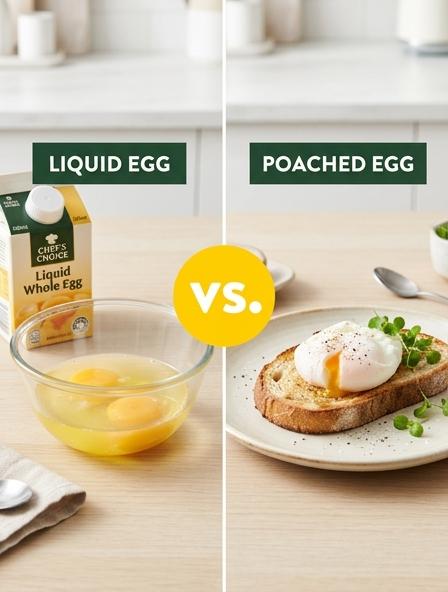
Analyzing the nutritional differences between liquid and poached eggs reveals a choice between convenience and whole-food integrity. Liquid eggs are pasteurized to eliminate pathogens, making them a safe choice for many, though they often contain stabilizers or citric acid. Poached eggs, however, use whole shell eggs, preserving the natural structure of proteins and fats without additional additives.
- Liquid Eggs: High in convenience and food safety; often available as egg-white only versions to reduce cholesterol.
- Poached Eggs: Cooked without added oils, maintaining the bioavailability of yolk-based nutrients like choline and lutein.
Both options provide high-quality protein essential for muscle repair and metabolic health. You might find liquid eggs ideal for a rapid, high-protein meal prep during a busy work week, while a perfectly runny poached egg remains the preferred choice for those craving a gourmet, nutrient-dense brunch experience.
Cooking Performance and Heat Stability
Liquid eggs offer exceptional heat stability and uniform cooking performance because they are homogenized and often pasteurized. This industrial process creates a consistent protein structure that resists "weeping" or syneresis, making them highly reliable for high-volume commercial service. In contrast, poached eggs rely on the delicate coagulation of fresh albumin; their heat stability is fragile, requiring a narrow temperature window (typically between 75°C and 82°C) to maintain structural integrity without the white becoming rubbery or the yolk hardening.
- Liquid Eggs: High heat tolerance, uniform setting, and minimal risk of texture separation.
- Poached Eggs: Sensitive to temperature fluctuations, requiring acidic stabilization (vinegar) to assist protein binding.
Busy catering chefs prefer the reliable heat stability of liquid eggs for mass-produced quiches, while home gourmets favor the technical challenge of poaching a fresh shell egg for a perfect, runny yolk over avocado toast.
Protein Bioavailability and Absorption Rates
The primary differentiator between liquid and poached eggs is thermal denaturation. While liquid eggs are pasteurized, consuming them raw significantly limits protein uptake. Research indicates that the human body absorbs approximately 90-91% of the protein from cooked eggs, such as poached ones, compared to only 50% from raw liquid sources.
| Egg Form | Cooking State | Absorption Rate |
|---|---|---|
| Poached Egg | Cooked (Set White) | High (~91%) |
| Liquid Egg | Raw/Pasteurized | Moderate (~50%) |
| Liquid Egg | Scrambled/Baked | High (~91%) |
Heat alters the molecular structure of egg proteins, making them more accessible to digestive enzymes. Additionally, cooking neutralizes avidin, a protein in raw whites that can block biotin absorption. You might prefer the convenience of pouring liquid eggs into a morning shake for speed, but choosing a perfectly poached egg ensures your muscles receive the maximum amino acid payload from every gram of protein.
Preparation Speed and Kitchen Efficiency
In high-pressure culinary environments, the choice between liquid eggs and poached eggs is often dictated by operational throughput. Liquid eggs provide an immediate solution for high-volume service because they are pre-cracked, pasteurized, and ready to pour. This eliminates the time-consuming labor of handling individual shells and managing the associated food waste.
Conversely, poached eggs require a specialized skillset and strict attention to detail, including water acidification and precise temperature monitoring. While poached eggs offer a premium aesthetic, they cannot match the rapid deployment of liquid alternatives. The following table compares their efficiency metrics:
| Efficiency Factor | Liquid Egg | Poached Egg |
|---|---|---|
| Preparation Time | Minimal/Instant | 4–6 minutes |
| Skill Requirement | Low | High |
In a fast-paced hotel breakfast buffet, chefs prioritize liquid eggs for scrambles and omelets to keep the line moving efficiently while guests enjoy a seamless dining experience.
Food Safety Standards and Handling Protocols
Understanding the safety profiles of liquid eggs versus poached eggs is essential for both commercial kitchens and home cooks. Liquid eggs are almost always pasteurized, a heat-treatment process that eliminates Salmonella and other pathogens while the product remains liquid. This rigorous standard provides a high level of microbial safety and a shelf-stable or long-refrigerated life, reducing the risk of foodborne illness in high-volume settings.
Poached eggs, however, rely on fresh shell eggs. While the whites are solidified in simmering water, the yolk often remains runny. Because the yolk may not reach the internal temperature required to kill all bacteria, safety depends heavily on sourcing and cold-chain integrity.
- Liquid Eggs: Pasteurized for maximum safety; ideal for vulnerable populations.
- Poached Eggs: Freshness-dependent; requires careful shell handling to avoid cross-contamination.
You might opt for the safety of pasteurized liquid eggs when preparing a massive buffet, but you likely crave the rich, flowing yolk of a fresh poached egg atop your weekend Eggs Benedict.
Texture Consistency and Mouthfeel
The primary distinction between liquid eggs and poached eggs lies in their structural uniformity. Liquid eggs are pasteurized and homogenized, resulting in a completely consistent, smooth texture once cooked. Because the yolk and white are pre-blended, every bite offers the same density. In contrast, a poached egg is defined by its textural duality-a delicate, coagulated outer white protecting a rich, fluid center.
- Liquid Eggs: Offer a uniform, velvety mouthfeel ideal for scrambles.
- Poached Eggs: Provide a complex contrast between firm whites and a runny, viscous yolk.
While liquid eggs are the go-to for achieving a reliable, even bite in breakfast burritos, many enthusiasts live for the moment a sharp knife pierces a poached egg, allowing the warm, golden yolk to glaze a piece of artisanal avocado toast.
Storage Longevity and Pantry Practicality
When evaluating storage, liquid eggs and poached eggs offer vastly different levels of convenience. Liquid eggs are pasteurized and vacuum-sealed, providing an extended shelf life of several weeks when unopened. Once the carton is breached, they typically remain fresh for three to five days. Conversely, poached eggs are a prepared form of fresh shell eggs. While shell eggs can stay fresh for up to five weeks in the refrigerator, the poached version is best consumed immediately or stored in an ice bath for no more than 48 hours.
- Liquid Eggs: Compact packaging, long unopened shelf life, reduces shell waste.
- Poached Eggs: Depends on shell egg freshness, requires immediate refrigeration if pre-cooked.
You might find liquid eggs indispensable for streamlined meal prepping during a hectic work week, whereas fresh shell eggs remain the gold standard for achieving that signature runny yolk during a relaxed weekend brunch.
Visual Presentation and Plating Aesthetics
The visual appeal of liquid eggs versus poached eggs depends largely on the intended dining experience. Liquid eggs offer a uniform, vibrant color and a consistent, smooth texture that is ideal for creating clean lines in modern culinary designs or high-volume displays. In contrast, poached eggs provide a rustic, artisanal charm characterized by their delicate teardrop shape and soft, opaque whites.
- Liquid Egg: Best for achieving a homogeneous, bright yellow finish in scrambles or omelets.
- Poached Egg: Offers a dramatic focal point with its architectural structure and "molten" center.
While liquid products ensure a flawless, streak-free appearance for commercial catering, brunch enthusiasts often crave the classic aesthetic of a poached egg perched atop avocado toast, waiting for the golden yolk to cascade over the sides.
Budget Management and Cost Per Serving
When analyzing the financial impact of liquid egg versus poached egg preparations, food costs and labor efficiency are the primary variables. Whole shell eggs used for poaching typically offer the lowest raw unit price. However, they carry hidden costs, including shell disposal and the risk of product loss during the delicate poaching process. Liquid egg products are often priced at a premium due to pasteurization and packaging but provide 100% yield with zero waste.
- Shell Eggs: Best for low-volume, artisanal presentation with lower raw material overhead.
- Liquid Eggs: Ideal for high-volume operations requiring strict portion control and reduced labor hours.
You might choose the liquid option when catering a massive corporate brunch to keep labor costs low, whereas the shell egg remains the favorite for a weekend family breakfast where quality and price per dozen are the top priorities.
Culinary Versatility and Recipe Application
Choosing between liquid eggs and poached eggs depends on your specific kitchen goals. Liquid eggs are the champions of convenience and consistency, making them indispensable for high-volume baking, omelets, and protein-packed smoothies. Because they are often pasteurized and pre-blended, they integrate seamlessly into complex batters and large-scale meal prep without the labor of cracking shells.
In contrast, poached eggs are culinary centerpieces prized for their aesthetic appeal and rich, flowing texture. While they require more precise technique, they provide a gourmet finish that liquid alternatives cannot replicate.
- Liquid Egg: Best for frittatas, quiches, and consistent commercial-scale scrambles.
- Poached Egg: Essential for Eggs Benedict, savory grain bowls, and artisan sourdough toasts.
Busy parents often reach for the carton to whip up a quick Monday morning scramble, whereas foodies cherish the moment a knife pierces a perfectly poached yolk during an indulgent weekend brunch.
Liquid Egg vs Poached Egg source and external links
- Liquid eggs are pasteurized egg products that offer a convenient and food-safe alternative for large-scale cooking and baking, which you can explore further by reading about liquid egg products.
- A poached egg is created by gently simmering a cracked egg in water until the whites are set and the yolk remains creamy, a technique used to master the perfect poached egg.