
Liquid Egg vs Whole Eggs: Which is Best for Baking Performance, Nutritional Value, and Kitchen Efficiency?
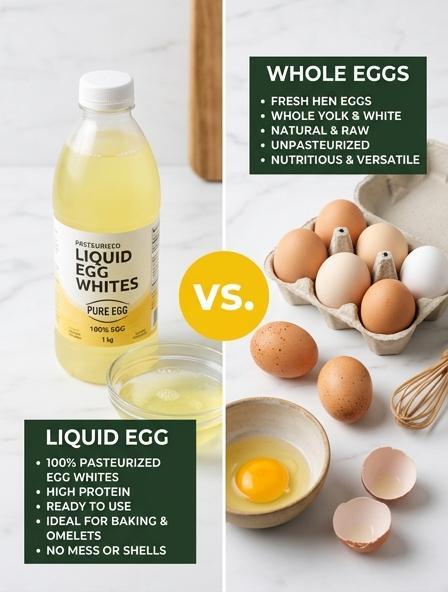
Comparing Texture Results in Daily Breakfast Preparations
Achieving the perfect mouthfeel in your morning meal depends largely on the structural differences between shell eggs and liquid alternatives. Whole eggs offer a rustic, heterogeneous texture because the whites and yolks coagulate at different temperatures, creating a "marbled" effect. Conversely, liquid eggs are homogenized and pasteurized, leading to a more consistent, sponge-like, and airy quality.
- Whole Eggs: Provide a rich, firm bite with distinct textural contrast between the fat-heavy yolk and lean white.
- Liquid Eggs: Deliver a smooth, velvety, and uniform consistency that is highly predictable in high-heat cooking.
Busy professionals often prefer the streamlined process of pouring liquid eggs into a hot skillet for a rapid, fluffy scramble that stays soft and moist even when prepared in a hurry before the morning commute.
Nutritional Profiles of Shell and Carton Varieties
The nutritional integrity of shell eggs versus liquid alternatives is remarkably similar, though processing nuances exist. Shell eggs are the "whole food" standard, containing intact proteins, essential vitamins D and B12, and choline. Liquid eggs undergo pasteurization to eliminate bacteria, which slightly alters some enzyme activities but preserves nearly all macronutrients.
- Shell Eggs: Natural source of healthy fats, fat-soluble vitamins, and lecithin found in the yolk.
- Liquid Whites: High-purity protein with zero fat and significantly lower caloric density, ideal for strict dieting.
- Whole Liquid Eggs: Typically contain the same protein-to-fat ratio as shell eggs, though some brands add citric acid to prevent graying.
While the protein quality remains consistent across both formats, carton varieties offer superior consistency for precise calorie tracking and food safety. You might reach for the convenient carton when whipping up a bulk high-protein scramble for your morning meal prep, but choose farm-fresh shell eggs when only a rich, runny yolk will satisfy your weekend brunch cravings.
Storage Longevity and Kitchen Efficiency for Families
Choosing between liquid eggs and whole eggs often comes down to balancing shelf life with morning speed. Whole shell eggs are champions of longevity, staying fresh in the refrigerator for three to five weeks. Liquid eggs, while pasteurized for safety, offer a shorter window, typically requiring use within three to seven days after opening.
For busy households, the efficiency of liquid eggs is a significant advantage. They eliminate the labor of cracking and the risk of shell fragments in your food. Consider the following comparison:
- Whole Eggs: Versatile for poaching or frying; longest storage life.
- Liquid Eggs: Best for bulk scrambles, omelets, and minimizing cleanup.
Busy parents love the convenience of pouring liquid eggs directly into a preheated skillet on a frantic Monday morning, delivering a high-protein breakfast to the kids in under two minutes without a single shell to discard.
Performance in Cakes and Delicate Pastries
In professional baking, the choice between liquid and shell eggs hinges on structural integrity and aeration. Fresh shell eggs are generally superior for delicate pastries like sponge cakes or soufflés because their proteins remain completely intact. This allows for maximum air entrapment during whipping, resulting in a superior lift and a lighter, finer crumb.
Liquid eggs are pasteurized, a heat process that can slightly denature proteins, sometimes reducing their foaming capacity. While they offer unmatched consistency and safety, they may yield a slightly denser texture in highly aerated recipes.
- Shell Eggs: Best for meringues, chiffons, and sponges requiring maximum volume.
- Liquid Eggs: Ideal for pound cakes, muffins, and brownies where moisture consistency is key.
You might choose hand-cracked shell eggs when perfecting a delicate Genoise sponge for an artisanal wedding cake, but you will likely find liquid eggs more efficient when batch-baking hundreds of uniform muffins for a busy morning catering service.
Evaluation of Additives in Processed Pourable Options
When comparing liquid egg products to whole shell eggs, the primary difference lies in the inclusion of functional additives. While whole eggs are a single-ingredient food, pourable versions are pasteurized for safety, a process that can alter protein structure. To compensate and ensure shelf stability, manufacturers often include specific ingredients:
- Citric Acid: Prevents the eggs from turning gray or greenish during hot holding.
- Xanthan Gum: Acts as a stabilizer to maintain a uniform, pourable texture.
- Nisin: Serves as a natural preservative to extend the product's refrigerated life.
- Beta-carotene: Added occasionally to restore the vibrant yellow hue lost during processing.
In contrast, whole eggs remain additive-free, offering a "clean label" and natural culinary performance. You might choose the convenience of a carton when prepping a large-scale holiday brunch for twenty guests, where avoiding the hassle of cracking dozens of shells saves precious time without sacrificing safety.
Safety Standards and Handling for Home Cooks
When comparing liquid eggs and shell eggs, the most significant difference lies in pasteurization. Liquid egg products undergo a heat-treatment process that destroys pathogens like Salmonella, making them a safer choice for high-risk individuals or recipes calling for undercooked eggs.
Standard shell eggs require careful handling to prevent cross-contamination from the exterior shell. Here are key safety considerations for home storage:
- Pasteurization: Liquid eggs are flash-heated; shell eggs are raw.
- Shelf Life: Unopened liquid cartons often last longer than fresh eggs.
- Handling: Shell eggs require manual cracking, increasing the risk of shell fragments and bacterial transfer.
While shell eggs offer natural protection through their porous surface, liquid versions provide a sterile alternative that simplifies kitchen hygiene. You might find liquid eggs most convenient when preparing a large Sunday brunch for the family, as they eliminate the mess of cracking dozens of shells and ensure every serving is salmonella-free.
Flavor Variations in Homemade Custards and Sauces
Choosing between liquid eggs and fresh whole eggs significantly influences the organoleptic qualities of delicate desserts and savory emulsions. Fresh eggs are prized for their rich, complex flavor profiles and high lecithin content, which ensures a superior bind in Hollandaise or pastry creams. Conversely, liquid egg products undergo pasteurization; while this enhances food safety, it can subtly alter protein structures and result in a more neutral, less "farm-fresh" taste.
- Fresh Eggs: Offer a deep golden hue and a creamy, buttery mouthfeel essential for traditional custards.
- Liquid Eggs: Provide a uniform consistency and convenience for high-volume recipes where subtle flavor nuance is secondary.
Professional pastry chefs often prefer cracking fresh yolks when preparing a signature Crème Brûlée to achieve that sought-after velvety texture and authentic, indulgent flavor that bottled substitutes rarely match.
Volume and Aeration Capacity in Fluffy Desserts
Achieving the perfect loft in desserts like soufflés and mousses depends heavily on the protein structure of the eggs used. Aeration occurs when whisking incorporates air, creating a stable foam. While both forms are functional, they perform differently under the whisk:
- Fresh Shell Eggs: Known for superior globulin proteins that facilitate rapid foaming and high-volume expansion.
- Liquid Eggs: These are pasteurized for safety, a heat process that can slightly denature proteins, sometimes resulting in a less stable or lower-volume foam.
In high-stakes pastry applications, the mechanical properties of fresh whites often provide a more resilient air-cell matrix. However, liquid eggs offer unmatched consistency and speed for high-volume production where uniform density is prioritized over maximum peak height.
You might choose fresh shell eggs when your goal is to achieve the delicate, cloud-like rise of an artisanal Grand Marnier soufflé.
Economic Value and Waste Reduction for Home Budgets
When evaluating grocery expenses, liquid eggs provide a cost-effective alternative to whole eggs by minimizing food waste. Unlike shell eggs, which are prone to breakage and have a shorter usable window once cracked, liquid egg products allow for exact measurements. This precision ensures that home cooks only use what is necessary for a recipe, eliminating the common issue of discarding unused yolks or whites.
- Reduced Spoilage: Pasteurized liquid eggs often have a longer refrigerated shelf life than cracked shell eggs.
- 100% Usability: Consumers pay for the edible product only, rather than the weight of discarded shells.
- Bulk Efficiency: Larger cartons often offer a lower price-per-ounce for families following high-protein diets.
Consider a busy parent who pours exactly half a cup of liquid egg for a quick Tuesday omelet, perfectly managing their weekly food budget without leaving a single cracked shell behind.
Nutrient Retention and Bioavailability in Different Formats
When comparing liquid egg products to whole shell eggs, the primary differences lie in processing and oxidation. Whole eggs benefit from a natural shell barrier that preserves delicate fat-soluble vitamins like A, D, and E. In contrast, liquid eggs undergo pasteurization to eliminate pathogens. While this heat treatment slightly reduces heat-sensitive B vitamins, it actually enhances protein bioavailability by neutralizing avidin, a protein that can interfere with biotin absorption.
- Whole Eggs: Superior retention of antioxidants and micronutrients due to minimal processing.
- Liquid Eggs: Highly bioavailable protein and improved food safety through flash pasteurization.
Despite minor nutrient loss during homogenization, the macronutrient profile remains largely identical between both formats. You might reach for a carton of liquid egg whites when you need a quick, high-protein base for a post-workout omelet without the hassle of cracking dozens of shells.
Liquid Egg vs Eggs source and external links
- Liquid egg products offer a pasteurized and convenient alternative to shell eggs for use in commercial baking and foodservice.
- As a nutrient-dense staple in diets worldwide, Eggs provide high-quality protein and essential vitamins in a versatile culinary form.