
La Ratte Potatoes vs Regular Potatoes: Comparing Flavor, Texture, and Nutrition Differences
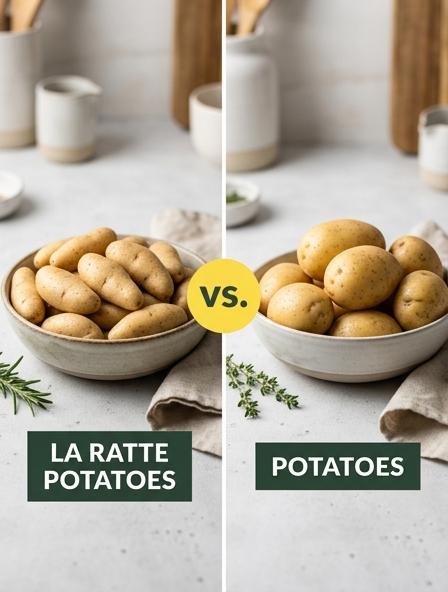
Nutty Flavor Profiles Compared to Neutral Earthy Tones
The primary distinction between the French La Ratte and standard potato varieties lies in their aromatic depth. While common white or Russet potatoes provide a neutral, starchy base with mild earthy undertones, the La Ratte is celebrated for its complex, gourmet profile. This heirloom variety delivers a rich, buttery sweetness reminiscent of roasted hazelnuts or chestnuts.
Unlike everyday potatoes that act as a blank canvas for heavy seasonings, the La Ratte is a flavor-forward ingredient. Its firm, waxy flesh preserves these delicate notes during cooking. Key differences include:
- La Ratte: Distinct nuttiness, buttery finish, and sophisticated chestnut notes.
- Standard Potatoes: Neutral starchiness, mild soil-like earthiness, and a clean palate.
Professional chefs often prefer the La Ratte for warm potato salads where its natural, chestnut-like richness can shine without being masked by heavy dressings.
Starch Content and Its Effect on Culinary Texture and Performance
The primary differentiator between La Ratte and standard potatoes lies in their starch-to-moisture ratio. La Ratte potatoes are low-starch, "waxy" tubers. Their cells bond tightly, allowing them to maintain a firm, buttery integrity even after prolonged cooking. In contrast, high-starch potatoes like Russets feature a dry, granular structure that bursts when heated, resulting in a light, floury finish.
| Attribute | La Ratte (Waxy) | Starchy Potatoes |
|---|---|---|
| Texture | Firm, Silky | Fluffy, Mealy |
| Cooking Goal | Shape Retention | High Absorbency |
You will prefer the La Ratte for a sophisticated potato salad or a slow-cooked confit where you want every bite to hold its elegant, fingerling shape without crumbling.
Nutritional Profiles of Heirloom and Standard Commercial Varieties
While standard commercial potatoes are primarily bred for high yields and uniform size, heirloom varieties like the La Ratte offer a distinct nutritional density. Because La Ratte potatoes are smaller fingerlings, they possess a higher skin-to-flesh ratio, which often results in a greater concentration of dietary fiber and essential minerals per serving compared to large, starchy Russets.
- La Ratte: Notable for its lower glycemic index and high levels of potassium and Vitamin C.
- Standard Varieties: Typically higher in complex carbohydrates and energy-providing starches, though often lower in phytonutrients.
The nutrient-rich skin of the La Ratte is so thin and delicate that health-conscious foodies prefer to simply steam them whole, preserving the earthy, nutty flavor and vital antioxidants that are often lost during the heavy peeling required for common commercial tubers.
Texture Stability and Shape Retention During High Heat Cooking
La Ratte potatoes are prized by professional chefs for their exceptional culinary performance under intense heat. Unlike standard floury potatoes that tend to disintegrate or turn mushy when roasted or sautéed, the La Ratte variety maintains a firm, waxy structure. This superior shape retention is a result of their low moisture content and dense cellular composition.
- La Ratte: Stays intact with a velvety, non-crumbly interior.
- Standard Starchy Potatoes: Often break apart or lose their edges during high-heat agitation.
When subjected to high temperatures, the skin of a La Ratte becomes delicately crisp while the flesh remains consistently smooth. This stability allows for even browning and a sophisticated presentation that ordinary potatoes cannot match. You will appreciate how these golden fingerlings stay perfectly whole and elegant when tossed in a searing hot cast-iron skillet with garlic and rosemary for a gourmet side dish.
Glycemic Index and Caloric Density of Diverse Tuber Selections
Understanding the nutritional profile of La Ratte potatoes versus standard high-starch varieties is essential for glucose management. La Ratte, a prized French heirloom, features a firm, waxy texture that typically results in a lower glycemic index (GI) compared to the fluffy, high-amylopectin Russet. This structural difference means La Rattes are digested more slowly, providing a steadier release of energy.
While caloric density remains relatively consistent across most raw tubers-averaging 75–80 calories per 100 grams-the physiological impact varies by type:
- La Ratte: Moderate GI; maintains integrity during cooking, enhancing satiety.
- Russet: High GI; breaks down quickly, leading to faster insulin responses.
- Red Potatoes: Low-to-medium GI; ideal for cold salads where resistant starch increases.
You will love roasting these buttery La Rattes with fresh rosemary and a hint of sea salt for a sophisticated dinner party side that satisfies your cravings without the heavy sugar crash common with traditional mash.
Visual Appeal and Skin Edibility for Family Meal Presentation
When comparing La Ratte potatoes to standard varieties, the most striking difference lies in their gourmet aesthetic. Unlike common starchy potatoes that often have thick, earthy skins requiring tedious peeling, La Ratte potatoes boast a delicate, paper-thin golden skin that is entirely edible. This thin skin not only saves preparation time but also holds the potato's unique, curved fingerling shape during the cooking process.
- La Ratte: Smooth, glossy texture; maintains structural integrity; elegant presentation.
- Standard Potatoes: Often require peeling; can become mushy or lose shape; utilitarian appearance.
For family meals, the visual contrast is significant. While standard potatoes are usually served mashed or chopped, La Ratte potatoes are best presented whole, offering a rustic "farm-to-table" charm. Their waxy skin crisps beautifully while maintaining a buttery interior. Home cooks love roasting these potatoes whole with fresh thyme and sea salt to create a sophisticated, golden side dish that looks like it came straight from a French bistro.
Density Variations and Their Impact on Boiling and Steaming Times
The culinary performance of La Ratte potatoes is defined by their high density and waxy texture, which stands in contrast to the porous, starchy nature of standard russets. This compact cellular structure directly influences thermal conductivity. Because La Ratte potatoes have low moisture and high dry matter, they require a gentle, consistent heat source to ensure the core reaches a creamy consistency without the exterior disintegrating.
When boiling or steaming, the following factors determine the timing:
- Internal Density: Dense tubers like La Ratte resist water absorption, maintaining structural integrity longer than floury types.
- Size Uniformity: Their naturally small, fingerling shape allows for more rapid heat penetration compared to large, bulky potatoes.
- Starch Stability: Low amylose content prevents the "sloughing" effect often seen in standard boiling potatoes.
Home cooks love using La Ratte for elegant dinner parties because these potatoes stay perfectly firm and yellow even when tossed warm in a heavy garlic butter sauce.
Mineral Concentrations and Health Benefits of Specialized Harvests
La Ratte potatoes distinguish themselves from standard varieties through their superior nutrient density, a result of specialized harvesting and unique genetic heritage. While common potatoes provide general carbohydrates, La Ratte fingerlings offer higher concentrations of vital minerals per gram. Because they are often harvested at smaller sizes, the nutrient-to-starch ratio remains favorable for health-conscious diets.
- Potassium: Essential for regulating blood pressure and heart health.
- Magnesium: Supports muscle function and nervous system regulation.
- Vitamin C: Acts as a powerful antioxidant found in higher levels within the thin, edible skin.
Unlike floury potatoes that can cause rapid blood sugar spikes, the firm, waxy texture of La Ratte suggests a lower glycemic response. Fitness enthusiasts and home chefs love roasting these tubers whole with a sprig of rosemary and olive oil to create a nutrient-rich, gourmet side dish that supports post-workout recovery without sacrificing flavor.
Moisture Content and Crispness Potential for Oven Roasted Dishes
The La Ratte potato is prized for its low moisture content and dense cell structure, which sets it apart from common supermarket varieties. While waxy potatoes often struggle to crisp and starchy potatoes can become too dry, the La Ratte offers a perfect middle ground for roasting.
| Potato Variety | Moisture Level | Roasting Result |
|---|---|---|
| La Ratte | Low-Medium | High / Golden Crust |
| Standard Waxy | High | Low / Firm Skin |
This balance ensures that the potato caramelizes beautifully in the oven rather than steaming from within. Home cooks often choose La Ratte for upscale dinner parties, roasting them whole with garlic and thyme to achieve a satisfyingly loud crunch that gives way to a buttery, melt-in-your-mouth center.
Aromatic Differences in Sautéed and Pureed Preparations
La Ratte potatoes are distinguished by a signature nutty, chestnut-like fragrance that intensifies based on the cooking method. Unlike standard potatoes, which often yield a neutral, earthy scent, La Ratte offers a more complex olfactory profile.
| Preparation | La Ratte Aroma | Standard Potato Aroma |
|---|---|---|
| Sautéed | Toasted hazelnut and butter | Mildly sweet, fried starch |
| Pureed | Rich cream and roasted nuts | Clean, neutral, and earthy |
When sautéing, the thin skins of La Ratte caramelize to release a deep, toasted bouquet that standard tubers cannot replicate. In a puree, their unique texture captures fats beautifully, resulting in the famous buttery scent popularized by high-end French cuisine. You will likely prefer La Ratte for a dinner party mash when you want the aroma of roasted chestnuts to elevate your main course beyond simple comfort food.
La Ratte Potatoes vs Potatoes source and external links
- La Ratte potatoes are a highly prized French heirloom variety celebrated for their unique nutty flavor and smooth, waxy texture, which you can learn more about by researching La Ratte potatoes.
- Potatoes are a versatile starchy tuber native to the Americas that have grown to become one of the most essential staple crops globally, with more information available regarding Potatoes.