
La Ratte Potatoes vs Baked Potatoes: Which is Best for Texture, Flavor Profiles, and Nutritional Value?
Texture and Consistency Variations in Finished Dishes
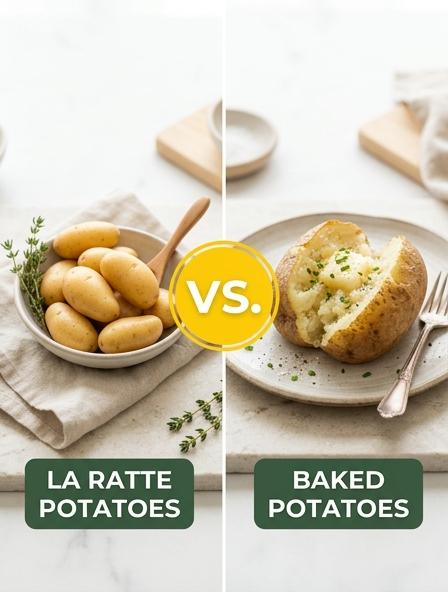
The culinary application of La Ratte versus traditional baking potatoes depends heavily on their structural integrity under heat. La Ratte potatoes are a waxy variety, characterized by a low starch content that results in a dense, creamy, and firm consistency. Conversely, standard baked potatoes, such as Russets, are high-starch tubers that undergo a "fluffing" process, where starch granules swell and separate to create a light, mealy, and porous interior.
- La Ratte: Maintains a smooth, waxy shape and a "nutty" bite; ideal for gourmet salads and roasting.
- Baked Potatoes: Develops a dry, absorbent texture that crumbles easily; perfect for mashing or loaded jackets.
You may find that while a sophisticated warm salad benefits from the buttery, hold-together snap of a sliced La Ratte, a cold winter night calls for the soft, cloud-like comfort of a traditional baking potato topped with melting butter.
Nutritional Values and Health Impact
Comparing La Ratte potatoes to standard baking varieties reveals distinct health benefits. La Ratte is a waxy heirloom potato known for its low glycemic index and high concentration of potassium and Vitamin C. In contrast, large baking potatoes-typically Russets-are starchy and provide a significant amount of Vitamin B6 and dietary fiber, particularly when the skin is consumed.
- La Ratte: Dense in antioxidants, lower starch content, and better for blood sugar management.
- Baked Potatoes: Higher in complex carbohydrates, providing sustained energy and magnesium.
While both varieties are naturally gluten-free and fat-free, the health impact depends largely on preparation; steaming La Ratte preserves more minerals than high-heat roasting. You might choose the delicate, nutty La Ratte for a nutrient-dense summer salad, while opting for a classic baked potato when you need a high-fiber, filling meal to fuel an active afternoon.
Starch Levels and Cooking Performance
The culinary distinction between La Ratte and traditional baked potatoes, such as Russets, lies in their starch-to-moisture ratio. La Ratte potatoes are classified as waxy, containing low amylose levels that allow the cell walls to remain intact during heating. Conversely, baking potatoes are high-starch (mealy) varieties, with cells that swell and separate to create a dry, granular texture.
- La Ratte: Low starch, firm texture, and holds its shape perfectly when boiled or sautéed.
- Baked Potatoes: High starch, fluffy interior, and highly absorbent for fats like butter or cream.
Because of these physical properties, La Ratte is the preferred choice for a refined Niçoise salad where structural integrity is key, while a high-starch Russet remains the gold standard for a classic, pillowy jacket potato topped with melted cheese and sour cream.
Flavor Profiles and Natural Aromatic Notes
The culinary distinction between La Ratte potatoes and traditional baking potatoes, such as the Russet, lies in their chemical composition and aromatic complexity. La Ratte potatoes are prized by gourmets for their distinctly nutty profile, often yielding subtle notes of toasted hazelnuts or chestnuts. Their waxy texture preserves these delicate volatile compounds during cooking, resulting in a rich, buttery finish.
Conversely, the classic baked potato offers a more neutral, earthy foundation. Because of its high starch content, the flavor is mild and slightly sweet, designed primarily to absorb external fats and seasonings rather than provide a complex standalone taste.
- La Ratte: Sophisticated, nutty, and naturally buttery.
- Baked Potato: Mild, floury, and absorbent.
Home cooks often choose the La Ratte for a refined dinner party side dish where its unique almond-like aroma can be appreciated with just a light sprinkle of sea salt and high-quality olive oil.
Structural Integrity and Heat Resistance
The primary difference in structural integrity between La Ratte and traditional baking potatoes lies in their starch-to-moisture ratio. La Ratte potatoes are classified as waxy, meaning they possess a dense cellular structure that remains intact even after prolonged exposure to high heat. Conversely, starchy baking potatoes, such as Russets, have a floury texture designed to expand and burst when cooked.
- La Ratte: High moisture and low starch; maintains a firm, buttery bite.
- Baked Potatoes: Low moisture and high starch; creates a light, crumbly interior.
This heat resistance makes La Ratte ideal for boiling, steaming, or sautéing without the risk of the tubers turning into mush. While a standard baked potato is prized for its ability to fluff up, the La Ratte is valued for its resilient flesh that withstands rigorous culinary techniques. You might choose the La Ratte when preparing a sophisticated Niçoise salad where you need clean, firm slices that won't crumble under a heavy vinaigrette.
Moisture Retention and Interior Mouthfeel
The culinary distinction between La Ratte and traditional baking potatoes lies in their cellular structure and starch-to-water ratio. La Ratte potatoes are waxy, meaning they possess high moisture retention. When cooked, their cells stay tightly bound, resulting in a dense, velvety mouthfeel that mimics the consistency of softened butter.
In contrast, starchy baking potatoes, such as Russets, are high in starch and low in moisture. During the baking process, these potatoes lose water, causing the starch granules to swell and separate. This creates the signature "fluffy" and floury texture associated with classic baked goods. Here is how they compare:
- La Ratte: Retains a firm, silky, and moisture-rich interior.
- Baked Potato: Produces a dry, aerated, and highly absorbent crumb.
You might choose the La Ratte for a sophisticated dinner party where a waxy, nutty bite is required, while the baked potato remains the go-to for soaking up generous amounts of butter and chives.
Caloric Density and Satiety Factors
When comparing La Ratte potatoes to traditional baked potatoes, caloric density remains similar-roughly 80-90 calories per 100 grams-but their physical structure impacts satiety differently. The La Ratte is a waxy fingerling with a dense, buttery texture that provides a heavy mouthfeel, whereas the floury starch of a typical Russet baked potato offers more volume per bite.
- La Ratte: Higher density and lower glycemic response contribute to sustained energy levels.
- Baked Potato: Boasts a high Satiety Index score, making it one of the most filling whole foods available.
While both varieties are nutrient-dense, satiety often depends on preparation; for example, many people prefer the firm, nutty La Ratte for a portion-controlled gourmet side, whereas those seeking maximum fullness after a long fast often opt for a large, fluffy baked potato topped with Greek yogurt.
Preparation Time and Handling Requirements
Choosing between La Ratte and traditional baked potatoes (typically Russets) significantly impacts kitchen workflow. La Ratte potatoes are prized for their thin, edible skins, which eliminate the need for peeling and reduce prep labor. They cook quickly-usually within 15 to 25 minutes-but require gentle handling due to their delicate flesh. In contrast, large baking potatoes are sturdier but necessitate rigorous scrubbing and a much longer cooking duration to achieve a fluffy interior.
- La Ratte: Best for rapid boiling, steaming, or pan-searing with minimal surface prep.
- Baked Potatoes: Require piercing and roughly 45–60 minutes of oven time for optimal texture.
You might prefer the swift, waxier La Ratte for a gourmet weeknight side dish, whereas the classic baked potato remains the favorite for a slow-roasted weekend meal where a thick, crispy skin is the goal.
Fat Absorption and Seasoning Retention
The culinary performance of La Ratte potatoes versus traditional baked potatoes is defined by their unique starch profiles. La Ratte potatoes are waxy and dense, featuring a tight cell structure that limits deep fat absorption. This allows them to maintain a firm texture while seasonings and oils cling to their thin, delicate skins. In contrast, floury baked potatoes, such as Russets, are highly porous; they behave like sponges, drawing butter, cream, and salt deep into their starchy, aerated interior.
| Potato Type | Fat Absorption | Seasoning Retention |
|---|---|---|
| La Ratte | Low / Surface-level | External glazes and herbs |
| Baked (Floury) | High / Internal | Deep infusion of fats |
Home cooks often choose La Ratte for elegant side dishes because they stay glossy and firm when tossed in a warm truffle oil and rosemary emulsion.
Visual Presentation and Plating Characteristics
The visual distinction between La Ratte potatoes and traditional baked potatoes dictates the aesthetic tone of a dish. La Ratte potatoes are elegant fingerlings with smooth, buff-colored skin and a waxy firm texture that holds its shape beautifully. In contrast, a standard baked potato, usually a Russet, offers a rustic, substantial presence with a rough, earthy skin that yields to a snowy, fluffed interior when opened.
- La Ratte: Small, uniform, and sleek; provides a sophisticated, gourmet look.
- Baked Potato: Large and hearty; creates a classic "blank canvas" for various toppings.
You might opt for the petite, golden La Ratte to add a touch of French refinement to a roasted lamb dish, whereas a steaming, butter-topped baked potato is exactly what people crave for a traditional, comforting steakhouse dinner.
La Ratte Potatoes vs Baked Potatoes source and external links
- La Ratte is a small, French fingerling potato highly prized by chefs for its distinctively nutty flavor and smooth, buttery texture. La Ratte potatoes
- A baked potato is a classic culinary staple made by cooking a starchy potato until the skin is crisp and the interior is soft and fluffy. Baked potatoes