
Hand-Pulled Noodles vs Ramen: Which is Best for Texture, Nutrition, and Digestibility?
When choosing between hand-pulled noodles and ramen, the decision ultimately comes down to your preference for artisanal elasticity versus a firm, alkaline snap. Hand-pulled noodles are celebrated for their silky texture and impressive gluten development achieved through repetitive stretching, making them naturally tender and often easier to digest for those sensitive to additives. In contrast, ramen owes its iconic springy bite and golden hue to kansui (alkaline mineral water), which provides a structured mouthfeel but can be slightly heavier on the stomach. While both offer a comforting wheat base, hand-pulled varieties typically win for digestibility, whereas ramen excels in maintaining its bite within rich, complex broths.
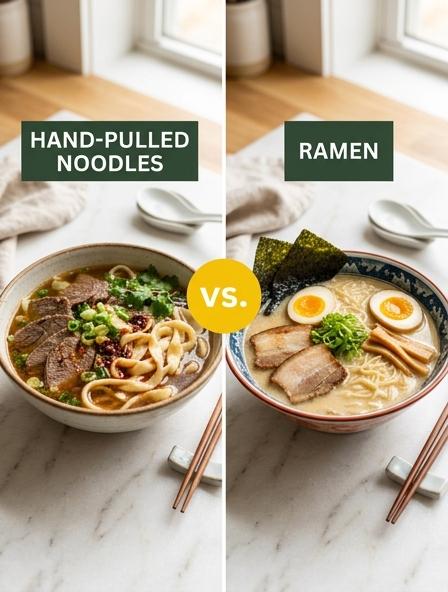
Textural Variations Between Hand-Pulled Noodles and Ramen in Home Cooking
In the realm of home cooking, the distinction between hand-pulled noodles (Lamian) and ramen lies in their molecular structure and mouthfeel. Hand-pulled noodles rely on intense gluten development through kneading and stretching, resulting in a silky, elastic, and slightly irregular texture that feels soft yet "q-bounce" chewy.
- Hand-Pulled: Highly elastic, tender, and organic in shape.
- Ramen: Firm, springy, and structurally resilient due to alkaline minerals.
The defining characteristic of ramen is kansui (alkaline water), which interacts with wheat proteins to create a yellowish tint and a snappy, firm bite. While hand-pulled noodles provide a rustic, porous surface ideal for absorbing light broths, ramen maintains its structural integrity even in boiling, heavy tonkotsu soups.
You will appreciate the meditative craft of stretching hand-pulled dough when you crave a hearty, rustic bowl of chili oil noodles that feels uniquely artisanal and comforting.
Nutritional Profiles and Caloric Content of Hand-Pulled Noodles and Ramen
The dietary profile of hand-pulled noodles versus ramen depends largely on broth composition and noodle preparation. Traditional hand-pulled noodles (Lamian) are made from wheat flour, water, and salt, typically served in a clear beef broth that is relatively low in fat. In contrast, Japanese ramen often uses kansui (alkaline water) to achieve its firm texture and is frequently served in dense, oil-rich broths like Tonkotsu, which significantly increases the caloric density.
- Hand-Pulled Noodles: Generally lower in saturated fats; focus on lean protein toppings.
- Ramen: Higher in sodium and calories due to concentrated soup bases and fatty pork belly (chashu).
While both dishes are high-carbohydrate staples, the caloric impact varies based on the richness of the soup and added fats. You might reach for a bowl of clear hand-pulled noodles for a lighter, restorative lunch, or indulge in a thick, savory ramen when you are craving a heavy, salt-forward comfort meal after a long workday.
The Influence of Alkaline Salts on Ramen and Hand-Pulled Noodle Firmness
The distinct textures of ramen and hand-pulled noodles are primarily dictated by the addition of alkaline salts. These minerals-typically potassium and sodium carbonate-react with wheat proteins to strengthen the gluten network. This chemical interaction results in a firmer, more resilient bite and a characteristic yellow hue without the use of eggs.
While both styles rely on alkalinity, their structural goals differ slightly to accommodate different preparation methods:
| Noodle Style | Alkaline Agent | Texture Result |
|---|---|---|
| Ramen | Kansui | Springy and Firm |
| Hand-Pulled | Peng Hui | Elastic and Silky |
You might prefer the firm, toothsome snap of a thin Hakata-style ramen when you want a hearty chew, or opt for the impossibly long, silky strands of hand-pulled noodles for a traditional celebratory feast.
Cooking Performance and Structural Integrity of Hand-Pulled Noodles and Ramen
The culinary performance of these noodles is dictated by their chemical composition and stretching techniques. Hand-pulled noodles, or Lanzhou Lamian, rely on manual gluten development, creating a porous, tender texture that excels at absorbing savory broths. Conversely, Ramen noodles utilize kansui (alkaline mineral water), which increases protein alkalinity to provide a firm, yellow-hued, and "snappy" structural integrity that resists softening in boiling liquids.
- Hand-Pulled: High elasticity, irregular surface area for sauce adhesion, best consumed immediately.
- Ramen: Enhanced durability, consistent al dente bite, maintains shape during long soaking periods.
While noodle enthusiasts crave the artisanal, melt-in-your-mouth quality of fresh hand-pulled strands, busy ramen lovers appreciate how alkaline noodles maintain their signature springy texture from the first slurp to the very last drop of hot tonkotsu broth.
Gluten Structure and Digestibility in Hand-Pulled Noodles and Ramen
The gluten architecture in these noodles differs significantly based on their preparation methods. Hand-pulled noodles rely on repetitive stretching and twisting, which physically aligns protein molecules into long, elastic strands. Conversely, ramen utilizes kansui (alkaline water) to chemically strengthen the gluten network, producing a firm, springy texture with a higher pH level.
- Hand-Pulled: Physical elongation creates smooth, continuous fibers that are often perceived as lighter on the stomach.
- Ramen: Alkaline salts create dense cross-links, resulting in the signature "snap" and yellow hue.
While both contain wheat protein, the mechanical manipulation of hand-pulled dough often results in a more permeable structure compared to the tightly bound, alkaline-heavy matrix of ramen. You might choose the silky, easily digestible strands of hand-pulled lamian when you want a comforting meal that won't leave you feeling overly weighed down.
Sodium Levels and Chemical Additives in Hand-Pulled Noodles and Ramen
Both noodle types rely on alkaline agents to achieve their signature springy texture, but their chemical compositions differ. Hand-pulled noodles traditionally use peng hui, a natural desert alkali salt, to increase dough elasticity. In contrast, ramen uses kansui, a mixture of potassium and sodium carbonate. While fresh versions are comparable, the disparity grows with processed options.
| Component | Hand-Pulled Noodles | Ramen (Fresh/Instant) |
|---|---|---|
| Primary Alkali | Peng Hui (Natural) | Kansui (Synthesized) |
| Sodium Impact | Moderate (mostly in broth) | High (noodles and broth) |
| Preservatives | Rarely used in fresh prep | TBHQ and stabilizers (Instant) |
Traditional hand-pulled noodles generally offer a cleaner ingredient list, whereas instant ramen is often laden with synthetic stabilizers and flavor enhancers like MSG. Health-conscious foodies often opt for fresh Lanzhou lamian over packaged ramen to enjoy a chewy, satisfying meal without the excessive salt bloat and chemical aftertaste of processed alternatives.
Broth Absorption and Texture Longevity of Hand-Pulled Noodles and Ramen
The structural integrity and "shelf-life" within a bowl of hot soup differ significantly due to noodle chemistry. Ramen features kansui (alkaline salts), which reinforces gluten structures, creating a firm, non-porous strand that resists liquid penetration. Hand-pulled noodles, however, rely on manual stretching and hydration, resulting in a softer, more porous surface area that absorbs broth rapidly.
- Ramen: High alkaline content ensures "bite" longevity and prevents sogginess during a slow meal.
- Hand-Pulled: Superior flavor absorption occurs instantly, though the noodles soften much faster in high-temperature liquids.
A busy professional might choose a firm Hakata-style ramen for a takeout lunch because the noodles retain their springy texture during the commute, while a weekend foodie prefers sitting at a counter to enjoy hand-pulled Lanzhou noodles the moment they are served, savoring how the dough has already soaked up the rich, aromatic beef broth.
Satiety and Macronutrient Ratios of Hand-Pulled Noodles and Ramen
While both dishes are carbohydrate-dominant, their macronutrient profiles and satiety levels differ based on noodle composition and broth density. Hand-pulled noodles (Lamian) are crafted from high-gluten wheat flour, providing a significant protein boost and a chewy texture. Conversely, Ramen utilizes alkaline salts (kansui) to achieve its firm bite, often paired with much richer, fat-heavy broths.
- Hand-Pulled Noodles: Typically lower in fat; satiety is derived from wheat protein and high-volume clear broths.
- Ramen: Higher caloric density; satiety is driven by emulsified fats and oils found in tonkotsu or miso bases.
The glycemic response also varies; the fats in a heavy Ramen broth can slow glucose absorption, whereas the lean profile of traditional hand-pulled beef noodles offers quicker energy. You might choose the clean, high-protein energy of hand-pulled noodles for a productive lunch, or dive into a rich bowl of Ramen when you crave the heavy, lingering satiety of a classic comfort meal.
Impact of Manual Stretching on Hand-Pulled Noodles and Ramen Consistency
The textural divergence between hand-pulled noodles and ramen stems from their mechanical preparation. Hand-pulled noodles (Lamian) undergo a rigorous process of manual stretching, twisting, and folding. This physical manipulation aligns gluten proteins in a linear fashion, resulting in exceptional elasticity and a distinct "bouncy" mouthfeel. In contrast, ramen noodles are typically rolled and cut, prioritizing a uniform density and thickness achieved through precision machinery.
- Elasticity: Manual pulling creates superior longitudinal stretch and springiness.
- Uniformity: Machine-cut ramen offers standardized thickness and consistent cooking times.
- Artisanal Variation: Stretching creates slight irregularities that allow strands to hold broth differently.
You might prefer the rustic, irregular bite of hand-pulled strands in a traditional Lanzhou beef soup if you value unique, artisanal textures over the standardized, firm snap of classic wheat ramen.
Freshness Retention and Storage Quality of Hand-Pulled Noodles and Ramen
Freshness retention differs vastly between these two styles. Hand-pulled noodles, or Lamian, rely on high hydration and immediate service. Because the gluten is stretched to its limit during live preparation, they absorb broth quickly and can become mushy if not consumed immediately. Ramen noodles often incorporate kansui (alkaline salts) and lower moisture levels, allowing them to retain a firm, "al dente" texture for longer periods, whether served fresh, chilled, or dried.
- Hand-Pulled: Optimal freshness lasts only minutes; dough cannot be stored long once pulled.
- Ramen: Excellent storage potential; alkaline properties preserve the structural integrity over days.
Storage quality also favors ramen, which can be aged to enhance flavor. In contrast, hand-pulled dough must be used quickly before the enzymatic activity weakens the protein bonds. You will appreciate the resilient snap of refrigerated ramen for your weekly meal prep, whereas the fleeting, velvet-smooth texture of hand-pulled noodles is a luxury best enjoyed the second they leave the chef's hands.
Hand-Pulled Noodles vs Ramen source and external links