
Granulated Sugar vs White Sugar : Which is Best for Baking, Texture, and Recipe Consistency?
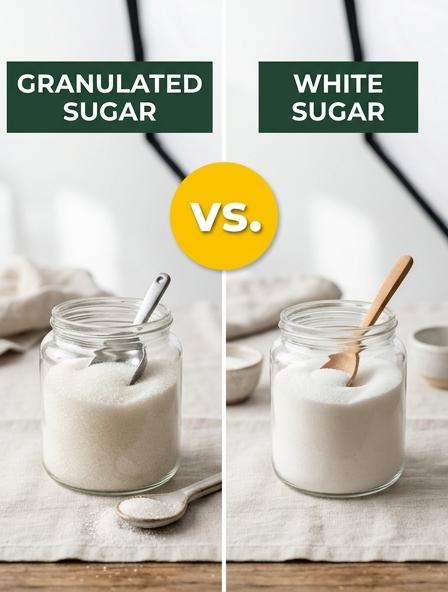
Texture and Grain Size Differences in Refined Sweeteners
While often used interchangeably, "white sugar" is a broad category encompassing various refined products, whereas granulated sugar refers specifically to the standard table variety. The primary distinction lies in the crystal dimensions and processing methods used to ensure flowability. Unlike superfine or powdered versions, granulated sugar undergoes a specific drying process to prevent clumping.
- Granulated Sugar: Features a medium-sized, sand-like crystal that provides structural integrity in baked goods.
- Caster Sugar: A finer "white sugar" variant that dissolves rapidly, ideal for meringues and cocktails.
- Confectioners' Sugar: Mechanically ground into a fine powder, often mixed with an anti-caking agent.
The refining process removes all molasses, resulting in the neutral flavor and brilliant white hue characteristic of these sweeteners. Many home bakers prefer using granulated sugar when creaming butter because its larger grain size effectively aerates the dough, ensuring that classic chocolate chip cookies achieve the perfect chewy texture and lift.
Culinary Performance and Dissolving Rates in Baking
While often used interchangeably, granulated sugar is the specific form of white sugar defined by its medium-sized crystals. In baking, these crystals are vital for mechanical aeration. When creamed with room-temperature butter, the sharp edges of the sugar carve tiny air pockets into the fat, providing the structural foundation for a light, airy rise.
The dissolving rate of granulated sugar is optimized for standard baking times. Because the grains are uniform, they dissolve steadily as moisture is released from other ingredients, preventing a sandy or gritty texture in the finished product.
- Aeration: Essential for building volume in sponges and pound cakes.
- Structural Integrity: Helps stabilize egg whites in meringues and soufflés.
- Moisture Retention: Bonds with water to keep baked goods tender and prolong shelf life.
You will achieve that signature golden-brown crunch and soft, even interior in your classic chocolate chip cookies by using standard granulated sugar for its reliable melting point and creaming efficiency.
Processing Standards and Impact on Crystalline Purity
While the terms are often used interchangeably, white sugar is a broad category encompassing various textures, whereas granulated sugar refers specifically to the standard "table sugar" found in most households. Both products undergo intensive refining to achieve a sucrose purity level of approximately 99.9%.
The processing standards involve several key stages to eliminate molasses and organic impurities:
- Clarification: Removing non-sugar solids and minerals from raw juice.
- Decolorization: Filtering the syrup to achieve a pristine, snow-white appearance.
- Crystallization: Controlled boiling to form uniform, sand-like grains.
This high level of purity ensures that the sugar provides consistent sweetness without altering the flavor profile or moisture content of your culinary creations. You will appreciate this refined consistency when whisking granulated sugar into a delicate meringue, ensuring the crystals dissolve perfectly for a smooth, glossy finish.
Nutritional Profiles of Standard Crystalline Staples
In most culinary contexts, granulated sugar and white sugar are interchangeable terms for refined sucrose. Both originate from sugar cane or beets and undergo extensive processing to remove impurities and molasses, resulting in the clear, white crystals we recognize. Nutritionally, they are identical, consisting almost entirely of simple carbohydrates with negligible vitamins or minerals.
| Nutrient (per 100g) | Granulated / White Sugar |
|---|---|
| Calories | 387 kcal |
| Total Carbohydrates | 99.9g |
| Protein and Fat | 0g |
Both varieties share an identical glycemic index, meaning they impact blood glucose levels similarly. Whether you are sweetening a morning coffee or folding it into a delicate sponge cake, the fine crystals dissolve quickly to provide a clean, neutral sweetness that home bakers adore for achieving a consistent golden-brown crumb.
Storage Stability and Moisture Absorption Characteristics
Granulated sugar and other varieties of white sugar are chemically stable and possess an indefinite shelf life because they do not support microbial growth. However, their physical integrity is highly dependent on environmental factors due to their hygroscopic nature. Sugar naturally attracts and binds with water molecules from the air, which can lead to significant changes in texture.
- Hygroscopy: Both granulated and fine white sugars pull moisture from the environment, leading to "caking" or hardening.
- Surface Area: Finer white sugars have a higher surface-area-to-volume ratio, making them slightly more susceptible to rapid clumping in humid climates.
- Odor Transfer: Because sugar absorbs moisture, it can also pick up volatile organic compounds or strong scents from nearby spices.
Professional pastry chefs often store their bulk granulated sugar in airtight, heavy-duty plastic bins to ensure that every cup scooped remains perfectly free-flowing for a consistent crumb in their signature sponges.
Environmental Impact of Large Scale Refining Processes
The production of granulated white sugar involves intensive industrial processing that carries a significant environmental footprint. To achieve the uniform texture and neutral profile of standard white sugar, raw extracts undergo extensive purification, including carbonatation and filtration. This large-scale refining is energy-intensive, requiring massive amounts of thermal energy for evaporation and crystallization.
The environmental consequences of these refining stages typically include:
- High Carbon Emissions: Significant CO2 output from the fossil fuels used to power industrial boilers and centrifuges.
- Water Depletion: High consumption of water during the washing and cooling phases of the refining cycle.
- Chemical Usage: Application of phosphoric acid and calcium hydroxide to remove impurities, which requires careful waste management.
Eco-conscious home bakers often switch to minimally processed raw cane sugars after realizing the sheer amount of water and energy required to bleach and refine their favorite pantry staple.
Influence on Aeration and Texture of Baked Goods
Granulated white sugar acts as a structural foundation in baking through a process called aeration. During the creaming stage, where sugar is beaten with fat, the sharp edges of the sugar crystals carve microscopic air pockets into the mixture. These pockets expand during baking, resulting in a light, fluffy crumb. While "white sugar" is a general term, the specific grain size of granulated sugar ensures a consistent rise and professional mouthfeel.
- Leavening: Mechanical aeration provides a framework for CO2 to expand.
- Tenderness: Sugar interferes with gluten development, ensuring a soft texture.
- Crispness: Higher crystal concentrations promote a characteristic snap in cookies.
The interplay between crystal size and solubility determines whether a cake is dense or airy. You will likely reach for fine granulated sugar when aiming for a delicate sponge cake that requires maximum volume and a uniform, tender bite.
Blood Glucose Response and General Health Effects
Granulated sugar and white sugar are chemically identical, consisting of pure sucrose. Because they lack fiber, protein, or fats to slow digestion, they possess a high Glycemic Index (GI). When consumed, they cause an immediate spike in blood glucose levels, prompting a rapid release of insulin from the pancreas.
Consistent overconsumption of these refined sugars is linked to various metabolic concerns:
- Insulin Sensitivity: Frequent glucose spikes can lead to decreased insulin efficiency over time.
- Weight Gain: Excess sucrose is easily converted into triglycerides and stored as fat.
- Dental Health: Refined crystals provide an immediate energy source for cavity-causing bacteria.
Consider the professional athlete who uses a quick spoonful of granulated sugar in a pre-workout drink for an instant energy burst, yet carefully avoids that same sugar in their evening meal to prevent a restless night and blood sugar fluctuations.
Mass and Volume Consistency in Recipe Measurements
In the culinary world, "granulated sugar" and "white sugar" typically refer to the same refined sucrose crystals. However, achieving precise results requires distinguishing between mass (weight) and volume. Measuring by volume using cups can be inconsistent because air pockets between granules vary depending on how the sugar is scooped or poured. For professional-grade baking, measuring by mass using a digital scale is the gold standard for accuracy.
- Standard Granulated Sugar: Approximately 200 grams per cup.
- Volume Variation: Can fluctuate by up to 10% based on packing density.
- Mass Consistency: Remains constant regardless of environmental humidity or container shape.
Serious home bakers often switch from measuring cups to a kitchen scale when they notice their delicate macarons finally achieving the perfect, consistent shell every single time they bake.
Regional Labeling and Naming of Common Table Crystals
While the terms "granulated sugar" and "white sugar" are often used interchangeably, regional nomenclature varies based on geography and culinary traditions. In the United States, "granulated" is the standard descriptor for the multi-purpose refined crystals found in most pantries. However, across the globe, these identical sucrose crystals may carry different labels despite being chemically the same product refined from sugar cane or beets.
- United States: Primarily labeled as Granulated Sugar or White Sugar.
- United Kingdom: Usually called Granulated Sugar, specifically to distinguish it from the finer "Caster Sugar."
- Australia/New Zealand: Most commonly marketed simply as White Sugar.
Whether you are following an American recipe for classic chocolate chip cookies or a British guide for a sponge cake, reaching for that familiar bag of white granules ensures the consistent sweetness and structural integrity that home bakers everywhere love.
Granulated Sugar vs White Sugar source and external links
- Granulated sugar is a highly refined, multi-purpose sweetener commonly used in baking and cooking, and you can find technical specifications for granulated sugar online.
- White sugar is produced by refining sugar cane or sugar beets to remove molasses and create pure sucrose crystals, with more information available regarding the history of white sugar through various resources.