
Granulated Sugar vs Caster Sugar : Are They The Same? Texture Differences, Dissolving Rates, and Baking Performance.
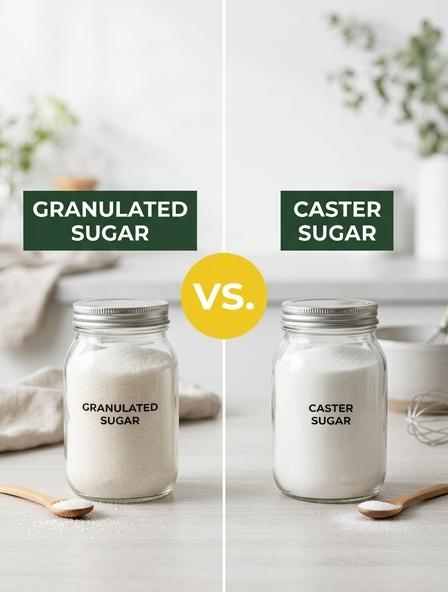
Granulated and Caster Sugar Texture Differences in Baking
The primary distinction between granulated and caster sugar lies in their crystal size, which significantly impacts the aeration and dissolution processes in baking. Granulated sugar features larger, coarser grains that are slower to dissolve and can leave a gritty texture if not creamed thoroughly. In contrast, caster sugar-often referred to as superfine sugar-has much smaller crystals that incorporate into batters almost instantly.
- Granulated Sugar: Best for bulk sweetness and creating a crisp, crunchy exterior on cookies.
- Caster Sugar: Ideal for delicate structures, providing a light, uniform crumb in sponges.
Because of its rapid solubility, professional pastry chefs prefer using caster sugar when whisking airy meringues or light pavlovas to ensure a flawlessly smooth finish without any lingering grainy crystals.
Dissolving Rates of Granulated vs Caster Sugar in Liquids
The primary difference between granulated and caster sugar lies in their crystal size, which directly impacts their solubility. Caster sugar, often called superfine sugar, features smaller granules that offer a significantly higher surface area-to-volume ratio than the larger crystals found in granulated sugar. This physical property allows liquid molecules to surround and break down the sucrose much faster.
- Granulated Sugar: Best for hot coffee or tea where heat assists the slower melting process of larger crystals.
- Caster Sugar: Essential for cold beverages and delicate batters where rapid, grit-free integration is required.
Because granulated sugar takes longer to break down, using it in cold applications often results in a crunchy, undissolved layer at the bottom of the container. You will prefer the instant solubility of caster sugar when shaking up a chilled mojito or folding sugar into a light, airy meringue to ensure a perfectly smooth texture.
Impact of Granulated and Caster Sugar on Meringue Stability
The choice between granulated and caster sugar fundamentally alters the structural integrity of meringues. Caster sugar is the preferred medium for meringue stability because its fine crystals dissolve rapidly into egg white proteins. This quick dissolution creates a dense, uniform foam that effectively traps air bubbles.
- Caster Sugar: Dissolves almost instantly, resulting in a glossy, stable peak and preventing "weeping" or syneresis.
- Granulated Sugar: Features larger crystals that take longer to melt, often leading to a gritty texture or over-beaten, collapsed egg whites.
While granulated sugar is functional, it requires a gradual addition process to ensure the grains fully incorporate. In contrast, caster sugar minimizes the risk of sugar beads forming on the surface during baking, ensuring a smooth, professional finish.
You will likely choose caster sugar when crafting a delicate Pavlova to ensure a crisp outer shell and a stable, marshmallow-like interior that won't deflate.
Nutritional Profiles and Caloric Content of Both Sweeteners
When comparing granulated and caster sugar, their nutritional values are virtually identical because both are composed of refined sucrose. Since caster sugar is simply granulated sugar ground into smaller crystals, the caloric density remains consistent across both varieties. Neither sweetener provides significant vitamins, minerals, or fiber, acting strictly as a source of simple carbohydrates for quick energy.
- Calories: Approximately 4 calories per gram (16 calories per teaspoon).
- Carbohydrates: Nearly 100% sucrose by weight.
- Nutrients: Zero fat, protein, or significant micronutrients.
Because they are chemically indistinguishable, the choice between them is based entirely on physical texture rather than health benefits or caloric differences. You might prefer caster sugar when whisking light sponges or meringues, as its finer grains dissolve effortlessly to create a smooth, aerated texture without changing the overall nutritional impact of your recipe.
Creaming Efficiency of Granulated and Caster Sugar with Butter
The creaming process relies on sugar crystals acting as abrasives to cut through butter, creating tiny air pockets that provide lift. The efficiency of this mechanical aeration depends largely on the surface area and size of the sugar grains.
- Caster Sugar: Because the crystals are finer, they create a higher density of smaller air bubbles, resulting in a more stable and uniform emulsion.
- Granulated Sugar: The larger, coarser grains provide significant aeration but require longer mixing times to dissolve, often risking an over-beaten or "sandy" batter.
While granulated sugar works for rustic cookies, caster sugar is the preferred choice for achieving the pale, fluffy consistency necessary for professional-grade sponges. Home bakers often reach for caster sugar when whipping up a delicate Victoria sandwich to ensure a light, melt-in-your-mouth crumb without any lingering grittiness.
Caramelization and Browning Effects of Different Sugar Sizes
The crystal size of sugar significantly influences the rate and uniformity of caramelization. Granulated sugar, characterized by larger crystals, requires more thermal energy and time to melt. This slower melting point can lead to uneven browning or localized "hot spots" in delicate confections. In contrast, the fine texture of caster sugar allows for rapid, consistent liquefaction.
- Granulated Sugar: Best for rustic textures; may remain crystalline if the cooking time is too short.
- Caster Sugar: Dissolves almost instantly, ensuring a smooth Maillard reaction and a more homogenous golden hue in sponges and meringues.
Smaller granules integrate more effectively into fats and liquids, which helps prevent the speckled, uneven surface browning often seen in quick-bake recipes. This precision is vital for achieving professional-grade aesthetics in pastry work.
You will appreciate the quick-melting properties of caster sugar when torching a crème brûlée to create a perfectly thin, glass-like amber crust without any lingering grittiness.
Storage Requirements and Shelf Life in Home Pantries
Both granulated and caster sugar are highly shelf-stable due to their low moisture content, which naturally inhibits bacterial growth. To maintain their texture and prevent the formation of hard lumps, both varieties should be stored in airtight containers away from direct sunlight and humidity. While granulated sugar is relatively resilient, the finer crystals of caster sugar are more prone to clumping when exposed to even trace amounts of moisture.
- Airtight Sealing: Prevents moisture absorption and protects against kitchen odors.
- Cool, Dry Location: A dark pantry is ideal to maintain consistent temperature.
- Indefinite Shelf Life: Technically, sugar never expires if kept completely dry.
You might prefer keeping your caster sugar in a dedicated glass canister with a silicone seal to ensure those delicate grains stay free-flowing for the perfect dusting on your morning shortbread.
Cookie Spread Variations Between Granulated and Caster Sugar
The choice between granulated and caster sugar significantly influences the final diameter and texture of your cookies. Granulated sugar, with its larger crystals, creates more air pockets during the creaming process but takes longer to dissolve in the oven. This delay causes the dough to spread further before the structure sets, resulting in a thinner, crispier cookie. In contrast, caster sugar's fine granules dissolve almost instantly, leading to a more stable dough and a uniform, tender bite.
- Granulated Sugar: Encourages greater spread, a coarser crumb, and increased crispness.
- Caster Sugar: Results in controlled spread, a finer texture, and a soft, delicate finish.
Professional bakers often reach for granulated sugar when crafting wide, chewy chocolate chip cookies that require those iconic rippled edges.
Suitability of Granulated and Caster Sugar for Syrups and Glazes
The choice between granulated and caster sugar for syrups and glazes depends primarily on the application of heat and the desired clarity of the final product. Granulated sugar, characterized by larger crystals, is the standard for cooked simple syrups where boiling ensures complete dissolution. However, its coarse texture can lead to unwanted graininess in cold preparations. Caster sugar, being more finely ground, dissolves almost instantly, making it the superior choice for achieving a smooth, uniform consistency.
- Granulated Sugar: Best for boiled syrups, caramel, and preserves where heat facilitates melting.
- Caster Sugar: Ideal for uncooked glazes, cordials, and delicate dessert drizzles.
Home bakers often prefer whisking caster sugar into a quick lemon juice reduction to create a perfectly translucent glaze that sets with a professional, grit-free shimmer on a warm loaf cake.
Cost Comparison and Availability for Daily Kitchen Use
In terms of household economics, granulated sugar is the most cost-effective option. Its widespread production and simple refining process make it available at every grocery store at a low price point. Caster sugar, often labeled as superfine sugar, is typically more expensive and harder to find, frequently localized to the specialty baking sections of larger supermarkets.
- Granulated Sugar: Highly affordable; found in bulk at any convenience or grocery store.
- Caster Sugar: Premium pricing; may require a trip to a specialty retailer or online shop.
While granulated sugar is the practical choice for budget-conscious daily needs, caster sugar is a targeted investment for achieving specific culinary textures. You might save the affordable granulated bags for your standard morning coffee, but reach for the pricier caster sugar when you want to impress guests with a light, airy sponge cake that lacks any sugary grit.
Granulated Sugar vs Caster Sugar source and external links
- Granulated sugar is a highly versatile, multi-purpose sweetener characterized by its medium-sized crystals which are ideal for everyday baking and cooking. Learn more about Granulated Sugar.
- Caster sugar features a superfine consistency that allows it to dissolve quickly, making it the preferred choice for delicate desserts like meringues and light sponges. Learn more about Caster Sugar.