
Granulated Sugar vs Cane Sugar : The Differences in Refining Processes, Culinary Performance, and Nutritional Profiles
Refining Processes and Culinary Performance
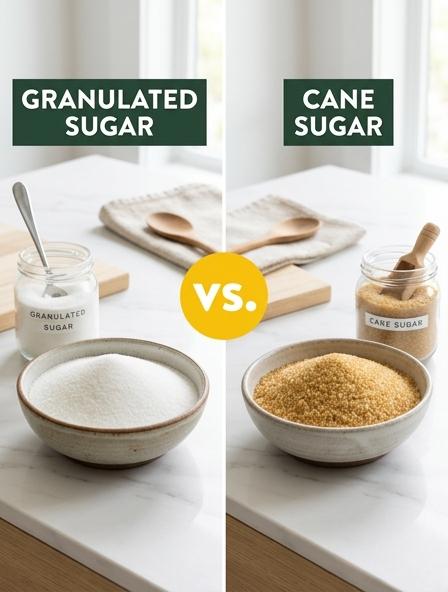
The primary distinction between granulated and cane sugar lies in their botanical source and refining methods. Standard granulated sugar is frequently a blend of sugar beets and sugarcane, processed to achieve a neutral, white crystal through extensive filtration. Pure cane sugar, however, is derived exclusively from sugarcane stalks. While both are chemically identical sucrose, the refining process for cane sugar often involves fewer synthetic decoloring agents, which some culinary experts believe preserves a more consistent flavor profile.
In terms of performance, these sugars are generally interchangeable, yet they behave differently under specific conditions:
- Caramelization: Cane sugar is often preferred for its reliable melting point and golden browning.
- Solubility: Beet-derived granulated sugar may dissolve slightly faster in cold mixtures due to crystal structure.
- Structure: Professional bakers often cite cane sugar as superior for delicate meringues and sponges.
You will appreciate the specific crystalline structure of pure cane sugar when crafting a brittle toffee or a silk-smooth caramel, where consistent heat response is vital for success.
Texture Variations in Creamed Mixtures
When creaming butter and sugar, the physical structure of the crystals dictates the aeration and final crumb of your bake. While often used interchangeably, standard granulated sugar and pure cane sugar can produce subtle differences in the air-cell structure of the fat-sugar emulsion.
- Granulated Sugar: Often sourced from beets, these highly processed, uniform crystals dissolve quickly, leading to a consistent, tight crumb.
- Cane Sugar: Typically features slightly larger, more irregular crystals that are highly effective at "cutting" into the butter to create stable air pockets.
The friction generated during the creaming process is vital for mechanical leavening. If the crystals are too fine, the mixture may lack the necessary volume; if they are too coarse, the sugar may not fully dissolve, leading to a speckled crust. Professional bakers often prefer the robust crystal structure of cane sugar when they want to achieve that classic, lofty rise in a pound cake that enthusiasts crave for its airy yet substantial bite.
Browning and Heat Response in Desserts
While granulated sugar and cane sugar are both primarily sucrose, their performance under heat varies due to trace minerals and processing methods. Cane sugar often contains microscopic amounts of molasses, which facilitates a more rapid Maillard reaction. This results in a deeper golden color and a more complex, toasted flavor profile during caramelization.
Standard granulated sugar, typically sourced from sugar beets, is highly refined and has a slightly higher melting point. This can lead to a more neutral sweetness but requires careful monitoring to avoid scorching. The structural differences become most apparent in high-heat applications:
- Cane Sugar: Achieves a rich amber hue and complex aromas quickly.
- Granulated Sugar: Offers a clean, consistent sweetness with a higher resistance to early browning.
You might choose pure cane sugar when craft-baking a batch of chewy ginger molasses cookies to ensure a rich, dark finish and a deep caramelized crust that people crave.
Sourcing and Sustainability of Sweetener Types
The distinction between granulated sugar and cane sugar lies primarily in their botanical origins. While "granulated sugar" is a generic term that often refers to sucrose extracted from either sugar beets or sugarcane, labeled "cane sugar" comes exclusively from the Saccharum officinarum plant.
- Sugarcane: Perennial grass grown in tropical climates like Brazil and India; it requires significant water but produces high yields per acre.
- Sugar Beets: Root crops grown in temperate regions like the American Midwest; they are often used in crop rotation to maintain soil health and generally require less irrigation.
Environmentally, sugar beets often have a lower carbon footprint due to localized production in Europe and North America, reducing transport emissions. Conversely, many cane producers are shifting toward "bonsucro" certification to ensure ethical labor and biodiversity protection.
Professional pastry chefs often insist on pure cane sugar when crafting delicate caramel sauces, as they find it resists crystallization better than beet-derived alternatives.
Moisture Retention and Shelf Life in Breads
In bread making, sugar functions as a powerful humectant, meaning it naturally attracts and binds water molecules. While standard granulated sugar (often sourced from beets) provides essential sweetness and food for yeast, many bakers favor cane sugar for its superior moisture-retention properties.
- Cane Sugar: Its molecular structure is highly effective at locking in hydration, which significantly delays starch retrogradation-the primary cause of bread going stale.
- Granulated Beet Sugar: While highly consistent, it may result in a slightly faster drying crumb in enriched doughs compared to its cane counterpart.
By effectively holding onto liquid, cane sugar ensures that the bread's internal crumb remains supple and elastic for a longer duration. Professional bakers often reach for cane sugar when crafting artisan brioche to ensure that every slice remains incredibly soft and moist, even several days after leaving the oven.
Solubility in Cold and Hot Liquids
Solubility is primarily driven by temperature. In hot liquids like coffee or tea, high kinetic energy breaks down the sucrose molecules in both granulated and cane sugar almost instantly. However, in cold liquids, the process is significantly slower. While chemically identical, standard white granulated sugar often features a finer, more uniform crystal size than raw cane sugar. This increased surface area typically allows granulated sugar to dissolve slightly faster in iced beverages compared to the coarser grains found in many cane sugar varieties.
| Liquid Temperature | Dissolving Behavior |
|---|---|
| Hot (Coffee/Tea) | Rapidly integrates; minimal stirring needed. |
| Cold (Iced Water/Soda) | Slower dissolution; requires vigorous agitation. |
You will appreciate the quick-dissolving nature of fine granulated sugar when stirring a cold glass of homemade lemonade on a humid afternoon.
Flavor Neutrality and Molasses Content
The distinction between standard granulated sugar and cane sugar centers on their source and refinement. Granulated sugar is frequently a blend of sugar beets and sugarcane. Because beet sugar is processed to reach 99.9% sucrose, it offers total flavor neutrality, making it a "blank slate" for sensitive recipes.
Cane sugar, while also highly refined, is often perceived as having a slightly more complex profile due to trace minerals and residual molasses. Key differences include:
- Beet-derived Granulated Sugar: Completely odorless and neutral; ideal for high-heat technical baking.
- Cane Sugar: Derived solely from sugarcane; often favored for its perceived "rounded" sweetness.
You might reach for pure cane sugar when simmering a delicate fruit reduction or whisking a classic French meringue to ensure a nuanced sweetness that complements the natural ingredients without adding any metallic aftertaste.
Structural Integrity of Whipped Foams
The stability of meringues and mousses depends on how sugar interacts with protein structures. While both granulated sugar and cane sugar provide sweetness, their crystal size significantly affects the dissolution rate crucial for foam reinforcement. Fine granulated sugar dissolves rapidly, increasing the viscosity of the liquid surrounding air bubbles to prevent structural collapse.
- Dissolution Speed: Finer granules integrate faster, creating a cohesive syrup that supports air cells.
- Weight Distribution: Large, undissolved crystals in coarser cane sugar can physically weigh down and deflate delicate protein bonds.
- Moisture Retention: Properly dissolved sugar prevents "weeping" or drainage in whipped toppings.
If the crystals are too large, the foam may become grainy or lose volume before it reaches the oven. You will notice a significant difference in height and glossiness when using a fine-grain granulated sugar for your Sunday morning soufflés to ensure the peaks stay perfectly upright.
Nutritional Comparisons of Refined Crystals
When analyzing granulated sugar versus cane sugar, the nutritional profiles are virtually identical. Both substances consist of pure sucrose, providing approximately 16 calories per teaspoon. While "granulated sugar" is a generic term that often includes sugar derived from beets, cane sugar specifically denotes its origin from the sugarcane plant. From a metabolic standpoint, the body processes these refined crystals the same way, as the purification process removes all fiber, proteins, and significant micronutrients.
- Caloric Value: 4 calories per gram.
- Chemical Structure: 100% Sucrose.
- Glycemic Index: Approximately 65.
You might prefer the subtle, earthy depth of less-refined cane sugar when seeking a more complex sweetness for your signature homemade simple syrups or rustic berry tarts.
Density Differences and Measurement Accuracy
While often used interchangeably, granulated sugar and cane sugar can exhibit subtle differences in density due to crystal size. Standard granulated sugar-frequently derived from beets-tends to have smaller, highly uniform crystals. In contrast, minimally processed cane sugar often possesses larger, more irregular grains that do not settle as tightly in a measuring cup.
- Crystal Size: Smaller grains result in higher bulk density and less air.
- Weight vs. Volume: A cup of fine granulated sugar typically weighs more than a cup of coarse cane sugar.
- Moisture Content: Cane sugar may retain trace molasses, slightly affecting its weight and clumping behavior.
To ensure consistent results in technical recipes like macarons or soufflés, professionals recommend measuring by weight rather than volume. You will likely notice a significant improvement in your pastry texture when you switch from scoop-measuring to using a digital scale for your cane sugar.
Granulated Sugar vs Cane Sugar source and external links
- Granulated sugar is a highly refined, multipurpose sweetener that has been processed to remove all natural molasses. Learn more about Granulated Sugar.
- Cane sugar is a sweetener produced specifically from the juice of sugarcane plants, often retaining a slightly more floral profile than beet-derived sugars. Read more about Cane Sugar.