
Granulated Sugar vs Brown Sugar: The Differences in Baking Performance, Flavor Profiles, and Chemical Functionality.
Influence on Texture and Moisture in Baking
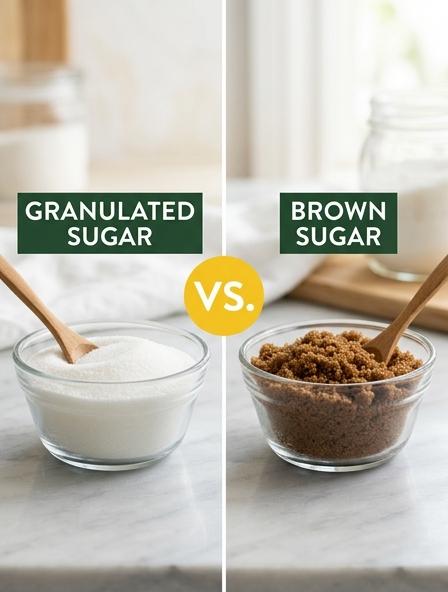
The choice between granulated and brown sugar fundamentally alters a baked good's structural integrity. Granulated sugar is pure sucrose, which promotes aeration during the creaming process and yields a crisp, light texture as moisture evaporates during baking. In contrast, brown sugar contains molasses, making it highly hygroscopic. This chemical property allows it to bind water molecules effectively, ensuring the final product remains moist and soft over time.
| Sugar Type | Primary Texture Impact |
|---|---|
| Granulated Sugar | Crisp, airy, and firm snap |
| Brown Sugar | Chewy, dense, and moist crumb |
Professional bakers often use a precise 50/50 blend in chocolate chip cookies to satisfy those who crave a perfectly caramelized, crunchy rim paired with a tender, fudge-like center.
Development of Flavor and Richness
The primary distinction in flavor development between granulated and brown sugar lies in the presence of molasses. Granulated sugar is highly refined, offering a clean, neutral sweetness that allows primary ingredients like fruit or vanilla to shine without interference. Conversely, brown sugar introduces a complex profile characterized by deep caramel and toffee-like undertones.
- Granulated Sugar: Provides a sharp, simple sweetness and a crisp, light texture.
- Brown Sugar: Delivers moisture and a robust, earthy richness due to its residual molasses content.
The chemical interaction during baking also differs; brown sugar's natural acidity reacts with leavening agents to produce a deeper color and a moister crumb. Professional bakers often reach for dark brown sugar when crafting chewy ginger snaps or thick barbecue sauces to achieve that signature smoky depth and fudgy consistency that people love in classic comfort foods.
Differences in Surface Browning and Heat Response
Granulated and brown sugars react uniquely to heat due to their chemical makeup. Granulated sugar is pure sucrose, which undergoes caramelization at high temperatures, resulting in a crisp, golden-brown finish and a neutral sweetness. Conversely, brown sugar contains molasses, which introduces moisture and invert sugars like glucose and fructose.
These components accelerate the Maillard reaction, leading to deeper browning and a complex, toffee-like flavor profile. Because brown sugar is acidic and hygroscopic, it retains more moisture during the baking process compared to the dry, crystalline structure of white sugar.
- Granulated Sugar: Best for a clean snap and light aeration.
- Brown Sugar: Ideal for dense, moist textures and rapid surface coloring.
You might choose to use brown sugar when baking thick chocolate chip cookies to ensure a rich, chewy center and a beautifully bronzed exterior that everyone finds irresistible.
Impact on Dough Stability and Spread
The choice between granulated and brown sugar fundamentally alters cookie geometry and structural integrity. Granulated sugar promotes dough spread; as the crystals melt during baking, they temporarily liquefy the mixture, resulting in a thinner, flatter, and crispier result. Conversely, brown sugar enhances dough stability. The molasses content is slightly acidic, which reacts with leavening agents like baking soda to jumpstart the rising process, allowing the protein structure to set more quickly.
- Granulated Sugar: Encourages a wider spread and a brittle, crunchy texture.
- Brown Sugar: Limits spread, producing a puffier, softer, and more humid crumb.
Professional bakers aiming for a thick, "soft-batch" chocolate chip cookie often increase the proportion of dark brown sugar to ensure the dough holds its height while maintaining a dense, fudge-like center.
Shelf Life and Clumping Tendencies
The primary difference in storage longevity and texture between granulated and brown sugar lies in their moisture content. White granulated sugar is nearly 100% sucrose, making it chemically stable with an indefinite shelf life if kept in a cool, dry environment. Conversely, brown sugar contains molasses, which introduces essential moisture but also makes it susceptible to hardening over time.
- Granulated Sugar: Highly resistant to clumping unless exposed to direct liquid or extreme humidity.
- Brown Sugar: Prone to turning into a solid, brick-like mass when air exposure causes the moisture in the molasses to evaporate.
To maintain the perfect texture for weekend baking, many enthusiasts place a damp terracotta disc or a fresh marshmallow inside their brown sugar canister to ensure it remains soft and ready for measuring into a batch of chewy cookies.
Comparison of Mineral Content and Calories
When comparing granulated sugar and brown sugar, the nutritional differences are minimal despite their distinct appearances. Both consist primarily of sucrose and provide nearly identical energy levels. The primary distinction lies in the molasses content found in brown sugar, which contributes a tiny amount of micronutrients that are absent in highly refined white sugar.
| Nutrient (per 100g) | Granulated Sugar | Brown Sugar |
|---|---|---|
| Calories | 387 kcal | 380 kcal |
| Calcium | 1 mg | 83 mg |
| Potassium | 2 mg | 133 mg |
| Iron | 0.01 mg | 0.71 mg |
While the mineral boost is negligible for health, many home bakers specifically choose brown sugar to achieve a soft, chewy texture in classic chocolate chip cookies, whereas granulated sugar is the go-to for a clean sweetness and crisp finish in meringues.
Reaction with Baking Soda and Volume
The primary chemical distinction between granulated and brown sugar is acidity. While granulated sugar is pH-neutral, brown sugar contains molasses, which is naturally acidic. This acidity is a critical catalyst when a recipe utilizes baking soda, a leavening base. When these two components react, they release carbon dioxide gas, which significantly increases the volume of the dough.
- Granulated Sugar: Lacks the acid to activate baking soda; relies primarily on mechanical aeration during creaming for lift.
- Brown Sugar: Triggers a chemical leavening reaction, resulting in a higher rise and a softer, chewier texture.
Because brown sugar reacts so effectively with leavening agents, it often produces a thicker, more aerated structure compared to the flatter, crispier results of white sugar. This interaction is essential for controlling the final spread and height of your baked goods.
You will prefer using brown sugar when baking thick, soft-batch chocolate chip cookies that require a moist, pillowy lift rather than a thin, brittle snap.
Performance During the Creaming Method
The choice between granulated and brown sugar fundamentally alters the aeration and texture of baked goods during the creaming process. Granulated sugar features sharp, uniform crystals that mechanically slice through butter, creating stable air pockets essential for a light, airy rise. In contrast, brown sugar contains molasses, which adds moisture and acidity but reduces the sharpness of the crystals.
- Granulated Sugar: Enhances volume and produces a crisp, delicate crumb.
- Brown Sugar: Creates a denser, moister structure with a characteristic chewy finish.
While white sugar excels at building structural height, the hygroscopic nature of brown sugar ensures a soft, tender bite that resists drying out. This chemical difference means granulated sugar creates more "lift," while brown sugar promotes "spread" and moisture retention. You might prefer granulated sugar for a tall, light sponge cake, whereas brown sugar is the ideal choice for a soft-batch chocolate chip cookie that stays chewy for days.
Visual Finish and Texture of Glazes
The choice between granulated and brown sugar fundamentally dictates the aesthetic and mouthfeel of a glaze. Granulated sugar dissolves to create a high-shine, translucent finish that often cures into a crisp, glass-like shell. Conversely, the molasses in brown sugar provides an opaque, amber-toned appearance with a softer, more viscous texture.
- Granulated Sugar: Delivers a professional, reflective sheen and a firm, smooth set.
- Brown Sugar: Offers a rustic, matte look with a tacky, syrupy consistency that remains moist.
Texture also varies significantly; granulated glazes provide a clean snap, while brown sugar glazes offer a chewy, indulgent pull. Pastry chefs choose a granulated sugar glaze for a crystal-clear coating on fruit galettes, whereas home bakers love a thick brown sugar glaze for creating that signature sticky topping on warm pecan rolls.
Retention of Softness in Finished Goods
The choice between granulated and brown sugar fundamentally alters the shelf life and texture of baked items. Brown sugar's superiority in retaining softness stems from its molasses content, which acts as a powerful humectant. This hygroscopic nature allows the sugar to pull moisture from the air and lock it into the food matrix.
- Granulated Sugar: Best for a crisp, snappy finish and light browning as moisture evaporates.
- Brown Sugar: Ideal for a moist, fudgy, and chewy consistency due to its liquid film.
While white sugar encourages a brittle structure through crystallization, the invert sugars in molasses keep the finished product pliable. This chemical property prevents baked goods from drying out or becoming overly hard during storage. You will notice the distinct benefit of brown sugar when baking a batch of thick chocolate chip cookies that stay perfectly tender and chewy for days in your kitchen container.
Granulated Sugar vs Brown Sugar source and external links
- Granulated sugar is a highly refined multipurpose sweetener characterized by its fine crystals and ability to dissolve easily in various recipes.
- Brown sugar is a sucrose sugar product with a distinctive brown color and moist texture due to the presence of molasses.