
Ghee vs Butter : Are They The Same? Smoke Points, Lactose Content, and Baking Performance
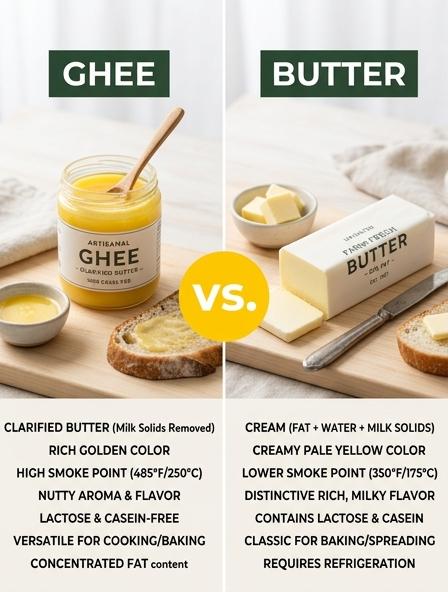
Thermal Stability and Smoke Point Variations for Sautéing
Thermal stability is the primary differentiator when choosing between ghee and butter for stovetop cooking. Standard butter contains water and milk solids, which begin to oxidize and burn at a relatively low temperature. In contrast, ghee is clarified to remove these solids, resulting in a pure fat that withstands significantly higher heat without breaking down.
| Fat Type | Approximate Smoke Point | Best Use Case |
|---|---|---|
| Butter | 350°F (175°C) | Low-heat sautéing |
| Ghee | 450°F (232°C) | High-heat searing |
Reaching for ghee ensures a cleaner flavor profile during high-temperature applications, as it prevents the acrid taste associated with scorched proteins. Home cooks often prefer using ghee when pan-searing a thick ribeye steak to achieve a golden-brown crust without the kitchen filling with smoke.
Digestive Impact and Lactose Content in Culinary Fats
When comparing ghee and butter, the primary difference lies in the presence of milk solids. Butter contains water, proteins, and sugars that can be difficult for some to process. Ghee, or clarified butter, is simmered until the water evaporates and the solids are strained out, leaving behind pure fat. This distinction is vital for gut health optimization.
- Lactose and Casein: Ghee is virtually free of these components, making it a safer choice for those with mild dairy intolerances.
- Butyric Acid: Ghee contains butyrate, a short-chain fatty acid known for supporting gut lining health and reducing inflammation.
- Bioavailability: The absence of solids allows for easier fat-soluble vitamin absorption without triggering digestive distress.
Fitness enthusiasts often prefer adding a spoonful of ghee to their morning coffee to gain sustained energy and a rich flavor profile while avoiding the bloating typically associated with traditional dairy products.
Aroma and Flavor Profiles for Savory Home Cooking
Understanding the sensory differences between ghee and butter is essential for mastering savory dishes. While both originate from dairy, their flavor impacts vary significantly due to the clarification process.
- Butter: Offers a sweet, creamy, and milky profile. Its milk solids provide a rich mouthfeel but can burn quickly at high temperatures.
- Ghee: Delivers an intense, nutty, and toasted aroma. Because the milk solids are removed during simmering, it provides a clarified depth that enhances spices without scorching.
In savory applications, butter excels in low-heat pan sauces, whereas ghee is the superior choice for high-heat roasting or searing. Many home chefs love whisking a cold pat of butter into a red wine reduction for a velvety, glossed finish, while reaching for a spoonful of ghee when tempering cumin seeds or searing a ribeye steak to achieve a perfect, nutty crust.
Nutritional Comparison of Fat Soluble Vitamins and Acids
While both fats originate from dairy, the clarification process used to create ghee removes water and milk solids, concentrating its nutrient density. Consequently, ghee typically provides a more significant source of fat-soluble vitamins per serving compared to standard butter. Both substances are prized for their unique fatty acid profiles, particularly their content of short-chain and medium-chain triglycerides.
| Nutrient | Primary Health Benefit |
|---|---|
| Vitamin A, E, & K | Supports immune function, skin health, and bone density. |
| Butyric Acid | Promotes gut health and reduces internal inflammation. |
| CLA | Linked to improved body composition and heart health. |
You might prefer whisking a teaspoon of ghee into your morning coffee for a concentrated dose of butyric acid and sustained energy without the lactose found in traditional butter.
Pantry Storage Durability and Spoilage Resistance
When comparing storage durability, ghee is the superior choice for shelf stability. The clarification process removes water and milk solids-the primary triggers for spoilage and bacterial growth. This makes ghee exceptionally resistant to oxidation and rancidity compared to standard butter.
The following factors highlight their storage differences:
- Ghee: Moisture-free and shelf-stable for 6–12 months in a cool, dark pantry.
- Butter: Contains water and proteins, requiring refrigeration to prevent spoilage within weeks.
While butter must stay chilled to maintain its integrity, ghee's lack of perishable components allows it to thrive at room temperature. You will love having a jar of ghee within arm's reach on your kitchen counter, ready for sautéing or spreading without the hassle of softening hard, refrigerated butter.
Influence on Flakiness and Texture in Baking Applications
The structural difference between ghee and butter stems primarily from moisture content. Butter contains approximately 15-20% water; during the baking process, this water evaporates into steam, which mechanically lifts dough layers to create a signature flaky finish. Ghee, however, is clarified to be nearly 100% milkfat. Without water to generate steam, it cannot produce distinct layers.
Because ghee lacks the milk solids and water found in butter, it coats flour proteins more efficiently, inhibiting gluten development more aggressively. This results in a "short" or sandy crumb rather than a laminated rise.
- Butter: Essential for puff pastries and pie crusts where airy, crisp layers are the priority.
- Ghee: Superior for cookies and traditional sweets where a dense, tender, and melt-in-the-mouth consistency is desired.
You might reach for ghee when baking artisanal shortbread to achieve that concentrated nutty aroma and a delicate, crumbly texture that dissolves instantly on the palate.
Moisture Content and Its Effect on Browning Results
The primary distinction between ghee and butter lies in their water composition. Butter typically contains 16% to 20% water, whereas ghee is pure butterfat with all moisture removed during the clarification process. This structural difference fundamentally changes how they react to heat.
When cooking with butter, the heat must first evaporate the water before the temperature can rise high enough for the Maillard reaction. This often results in steam and splattering. Ghee, being moisture-free, allows for an immediate high-heat sear. Here is how they compare in the pan:
- Butter: Better for "browning" itself (beurre noisette) due to milk solids, but the water content can prevent a crisp exterior on proteins.
- Ghee: Provides a cleaner, faster sear and a higher smoke point, as there is no water to dampen the temperature.
Home cooks love using ghee when searing a thick ribeye steak to achieve that uniform, crusty golden-brown exterior without the splattering mess caused by butter's high water content.
Saturated Fat Levels and Heart Health Considerations
When comparing ghee and butter, the primary difference lies in their lipid concentration. Ghee is produced by simmering butter and removing the water and milk solids, resulting in a product that is nearly 100% fat. This process makes ghee slightly more calorie-dense and higher in saturated fats than its counterpart.
- Butter: Typically contains about 63% saturated fat along with 15% water and milk proteins.
- Ghee: Contains approximately 65-70% saturated fat, with almost no moisture or lactose.
From a heart health perspective, both fats should be consumed in moderation, as high intake of saturated fatty acids can influence LDL cholesterol levels. However, ghee provides unique short-chain fatty acids like butyrate, which supports gut health and may offer anti-inflammatory benefits.
Health-conscious cooks often swap traditional butter for a teaspoon of ghee when searing salmon to achieve a high-heat crisp without burning the milk solids.
Visual Clarity and Color Differences in Finished Meals
The visual impact of ghee versus butter depends largely on the presence of milk solids. Because ghee is clarified, it offers a translucent, liquid-gold appearance that remains clear even after heating. Butter, containing water and proteins, appears opaque and creamy when melted, often creating a cloudy finish in sauces.
- Ghee: Provides a vibrant, high-gloss sheen and a consistent golden hue without residue.
- Butter: Delivers a matte, pale yellow look, but can develop brown or black "specks" as milk solids caramelize or burn.
Ghee is favored for professional plating where a clean, luminous finish is required, as it does not break or separate into visible particles at high temperatures. In contrast, butter is prized for the rustic, toasted aesthetic it provides through the Maillard reaction.
You might prefer the brilliant, glass-like clarity of ghee for drizzling over steamed seafood, whereas the charming, toasted amber flecks of browned butter are exactly what you want atop a stack of artisanal ravioli.
Performance During High Temperature Roasting and Sealing
The primary differentiator between ghee and butter during high-heat cooking is their smoke point. Butter contains water and milk solids, which begin to burn and smoke at approximately 350°F (175°C). This can result in bitter flavors and scorched fats when roasting at high temperatures. In contrast, ghee is clarified to remove those solids, raising its smoke point to a robust 450°F (232°C).
- Ghee: Superior for high-intensity searing and long-duration roasting without breaking down.
- Butter: Prone to burning; best reserved for low-heat basting or finishing dishes.
Because ghee lacks moisture, it encourages a faster Maillard reaction, allowing for a crisp, even seal on proteins. This thermal stability ensures that the fat remains chemically intact, preserving both nutritional value and flavor profile throughout the cooking process.
You will find ghee indispensable when searing a thick-cut ribeye in a cast-iron skillet to achieve a perfect, mahogany-brown crust without the acrid smell of burnt milk solids.
Ghee vs Butter source and external links