
Garden Strawberry vs Blueberry : The Differences in Nutritional Profiles, Baking Performance, and Glycemic Impact
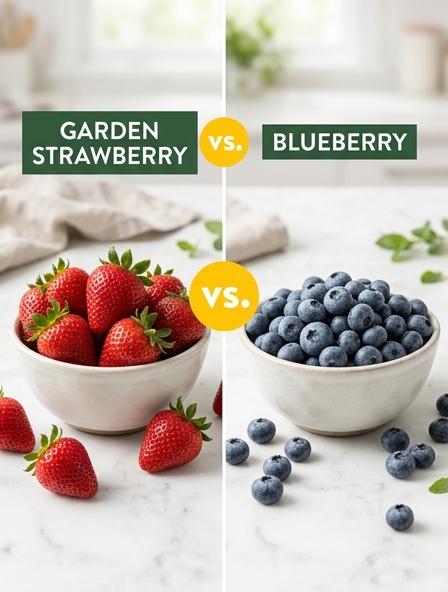
Garden Strawberry and Blueberry Nutritional Profiles
Comparing garden strawberries and blueberries reveals distinct health benefits. While both are low-calorie superfoods, their micronutrient compositions differ significantly. Strawberries are renowned for their exceptional Vitamin C content, often surpassing oranges per serving, which supports collagen production and immune health. Conversely, blueberries are celebrated for their high concentration of anthocyanins-powerful antioxidants that aid cognitive function and cardiovascular wellness.
| Nutrient Focus | Garden Strawberry | Blueberry |
|---|---|---|
| Key Vitamin | Vitamin C (Very High) | Vitamin K (High) |
| Antioxidant Type | Ellagitannins | Anthocyanins |
| Fiber Content | 2g per 100g | 2.4g per 100g |
You might prefer layering sliced strawberries over morning yogurt for a metabolic boost or tossing a handful of frozen blueberries into a post-workout smoothie to maximize recovery through their anti-inflammatory properties.
Heat Stability and Baking Performance of Garden Strawberries and Blueberries
Thermal stability differs significantly between these two berries due to their moisture content and structural integrity. Blueberries are highly resilient; their waxy skins encapsulate juice, allowing them to remain whole and provide "bursts" of flavor in high-heat environments. Garden strawberries, however, have a higher water content and lack a protective outer layer, causing them to soften rapidly and bleed color into the surrounding batter.
| Feature | Blueberries | Garden Strawberries |
|---|---|---|
| Structural Integrity | High (remains intact) | Low (breaks down) |
| Moisture Migration | Minimal bleeding | Significant juice release |
Home bakers often prefer folding whole blueberries into muffin batters for a clean aesthetic, while reserving strawberries for rustic galettes where their tendency to collapse creates a delicious, naturally jam-like consistency.
Glycemic Impact of Garden Strawberries and Blueberries
Both garden strawberries and blueberries are recognized as low-glycemic fruits, making them excellent options for maintaining metabolic health. They contain high concentrations of fiber and polyphenols, which effectively slow down the absorption of sugars into the bloodstream. However, when comparing their specific Glycemic Index (GI) values, strawberries generally have a slight edge with a lower score.
| Fruit Type | Glycemic Index (GI) | Glycemic Load (GL) |
|---|---|---|
| Garden Strawberry | Approximately 40 | Low |
| Blueberry | Approximately 53 | Low |
While strawberries rank lower on the scale, blueberries are frequently praised for their anthocyanins, which may enhance insulin sensitivity over time. Many health-conscious individuals prefer topping their morning steel-cut oats with a handful of fresh strawberries to satisfy a sweet craving while ensuring their energy levels remain steady throughout the workday.
Vitamin and Mineral Density in Garden Strawberries and Blueberries
Analyzing the nutritional profiles of garden strawberries and blueberries reveals distinct advantages for each fruit. Strawberries are a powerhouse of Vitamin C, often exceeding the concentration found in citrus fruits, which is essential for collagen production and immune defense. They also provide significant amounts of folate (Vitamin B9), crucial for tissue growth and cell function.
- Strawberries: Superior Vitamin C levels and rich in potassium and folate.
- Blueberries: Exceptional source of Vitamin K and Manganese for bone health.
Blueberries, while lower in Vitamin C, lead in Manganese and Vitamin K density. These micronutrients are vital for bone metabolism and effective blood clotting. While strawberries offer a boost for skin health and immunity, blueberries provide the specific minerals necessary for skeletal strength and metabolic regulation. Fitness enthusiasts often mix both berries into a morning yogurt bowl to secure a comprehensive spectrum of antioxidants and energy-supporting minerals before a long training session.
Moisture Content and Recipe Texture of Garden Strawberries and Blueberries
The moisture content of these berries significantly dictates the final texture of culinary creations. Garden strawberries consist of approximately 91% water, which causes them to soften drastically and release substantial liquid when heated. In contrast, blueberries contain about 84% water and possess a resilient skin that helps them maintain structural integrity during the baking process.
- Garden Strawberries: High hydration leads to a soft, jam-like consistency that integrates into the surrounding dough.
- Blueberries: Lower moisture and protective skins allow them to stay whole, offering distinct "bursts" of juice.
When formulating recipes, strawberries may require additional thickening agents like cornstarch to prevent a soggy crust or runny filling. Home bakers often prefer using whole blueberries in morning pancakes to ensure a clean flip without the batter turning completely purple or becoming overly mushy from excess moisture release.
Antioxidant Comparison of Garden Strawberries and Blueberries
Both garden strawberries and blueberries are nutritional powerhouses packed with phytochemicals that neutralize oxidative stress. While blueberries are often crowned the "superfood" king due to their high anthocyanin content, garden strawberries provide a superior concentration of Vitamin C and specific ellagitannins.
| Nutrient Profile | Garden Strawberry | Blueberry |
|---|---|---|
| Key Antioxidant | Pelargonidin (Anthocyanin) | Malvidin/Delphinidin |
| Vitamin C Content | High (~59mg per 100g) | Moderate (~10mg per 100g) |
| Primary Benefit | Skin & Heart Health | Cognitive & Eye Health |
Blueberries typically rank higher on the ORAC (Oxygen Radical Absorbance Capacity) scale, yet strawberries offer more potent anti-inflammatory properties through their unique phenolic profile. You might prefer tossing a handful of blueberries into your morning smoothie for a cognitive boost during long work hours, or opting for sliced strawberries on your post-workout yogurt to leverage their high Vitamin C for tissue repair.
Dietary Fiber Levels in Garden Strawberries and Blueberries
When comparing the nutritional profiles of garden strawberries and blueberries, dietary fiber serves as a vital indicator of digestive health benefits. Both fruits are excellent low-calorie sources of both soluble and insoluble fiber, which assist in regulating blood sugar and supporting gut motility. While very close in composition, blueberries typically offer a slightly higher fiber density per serving compared to the garden strawberry.
- Garden Strawberries: Contain approximately 2.0 grams of fiber per 100g.
- Blueberries: Contain approximately 2.4 grams of fiber per 100g.
The pectin found in these berries is particularly effective for heart health, making them a staple for those monitoring cholesterol. Many fitness enthusiasts enjoy mixing a handful of both berries into a protein smoothie to create a fiber-dense post-workout meal that promotes long-lasting fullness.
Acidity and pH Balance of Garden Strawberries and Blueberries
Understanding the acidity profiles of garden strawberries and blueberries is essential for both culinary applications and gardening success. While both fruits are classified as acidic, their specific pH ranges and chemical compositions vary.
- Garden Strawberries: Typically range from 3.0 to 3.5 pH, containing high levels of citric acid.
- Blueberries: Generally range from 3.1 to 3.4 pH, often perceived as milder due to their sugar-to-acid ratio.
Beyond the fruit itself, these berries have distinct soil requirements. Blueberries are famously "acid-loving," requiring a low soil pH of 4.5 to 5.5 to thrive, whereas strawberries are more adaptable, preferring a range of 5.5 to 6.5. This acidity influences how the berries react with leavening agents in baking or dairy in desserts. You can pair the sharp, bright tang of strawberries with sweet cream to balance the palate, or use blueberries in muffins where their consistent acidity ensures a reliable rise and tender crumb.
Caloric Density and Weight Management Impact of Garden Strawberries and Blueberries
For individuals focusing on weight management, understanding caloric density is essential. Garden strawberries are among the lowest-calorie fruits available, largely due to their high water content. In contrast, blueberries have a higher concentration of natural sugars and carbohydrates, resulting in a slightly higher caloric profile per serving. However, both fruits provide significant dietary fiber, which is crucial for maintaining satiety and stabilizing blood sugar levels.
| Nutrient (per 100g) | Garden Strawberry | Blueberry |
|---|---|---|
| Energy (Calories) | ~32 kcal | ~57 kcal |
| Total Fiber | 2.0 g | 2.4 g |
While blueberries offer more energy-dense nutrients, strawberries allow for greater volume eating, making them ideal for those monitoring strict caloric limits. Many health-conscious snackers prefer adding a cup of sliced strawberries to their low-fat cottage cheese to create a filling, high-volume snack that satisfies sweet cravings without exceeding daily energy goals.
Cold Storage and Freezing Effects on Garden Strawberries and Blueberries
Temperature management significantly influences the shelf life and texture of garden strawberries and blueberries. Strawberries are highly perishable; their high water content and thin skins make them prone to bruising and mold, typically lasting only 3–5 days in refrigeration. Conversely, blueberries possess a protective waxy "bloom" and sturdier skin, allowing them to remain fresh for up to two weeks.
When freezing these fruits, their physical responses differ:
- Strawberries: Large ice crystals often rupture the delicate cell walls, resulting in a mushy texture upon thawing.
- Blueberries: These berries maintain their structural integrity remarkably well, making them ideal for long-term freezing without losing their signature pop.
For best results, store both unwashed in the coldest part of your fridge. You might love using frozen blueberries as chilled, bite-sized snacks during a summer heatwave, while thawed strawberries are best reserved for blending into smoothies or simmering into a sweet jam.
Garden Strawberry vs Blueberry source and external links
- The garden strawberry is a widely grown hybrid species cultivated globally for its fragrant, juicy, and bright red fruit.
- The blueberry is a nutrient-dense perennial flowering plant that produces bluish or purple berries prized for their high antioxidant levels.