
Fruit on Bottom Yogurt vs Milk : Are They The Same? Baking Texture, Nutritional Content, and Digestive Health
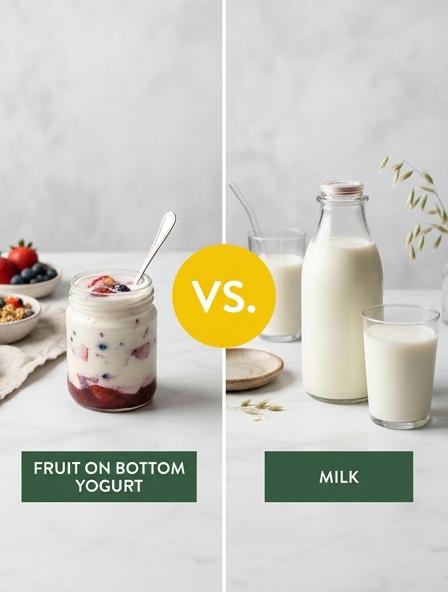
Nutritional Value of Cultured Fruit Bases and Fresh Liquid Dairy
Comparing fruit on bottom yogurt to fresh milk reveals a trade-off between probiotic complexity and hydration efficiency. While both deliver essential calcium, their macronutrient distributions vary based on fermentation and additives.
- Cultured Fruit Bases: These provide active cultures for gut health and fiber from fruit, though they often contain higher sugar and calorie counts due to the fruit preserves.
- Fresh Liquid Dairy: Offers a pure source of protein and vitamin D with a lower glycemic index and no added sweeteners or thickeners.
Yogurt undergoes a fermentation process that breaks down lactose, making it generally easier to digest than liquid milk. However, milk provides a more consistent electrolyte balance for immediate recovery after physical exertion. You might choose the indulgent, layered sweetness of yogurt as a functional dessert alternative, while opting for a cold glass of milk to perfectly balance your morning bowl of oats.
Impact on Texture and Crumb in Baked Goods
Choosing between fruit on bottom yogurt and milk significantly alters the structural integrity of your bake. Milk provides hydration and fat, resulting in a light, airy crumb and a classic, delicate rise. Conversely, yogurt is much thicker and more acidic; this acidity reacts with leavening agents like baking soda to produce a tender, velvety crumb that is noticeably denser and moister than milk-based recipes.
- Milk: Produces a traditional, uniform sponge with a soft, open grain.
- Fruit on Bottom Yogurt: Creates a heavy, "fudgy" texture with added moisture pockets from the fruit preserves.
The protein content in yogurt strengthens the crumb, preventing it from crumbling easily when sliced. Home bakers often reach for a strawberry fruit-on-bottom yogurt when they want to transform a standard muffin recipe into a dense, moist morning treat with hidden bursts of sweetness.
Sugar Content and Health Impact of Morning Meal Choices
Choosing between fruit on bottom yogurt and milk requires a close look at nutritional labels. While both provide essential calcium and vitamin D, their glycemic impact differs significantly. Fruit on bottom yogurts often hide high amounts of added sugars within the fruit preserves, whereas milk contains only naturally occurring lactose.
- Fruit on Bottom Yogurt: Frequently contains 15–25 grams of sugar due to syrups and fruit concentrates.
- Cow's Milk: Typically contains about 12 grams of natural sugar per cup with a lower glycemic index.
Opting for high-sugar breakfast items can lead to insulin spikes and mid-morning energy crashes. Milk offers a more balanced ratio of protein to carbohydrates, supporting longer-lasting satiety compared to sweetened dairy snacks.
You might prefer a refreshing glass of cold milk to complement a high-fiber cereal, or you may choose the convenience of a fruit-on-the-bottom yogurt as a portable, sweet treat for a fast-paced morning commute.
Protein Levels for Growth and Family Nutrition
Protein is the essential building block for childhood development and adult tissue repair. While both milk and fruit on bottom yogurt are staples in family nutrition, their protein density varies due to processing and added ingredients. Standard cow's milk provides a consistent, high-bioavailability protein source, containing all nine essential amino acids. In contrast, fruit on bottom yogurt often has a lower protein-to-calorie ratio because the bottom layer of fruit preserves and syrups adds significant sugar and displacement.
| Dairy Source | Average Protein Content |
|---|---|
| Whole or Skim Milk (1 cup) | 8 grams |
| Fruit on Bottom Yogurt (5.3 oz) | 5 - 7 grams |
A busy parent might pour a quick glass of milk at breakfast to fuel a toddler's morning growth spurt, while tucking a fruit-layered yogurt into a lunchbox as a balanced, protein-rich treat that feels like a dessert.
Digestive Ease and Probiotic Benefits in Home Recipes
When comparing fruit on bottom yogurt to plain milk in home recipes, the primary advantage lies in digestibility. While milk is a versatile liquid, its high lactose content can cause discomfort for sensitive individuals. In contrast, the fermentation process used to create yogurt introduces beneficial probiotics that pre-digest lactose, making it a superior choice for gut health.
- Live Cultures: Homemade yogurt maintains higher concentrations of active bacteria than standard pasteurized milk.
- Lower Glycemic Impact: Using whole fresh fruit instead of refined syrups helps regulate blood sugar levels.
- Bioavailability: The acidic nature of yogurt enhances the absorption of essential minerals like calcium and magnesium.
Imagine reaching into the fridge for a chilled glass-jar parfait layered with fresh macerated berries and creamy yogurt, enjoying a breakfast that feels indulgent yet remains incredibly gentle on your digestive system.
Moisture Control and Batter Consistency
Choosing between fruit on bottom yogurt and milk significantly alters the hydration levels and structural integrity of your bake. While milk provides high fluidity and a light, pourable batter, yogurt offers a thicker viscosity that results in a dense, velvety crumb. Fruit on bottom varieties introduce a unique variable: the syrupy fruit layer adds localized moisture and concentrated sugars, which can create a more tender "jammy" texture compared to the uniform hydration of milk.
- Milk: Best for thin batters, yielding an airy and light structure.
- Fruit Yogurt: Best for heavy batters, providing extra fat, acidity, and moisture pockets.
The lactic acid in yogurt reacts with baking soda more vigorously than milk, helping the thicker batter rise despite its weight. This swap is ideal for bakers looking to prevent a dry finish while adding complex flavor notes through the fruit preserve.
Imagine folding a black cherry fruit-on-bottom yogurt into your muffin mix to achieve a moist, marbled center that standard milk simply cannot replicate.
Caloric Differences in Breakfast Dairy Staples
When comparing the energy density of common breakfast dairy, the disparity between plain milk and fruit-on-bottom yogurt often surprises consumers. While milk provides a consistent caloric profile based solely on fat content, fruit-on-bottom varieties introduce concentrated sugars through fruit preserves and stabilizers. This addition significantly elevates the calorie count per ounce compared to traditional cow's milk.
| Dairy Product | Average Calories |
|---|---|
| Whole Milk (8 oz) | ~150 kcal |
| Skim Milk (8 oz) | ~90 kcal |
| Fruit-on-Bottom Yogurt (6 oz) | ~150-190 kcal |
Many health-conscious parents choose cold milk for morning cereal to keep sugar intake low but reserve the indulgent fruit-on-bottom yogurt as a convenient, dessert-like treat for mid-day school lunches.
Performance with Leavening Agents in Common Recipes
Choosing between fruit-on-bottom yogurt and milk significantly impacts how leavening agents react in your batter. Milk acts as a neutral liquid, typically requiring baking powder to provide lift through heat activation. Conversely, yogurt is naturally acidic. This acidity triggers an immediate chemical reaction when combined with baking soda, producing carbon dioxide bubbles that result in a superior rise and a tender crumb.
- Chemical Reactivity: Yogurt's lactic acid activates baking soda; milk generally does not.
- Structural Density: The fruit preserves and thick proteins in yogurt create a sturdier crumb compared to milk's liquid consistency.
- Moisture Retention: Yogurt's fat and sugar content keep baked goods moist for longer periods.
You will love the extra-tall dome and burst of hidden sweetness in your weekend blueberry muffins when swapping milk for fruit-on-bottom yogurt to maximize the baking soda's lift.
Satiety and Hunger Regulation in Daily Meals
Choosing between fruit on bottom yogurt and milk involves understanding how food form impacts appetite. Research suggests that semi-solid foods like yogurt provide greater satiety than liquid calories. While milk offers high-quality protein, its rapid gastric emptying can lead to hunger returning sooner. In contrast, the viscous texture of yogurt combined with the fiber found in the fruit layer slows digestion and helps regulate glucose response.
- Textural Influence: The act of spooning yogurt triggers cephalic phase responses that signal fullness better than drinking.
- Protein Density: Yogurt often contains concentrated casein and whey, which suppress the hunger hormone ghrelin.
- Digestive Pace: The fruit preparation adds complex carbohydrates that extend energy release.
You may find that reaching for a chilled cup of fruit-layered yogurt during your 3 PM slump provides the necessary chew-factor and fullness to carry you comfortably until a late dinner.
Storage Life and Stability of Prepared Dishes
When comparing the shelf life of prepared meals, fruit on bottom yogurt offers significantly higher stability than fresh milk. The fermentation process used to create yogurt results in a lower pH level, which acts as a natural preservative against microbial growth. In contrast, the neutral pH of milk makes it a volatile medium, leading to faster spoilage and ingredient separation in complex recipes.
- Yogurt-based dishes: Maintain consistency and flavor for 3–5 days due to lactic acid and sugar stabilizers in the fruit layer.
- Milk-based dishes: Often experience curdling or syneresis within 48 hours, especially when combined with acidic fruits.
The high viscosity of the yogurt base also prevents the fruit compote from bleeding prematurely into the dairy, preserving the dish's aesthetic appeal. You will find that prepping a week's worth of breakfast parfaits is far more successful with fruit on bottom yogurt than milk, as it ensures your Friday meal remains as thick and vibrant as Monday's.
Fruit on Bottom Yogurt vs Milk source and external links
- Fruit on bottom yogurt features a layer of sweetened fruit preserves at the base of the container that must be stirred into the creamy yogurt before consumption.
- Milk is a nutrient-rich liquid food produced by the mammary glands of mammals and serves as a primary source of calcium and protein for people around the world.