
Fava Bean vs Kidney Bean: The Differences in Nutritional Profile, Culinary Performance, and Preparation Methods.
Nutritional Profiles and Health Impact
While both legumes are exceptional sources of plant-based protein and dietary fiber, their micronutrient compositions cater to different health goals. Fava beans are uniquely high in L-dopa, a precursor to dopamine, and provide significant amounts of folate. Kidney beans excel in providing iron, potassium, and complex carbohydrates with a low glycemic index.
| Nutrient (per 100g) | Fava Bean | Kidney Bean |
|---|---|---|
| Protein | ~8g | ~9g |
| Fiber | ~5g | ~6g |
Fitness enthusiasts often blend fava beans into dips for a cognitive and protein boost, whereas families typically choose kidney beans to add satisfying bulk and earthy flavor to a traditional slow-cooked Sunday chili.
Culinary Performance in Soups and Stews
Choosing between fava beans and kidney beans significantly alters the texture and mouthfeel of liquid-based dishes. Fava beans are prized for their high starch content and delicate skins; when simmered, they often soften into a buttery, creamy consistency that naturally thickens broths. Conversely, kidney beans are known for their resilience. Their thick outer skins allow them to maintain their structural integrity and "snap" even during prolonged cooking cycles.
- Fava Beans: Best for creating velvety bases and mild, nutty flavor profiles.
- Kidney Beans: Ideal for hearty textures where the bean needs to remain whole and distinct.
While a chef might choose kidney beans to provide a sturdy bite in a spicy beef chili, home cooks often prefer fava beans to achieve the smooth, comforting richness found in a traditional Mediterranean vegetable potage.
Preparation Times and Rehydration Processes
Both fava and kidney beans require meticulous rehydration to ensure a creamy texture and improved digestibility. While kidney beans generally need an 8 to 12-hour soak, dried fava beans often benefit from a longer 24-hour hydration period due to their denser structure and thicker skins.
- Kidney Beans: Must be boiled vigorously for at least 10 minutes to neutralize phytohaemagglutinin before simmering for 60–90 minutes.
- Fava Beans: Often involve the labor-intensive step of removing the tough outer hull after soaking, followed by a 1 to 2-hour simmer until tender.
Proper rehydration significantly reduces active cooking times and helps break down complex sugars that cause digestive discomfort. You might choose kidney beans for a reliable, hearty addition to your Tuesday night chili, while the dedicated process of peeling fava beans is a rewarding culinary ritual for those crafting a traditional, silky Egyptian ful medames.
Protein Density and Dietary Fiber Levels
Comparing fava beans and kidney beans reveals two nutritional giants essential for plant-based wellness. Both legumes offer impressive protein density, but they differ slightly in their macronutrient profiles. Fava beans are often favored for their dense concentration of nutrients and essential amino acids, whereas kidney beans are legendary for their high dietary fiber content, which is vital for digestive health and stabilizing blood sugar levels.
| Nutrient (per 100g boiled) | Fava Beans | Kidney Beans |
|---|---|---|
| Protein | ~8.0g | ~8.7g |
| Dietary Fiber | ~5.4g | ~6.4g |
You can simmer kidney beans in a robust chili for a high-fiber meal that provides lasting satiety, or use tender fava beans in a spring risotto to enjoy a refined texture with a potent protein punch.
Texture Variations and Mouthfeel in Recipes
Understanding the structural differences between fava beans and kidney beans is vital for achieving the desired mouthfeel in your culinary creations. Fava beans are prized for their buttery, creamy interior and delicate texture, especially when double-peeled. In contrast, kidney beans are known for their dense, meaty consistency and resilient skins that maintain their shape even under high heat.
| Feature | Fava Bean | Kidney Bean |
|---|---|---|
| Consistency | Velvety and soft | Firm and starchy |
| Skin Texture | Tough (usually removed) | Thick and chewy |
| Cooked Feel | Melt-in-your-mouth | Substantial bite |
Health-conscious foodies often prefer mashing fava beans into a silky spread for crostini, whereas those preparing a traditional slow-cooked chili rely on kidney beans to provide a hearty, robust texture that stands up to hours of simmering.
Digestive Wellness and Nutrient Absorption
Comparing fava beans and kidney beans reveals distinct benefits for gastrointestinal health. Both legumes are high in dietary fiber, which promotes regularity and supports a healthy microbiome. Kidney beans are notably rich in resistant starch, a prebiotic that fuels beneficial gut bacteria, while fava beans provide a dense concentration of protein and essential minerals.
- Kidney Beans: Contain high levels of complex carbohydrates that stabilize blood sugar during digestion.
- Fava Beans: Offer significant amounts of folate and manganese, crucial for metabolic enzymatic reactions.
To optimize nutrient absorption, it is essential to mitigate anti-nutrients like phytates and lectins. Proper soaking and boiling neutralize these compounds, ensuring minerals like iron and zinc are bioavailable. You might enjoy slow-cooking kidney beans into a hearty vegan chili to experience a sustained release of energy and a comfortable sense of fullness that lasts for hours.
Flavor Characteristics and Dish Compatibility
Understanding the flavor profiles of fava and kidney beans is essential for culinary success. Fava beans possess a delicate, buttery richness with a slightly nutty and grassy finish, making them a staple in lighter, spring-inspired dishes. Kidney beans, however, deliver a much bolder, earthy sweetness and a dense, mealy texture that absorbs heavy spices without losing its structural integrity.
- Fava Beans: Pairs excellently with lemon, garlic, and fresh herbs in Mediterranean mezze or purees.
- Kidney Beans: The preferred choice for protein-heavy recipes like Tex-Mex chili, minestrone, and Indian rajma.
You might choose the elegant creaminess of fava beans for a sophisticated crostini topping, whereas many home cooks prefer the reliable heartiness of kidney beans when slow-cooking a spicy, comforting batch of chili for a weekend gathering.
Caloric Density and Satiety Levels
When comparing fava beans and kidney beans, both are categorized as low-to-moderate caloric density foods that excel in promoting fullness. Fava beans typically provide about 110 calories per 100 grams (cooked), while kidney beans are slightly denser at approximately 127 calories. The high concentrations of dietary fiber and plant-based protein in both legumes trigger satiety hormones, making them ideal for weight management.
| Bean Variety | Calories (per 100g) | Satiety Profile |
|---|---|---|
| Fava Bean | ~110 kcal | High fiber, rich in L-dopa |
| Kidney Bean | ~127 kcal | Complex carbs, high protein |
Health-conscious cooks often prefer adding kidney beans to a slow-cooked evening chili to ensure they stay satisfied until morning, whereas others enjoy fava beans in a light afternoon salad to maintain steady energy levels without feeling heavy.
Structural Integrity During Boiling and Simmering
Fava beans and kidney beans exhibit distinct physical responses when subjected to heat. Kidney beans are celebrated for their exceptional structural integrity; their thick, fibrous skins and dense starch profile allow them to endure long simmering sessions without losing their shape. Conversely, fava beans possess a more delicate composition. While they hold their form initially, prolonged boiling often causes the interior to become buttery or mealy, especially if the outer skins are removed prior to cooking.
- Kidney Beans: High resistance to bursting; maintains a firm, "al dente" bite even in slow cookers.
- Fava Beans: Softens rapidly; ideal for dishes requiring a creamy consistency or quick sautéing.
You might choose kidney beans when simmering a robust, three-alarm chili for several hours to ensure every bean remains intact, whereas fava beans are what you reach for when crafting a silky Mediterranean dip or a tender spring salad.
Starch Content and Glycemic Response
Both fava and kidney beans are powerhouse sources of complex carbohydrates, yet they impact blood glucose levels differently due to their specific starch structures. Fava beans provide a balanced ratio of soluble fiber and starch, resulting in a low glycemic index (GI) that ensures a gradual release of energy. Kidney beans, however, are particularly rich in resistant starch, which escapes digestion in the small intestine. This characteristic gives kidney beans one of the lowest glycemic responses among legumes, making them highly effective for blood sugar management.
| Bean Variety | Glycemic Index (GI) | Primary Starch Benefit |
|---|---|---|
| Fava Bean | Low (~40) | Sustained Energy |
| Kidney Bean | Very Low (~24) | High Resistant Starch |
Fitness enthusiasts often swap white rice for kidney beans in their meal prep to secure a slow-burning fuel source that prevents the mid-afternoon energy crash.
Fava Bean vs Kidney Bean source and external links
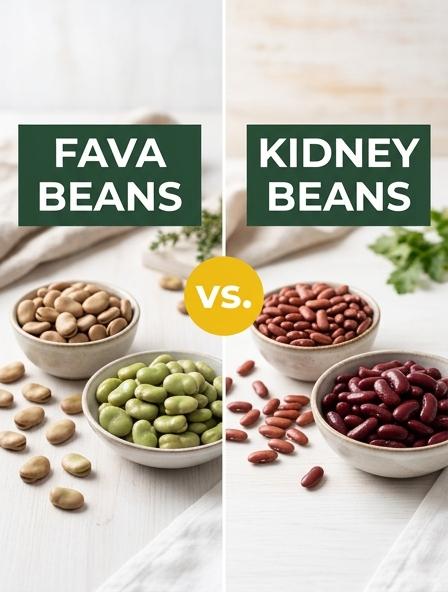
- Fava beans are nutrient-dense legumes widely enjoyed for their buttery texture and high protein content.
- Kidney beans are a versatile staple in many cuisines, characterized by their reddish-brown color and distinct kidney shape.