
Fava Bean vs Garbanzo : Are They The Same? Nutritional Density, Culinary Performance, and Digestive Health
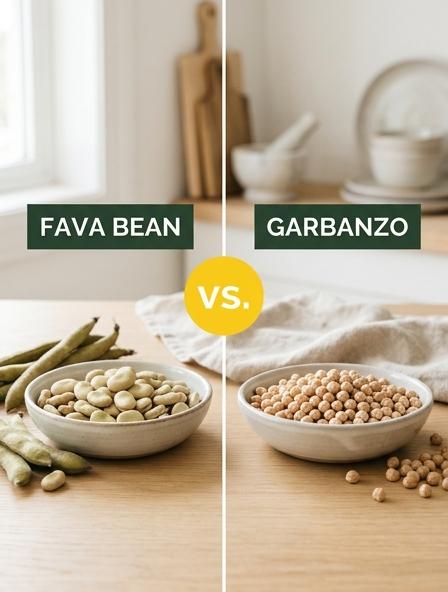
Nutritional Density and Caloric Content Comparison of Fava Beans and Garbanzo
Comparing fava beans and garbanzo beans (chickpeas) reveals distinct nutritional advantages for different dietary goals. Fava beans are generally lower in calories, providing roughly 110 calories per 100-gram cooked serving, making them ideal for weight management. In contrast, garbanzo beans are more energy-dense, offering about 164 calories for the same portion.
Both legumes are powerhouses of plant-based protein and essential minerals, as shown below:
- Protein: Both provide approximately 8-9g per serving.
- Fiber: Garbanzos lead with 8g, whereas fava beans offer about 5g.
- Micronutrients: Fava beans are exceptionally high in folate, while garbanzos are rich in manganese and phosphorus.
Home chefs often reach for fava beans to create a light, nutrient-dense spring succotash, while busy professionals prefer the sustained energy and satiety of garbanzo beans in a hearty Mediterranean grain bowl.
Texture and Creaminess Variations of Fava Beans and Garbanzo in Stews
When simmering in stews, fava beans and garbanzo beans offer contrasting structural profiles. Fava beans, particularly when peeled, have a tendency to break down and melt into the liquid. This release of starch results in a buttery, velvety creaminess that naturally thickens the broth, creating a rich mouthfeel. In contrast, garbanzo beans (chickpeas) are celebrated for their resilience; they maintain a firm, "al dente" bite and keep their spherical shape even after prolonged cooking.
- Fava Beans: Best for thick, cohesive textures and creamy consistency.
- Garbanzo Beans: Best for providing a nutty, individual chew and structural contrast.
A home cook might choose fava beans to achieve the smooth, porridge-like depth of a traditional Egyptian Ful Medames, whereas someone preparing a rustic Mediterranean vegetable stew would prefer garbanzo beans for their satisfying, hearty bite that stands up to heavy spices.
Flavor Profiles and Culinary Performance of Fava Beans versus Garbanzo
Fava beans and garbanzo beans (chickpeas) offer distinct sensory experiences and structural roles in the kitchen. Favas are celebrated for their rich, buttery, and slightly grassy flavor, complemented by a creamy interior that melts when cooked. In contrast, garbanzos provide a mild, nutty taste and a firm, starchy consistency that maintains its shape even under high heat.
- Fava Beans: Earthy and delicate; ideal for velvety purees, spring risottos, and sautés.
- Garbanzo Beans: Nutty and robust; the essential base for hummus, falafel, and hearty stews.
While fava beans often require double-peeling to reveal their vibrant green color and tender texture, garbanzos are prized for their convenience and versatility in both hot and cold preparations. You might choose mashed fava beans seasoned with lemon and mint for a sophisticated crostini topping, whereas chickpeas are your go-to for adding a satisfying, protein-rich crunch to a Mediterranean power bowl.
Protein and Fiber Disparities Between Fava Beans and Garbanzo
While both legumes are nutritional powerhouses, fava beans typically hold a slight edge in macronutrient density. Per serving, fava beans offer a higher protein concentration, often reaching 26 grams per 100g of dry weight, compared to the 19 grams found in garbanzo beans (chickpeas). Fiber content also varies; fava beans are exceptionally rich in insoluble fiber, whereas garbanzo beans provide a balanced mix of soluble and insoluble fibers that support heart health and digestion.
- Fava Beans: Superior plant-based protein source for muscle maintenance and recovery.
- Garbanzo Beans: Excellent fiber-to-calorie ratio, ideal for managing blood sugar levels.
Despite these disparities, both beans are essential for a plant-forward diet. Fitness enthusiasts often prefer fava beans in a post-workout salad for the extra protein boost, while foodies love using garbanzos to achieve that perfectly smooth, fiber-rich texture in a traditional Mediterranean hummus.
Digestive Health Impact and Fiber Quality of Fava Beans and Garbanzo
Both legumes are exceptional sources of dietary fiber, crucial for maintaining a healthy gut microbiome and stable blood sugar levels. Fava beans offer a slightly higher concentration of fiber per serving, primarily composed of resistant starch and soluble fibers that aid in cholesterol management. Garbanzo beans, or chickpeas, are rich in raffinose, a prebiotic fiber that specifically feeds beneficial Bifidobacteria in the colon.
- Fava Beans: Support long-term satiety and provide a dense source of prebiotic resistant starch.
- Garbanzo Beans: Excel in promoting bowel regularity through high insoluble fiber content.
While both improve digestive transit, fava beans are often noted for their complex fermentable sugars, which may require a gradual introduction for those with sensitive stomachs. Conversely, the fiber in garbanzo beans is frequently cited for its role in weight management and appetite control.
You might prefer blending fava beans into a creamy spread for a high-fiber breakfast boost, or tossing garbanzos into your meal-prep bowls to ensure a smooth-running digestive system throughout a hectic work week.
Heat Resistance and Structural Integrity of Fava Beans and Garbanzo
Understanding the thermal properties of these legumes is essential for achieving the desired culinary texture. Garbanzo beans exhibit remarkable structural integrity, remaining firm and intact even after prolonged boiling or high-heat roasting. Fava beans, however, possess a higher moisture content and more delicate starch granules, making them prone to breaking down and losing their shape under intense heat.
- Garbanzo: High heat resistance; maintains a "nutty" bite in pressurized environments or slow cookers.
- Fava Bean: Moderate heat resistance; softens quickly into a buttery consistency ideal for spreads and mashes.
Health-conscious foodies typically choose garbanzos for a crunchy air-fried salad topper, whereas traditional cooks prefer fava beans for simmering into a rich, melt-in-your-mouth Egyptian ful medames.
Performance of Fava Beans and Garbanzo in Purees and Spreads
When comparing fava beans and garbanzos (chickpeas) for purees, the primary differences lie in texture and fat content. Garbanzo beans are the traditional foundation for hummus, offering a dense, nutty, and slightly grainy consistency that holds its shape well. In contrast, fava beans-especially when peeled-yield a significantly creamier, more buttery mouthfeel with a delicate, earthy flavor.
- Garbanzo: Provides a robust, starchy structure that emulsifies efficiently with tahini and oils.
- Fava Bean: Offers a smoother, velvet-like finish often preferred for refined Mediterranean dips like Egyptian Ful Medames.
While chickpeas provide the classic "bite" many associate with legume spreads, fava beans excel in lighter, whipped applications. The choice often comes down to whether you desire the hearty, iconic grit of a traditional dip or the sophisticated silkiness of a gourmet bean mash.
Home cooks often prefer a vibrant, chilled fava bean puree topped with mint and lemon as a refreshing alternative to heavy hummus during summer garden parties.
Vitamin and Mineral Concentrations in Fava Beans versus Garbanzo
Comparing the micronutrient density of fava beans and garbanzo beans (chickpeas) reveals exceptional nutritional profiles for both legumes. Fava beans are powerhouse sources of folate (Vitamin B9) and manganese, typically offering higher concentrations per serving than chickpeas. They also excel in providing non-heme iron and magnesium, which are essential for energy metabolism. Garbanzo beans, while slightly lower in folate, serve as an excellent source of Vitamin B6, zinc, and phosphorus.
| Nutrient | Fava Bean Strength | Garbanzo Strength |
|---|---|---|
| Folate (B9) | Superior | High |
| Iron | Higher | Moderate |
| Zinc | Moderate | Higher |
You might reach for buttery fava beans to significantly boost your daily folate and iron intake in a fresh spring salad, or opt for garbanzo beans when you need a zinc-rich base for a satisfying, creamy hummus.
Cooking Time and Water Absorption of Fava Beans and Garbanzo
Preparation requirements for fava beans and garbanzo beans (chickpeas) vary based on their density and skin thickness. Both legumes require significant water absorption, typically doubling in size after an overnight soak. While soaking is optional for some smaller pulses, it is essential for these two to ensure even softening and to reduce cooking time.
| Legume Type | Soaking Duration | Average Cooking Time |
|---|---|---|
| Dried Fava Beans | 8–12 hours | 45–90 minutes |
| Garbanzo Beans | 10–24 hours | 60–120 minutes |
Fresh fava beans are the outlier, requiring only a few minutes of blanching to slip off their waxy skins. Busy home cooks often choose the garbanzo bean for its ability to hold its firm shape in meal-prepped salads, whereas enthusiasts love the fava bean for creating the ultra-creamy, buttery consistency found in traditional Egyptian Ful Medames.
Satiety and Caloric Impact of Fava Beans and Garbanzo for Family Meals
When planning nutrient-dense family dinners, choosing between fava beans and garbanzo beans (chickpeas) often comes down to caloric density and how long they keep everyone full. Both legumes are rich in protein and dietary fiber, which are the primary drivers of satiety. Fava beans typically offer a slightly lower caloric count per serving, making them excellent for volume-heavy meals.
| Feature (Per 100g Cooked) | Fava Beans | Garbanzo Beans |
|---|---|---|
| Approx. Calories | 110 kcal | 164 kcal |
| Protein Content | 8g | 9g |
| Fiber Content | 5g | 8g |
Garbanzo beans have a higher fat and calorie profile but provide a dense, nutty texture that prevents late-night snacking. Busy parents often prefer batch-cooking a garbanzo bean curry on Sunday nights to ensure the family stays energized and satisfied throughout a demanding school and work week.
Fava Bean vs Garbanzo source and external links
- Fava beans are nutrient-dense legumes widely used in Mediterranean and Middle Eastern cuisines.
- Garbanzo beans are versatile legumes that serve as the primary ingredient in popular dishes like hummus and falafel.