
Extra Virgin Olive Oil vs Regular Olive Oil : Are They The Same? Smoke Points, Health Benefits, and Culinary Uses.
Smoke Point Variations for Sautéing and Deep Frying
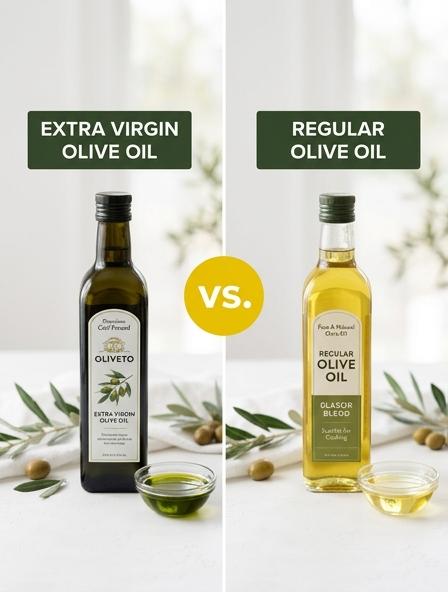
The primary technical difference between Extra Virgin Olive Oil (EVOO) and regular olive oil lies in their heat stability. Because EVOO is unrefined, it contains volatile compounds and free fatty acids that begin to smoke at lower temperatures, typically between 325°F and 375°F. Regular olive oil undergoes refining processes that remove these organic impurities, resulting in a significantly higher smoke point.
| Oil Variety | Average Smoke Point | Recommended Use |
|---|---|---|
| Extra Virgin | 325°F – 375°F | Light sautéing, finishing, dressings |
| Regular/Light | 410°F – 465°F | Deep frying, roasting, high-heat searing |
Professional chefs typically reserve their premium EVOO for finishing a dish, while reaching for regular olive oil when deep-frying calamari to ensure a crisp, neutral-tasting crust without the risk of acrid smoke.
Nutritional Content and Antioxidant Levels in Cold Pressed Varieties
Extra Virgin Olive Oil (EVOO) maintains a superior nutritional profile compared to regular olive oil because it is extracted using cold-pressing techniques. This mechanical process avoids high heat and chemical solvents, preserving the bioactive compounds naturally present in the olives. While regular olive oil is often refined, losing most of its micronutrients, EVOO remains a rich source of health-promoting elements.
- Polyphenols: Powerful antioxidants that combat oxidative stress and inflammation.
- Vitamin E: A fat-soluble nutrient that supports immune function and skin health.
- Oleocanthal: A unique phenolic compound with natural anti-inflammatory properties.
The presence of these antioxidants not only enhances the oil's stability but also provides significant cardiovascular benefits. You might prefer drizzling a high-phenolic cold-pressed oil over roasted vegetables or a fresh Mediterranean salad to maximize both the peppery flavor profile and the medicinal properties of your meal.
Flavor Impact on Fresh Dressings and Neutral Heat Applications
The culinary distinction between extra virgin olive oil (EVOO) and regular olive oil centers on flavor intensity and thermal stability. EVOO is unrefined, preserving the pungent, peppery, and fruity notes of the olives, making it the superior choice for raw applications.
| Oil Type | Flavor Profile | Ideal Application |
|---|---|---|
| Extra Virgin | Robust & Complex | Salad dressings and dipping |
| Regular Olive Oil | Neutral & Mellow | High-heat frying and baking |
While EVOO acts as a vibrant seasoning, regular olive oil undergoes refining to remove strong aromatic compounds. This process results in a neutral oil that facilitates heat transfer without altering the dish's intended taste. Many food enthusiasts love drizzling a bold, grassy EVOO over heirloom tomatoes, yet rely on the subtlety of light olive oil when searing delicate white fish.
Processing Differences Between Refined and Unrefined Grades
The fundamental distinction between olive oil grades lies in the extraction method. Extra Virgin Olive Oil (EVOO) is unrefined, meaning it is extracted solely through mechanical cold-pressing. This process ensures the oil retains its natural polyphenols, antioxidants, and rich flavor profiles without the interference of heat or chemicals.
Conversely, regular olive oil (often labeled as "Pure" or "Light") undergoes a refining process. This involves heat, filtration, or chemical solvents to remove impurities, neutralize high acidity, and eliminate odors. The resulting oil is often blended with a small percentage of virgin oil to restore some character.
- Unrefined: Cold-pressed, high nutrient density, low smoke point.
- Refined: Heat-treated, neutral flavor, high smoke point.
Home chefs typically reserve the robust, cold-pressed extra virgin for finishing a fresh garden salad, while reaching for the refined regular olive oil for high-heat pan-searing to ensure a clean, neutral taste.
Cost Efficiency for Daily Home Meal Preparation
Choosing between Extra Virgin Olive Oil (EVOO) and regular olive oil requires balancing culinary performance with your grocery budget. EVOO typically carries a higher price tag due to its chemical-free extraction and high antioxidant content, making it a "finishing oil" for many. In contrast, regular olive oil-a blend of refined and virgin oils-is more affordable and offers a neutral flavor profile that won't overwhelm everyday dishes.
- Extra Virgin: Best for raw dressings, dips, and low-heat sautéing where flavor is key.
- Regular Olive Oil: Most cost-effective for high-volume tasks like roasting, deep-frying, or baking.
Smart home cooks often save money by using a budget-friendly refined oil for high-heat pan-searing while reserving a single bottle of premium EVOO to drizzle over a finished Caprese salad or warm sourdough bread.
Extraction Methods and Impact on Heart Health Benefits
The primary distinction between Extra Virgin Olive Oil (EVOO) and regular olive oil lies in the refining process. EVOO is "cold-pressed," meaning it is extracted using purely mechanical methods without exposure to high heat or chemical solvents. This preserves the oil's natural polyphenols and antioxidants, which are vital for cardiovascular protection.
- Extra Virgin: Unrefined, retaining high levels of Vitamin E and oleocanthal.
- Regular Olive Oil: A blend of refined and virgin oils, treated with heat to remove impurities.
Research indicates that the high antioxidant profile of EVOO is significantly more effective at reducing systemic inflammation and improving arterial function than refined alternatives. While regular olive oil offers a higher smoke point for cooking, it lacks the nutrient density required to maximize heart-healthy benefits.
You might prefer drizzling a robust, cold-pressed extra virgin olive oil over a fresh Greek salad to enjoy its full peppery flavor and heart-protective bioactive compounds.
Aroma and Color Distinctions in Traditional Kitchen Use
The sensory profiles of Extra Virgin Olive Oil (EVOO) and regular olive oil differ significantly due to their processing methods. EVOO, being cold-pressed and unrefined, retains its natural chlorophyll and carotenoids, resulting in a distinct green to golden-yellow hue. Its aroma is complex and pungent, often featuring notes of fresh grass, herbs, or pepper. In contrast, regular olive oil is a blend of refined and virgin oils, presenting a pale, translucent yellow color and a much more neutral, subtle scent.
- Extra Virgin: Vibrant emerald color, robust peppery aroma, rich in antioxidants.
- Regular: Light golden tint, mild fragrance, processed for flavor neutrality.
Home cooks typically reach for a bottle of emerald-green extra virgin olive oil to drizzle over a fresh Caprese salad, allowing its grassy fragrance to enhance the creamy mozzarella and ripe tomatoes.
Heat Stability During Oven Roasting and High Temperature Grilling
Choosing the right oil for high-heat applications depends on oxidative stability and smoke points. While regular olive oil undergoes refining to achieve a higher smoke point (approximately 465°F), Extra Virgin Olive Oil (EVOO) remains surprisingly resilient. Despite a lower smoke point (375°F–410°F), EVOO is packed with polyphenols and antioxidants that protect the oil from breaking down into harmful compounds during the roasting process.
- Regular Olive Oil: Best for high-temperature searing and prolonged grilling where a neutral flavor is desired.
- Extra Virgin Olive Oil: Superior for oven roasting up to 400°F, as its natural compounds prevent rapid oxidation.
For searing meats on a gas grill, regular olive oil provides the necessary thermal ceiling, whereas EVOO shines in the oven. You will love the way Extra Virgin Olive Oil maintains its nutritional integrity and peppery notes when tossed with root vegetables for a slow, golden-brown roast.
Storage Stability and Oxidation Rates in Different Oil Types
The shelf life and oxidative stability of olive oil depend largely on its processing method. Extra Virgin Olive Oil (EVOO) contains high concentrations of polyphenols and tocopherols. These natural antioxidants act as a built-in defense system, significantly slowing down the oxidation process compared to refined oils. Regular olive oil, being a blend of refined and virgin oils, lacks this robust antioxidant shield, making it more susceptible to oxidative stress over time.
- Extra Virgin Olive Oil: High oxidative stability due to minimal processing and high phenolic content.
- Regular Olive Oil: Lower stability; refining removes natural protectors, increasing the rate of rancidity.
- Oxidation Triggers: Both types degrade rapidly when exposed to direct sunlight, heat, or oxygen.
Home cooks prefer keeping their premium EVOO in a cool, dark cupboard to ensure that when they drizzle it over toasted sourdough, the peppery notes and heart-healthy compounds remain perfectly intact.
Performance Differences for Finishing Drizzles and Searing
The primary distinction between extra virgin olive oil (EVOO) and regular olive oil lies in their heat stability and flavor retention. EVOO is unrefined, preserving volatile compounds that provide a peppery, robust finish but result in a lower smoke point of approximately 375°F. Conversely, regular olive oil-often a blend of refined and virgin oils-boasts a higher smoke point of up to 465°F, making it the superior choice for high-heat techniques like searing and sautéing.
- Extra Virgin: High in polyphenols; best for cold dressings and finishing.
- Regular Olive Oil: Neutral flavor profile; maintains structural integrity during browning.
- Searing: High-heat stability prevents the oil from breaking down into acrid compounds.
You might use regular olive oil to achieve a perfect crust on a steak in a hot skillet, then finish the dish with a generous drizzle of EVOO to capture those bright, fruity notes that vanish under high heat.
Extra Virgin Olive Oil vs Regular Olive Oil source and external links
- Extra Virgin Olive Oil is the highest quality olive oil available, extracted solely by mechanical means without the use of heat or chemicals.
- Often labeled simply as "Olive Oil," Regular Olive Oil is a blend of refined and virgin oils that offers a more neutral flavor and a higher smoke point for cooking.