
Extra Virgin Olive Oil vs Fish Oil: Are They The Same? Nutrient Bioavailability, Anti-Inflammatory Properties, and Heart Wellness.
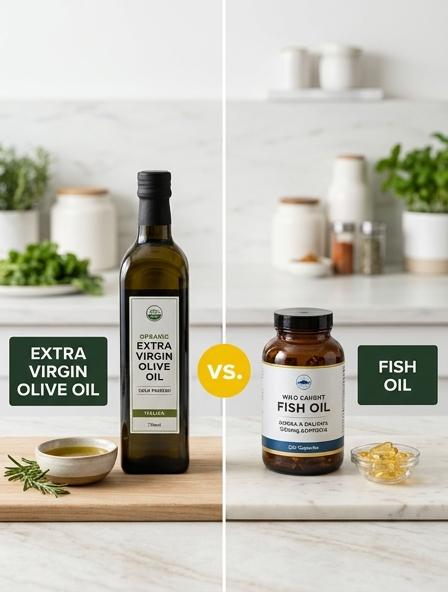
Culinary Heat Stability and Smoke Point Variations
Understanding the thermal resilience of fats is essential for both flavor and health. Extra Virgin Olive Oil (EVOO) is characterized by its high monounsaturated fat content and protective antioxidants, which provide a smoke point ranging from 375°F to 405°F. This stability makes it suitable for most home cooking methods, including sautéing and roasting. In contrast, fish oil consists of highly sensitive polyunsaturated omega-3s (EPA and DHA) that oxidize and turn rancid almost immediately when exposed to heat.
| Oil Type | Smoke Point | Primary Culinary Use |
|---|---|---|
| Extra Virgin Olive Oil | Medium-High | Sautéing, Roasting, Finishing |
| Fish Oil | Very Low | Raw Supplementation Only |
You might rely on extra virgin olive oil to pan-sear a salmon fillet to perfection, while reserving fish oil strictly for cold supplementation to ensure you receive its delicate nutritional benefits without the risk of heat damage.
Nutrient Bioavailability in Daily Family Meals
Optimizing nutrient bioavailability is essential for ensuring your family receives the full health benefits of dietary fats. Extra Virgin Olive Oil (EVOO) and fish oil function differently within the digestive process. EVOO, rich in monounsaturated fats and polyphenols, acts as a primary carrier that enhances the absorption of fat-soluble vitamins (A, D, E, and K) found in colorful vegetables.
In contrast, the Omega-3 fatty acids (EPA and DHA) in fish oil require a fat-rich environment to stimulate gallbladder activity and pancreatic enzymes for effective breakdown. Balancing these lipids in daily cooking ensures higher systemic uptake and metabolic efficiency.
- EVOO: Best for raw applications and medium-heat cooking to preserve antioxidant integrity.
- Fish Oil: Best consumed with a meal to prevent oxidation and maximize EPA/DHA integration.
You can boost your family's heart health by drizzling EVOO over roasted sweet potatoes to unlock beta-carotene while serving salmon to provide the natural fats needed for optimal fish oil synthesis.
Distinctive Aroma and Palate Impact on Finished Dishes
The sensory experience of Extra Virgin Olive Oil (EVOO) versus fish oil represents the divide between gourmet enhancement and medicinal supplementation. EVOO is prized for its aromatic complexity, featuring notes of freshly cut grass, green tomato, and a characteristic peppery finish. Fish oil, however, carries a heavy marine scent that is often perceived as "fishy" or metallic, making it unsuitable as a flavor-building ingredient in most recipes.
| Feature | Extra Virgin Olive Oil | Fish Oil |
|---|---|---|
| Aroma Profile | Fruity, Floral, or Herbaceous | Briny, Pungent, Marine |
| Culinary Use | Finishing Oil & Sautéing | Dietary Capsules |
Food enthusiasts love drizzling a robust, peppery EVOO over a warm bowl of minestrone to brighten the earthy vegetables, a culinary luxury that cannot be achieved with the pungent profile of fish oil.
Sourcing Sustainability and Environmental Footprint of Kitchen Staples
When evaluating the environmental impact of extra virgin olive oil (EVOO) versus fish oil, the primary distinction lies in terrestrial land management versus marine ecosystem health. EVOO is a plant-based lipid sourced from olive groves that often act as carbon sinks, helping to sequester greenhouse gases.
- Extra Virgin Olive Oil: Generally features a lower carbon footprint and promotes soil conservation through regenerative farming.
- Fish Oil: Relies on industrial fishing of forage fish, which can lead to overfishing, bycatch, and the disruption of aquatic food chains.
The processing of fish oil also requires significant energy for molecular distillation and cold-chain logistics to prevent rancidity. Environmentally conscious consumers often prefer drizzling high-quality EVOO over a Mediterranean grain bowl as a sustainable way to enjoy heart-healthy fats while minimizing their impact on fragile ocean biodiversity.
Anti Inflammatory Properties and Heart Wellness Contributions
Both extra virgin olive oil (EVOO) and fish oil serve as nutritional cornerstones for cardiovascular health, though they function through different biological pathways. EVOO is rich in oleocanthal, a polyphenol that mimics the anti-inflammatory mechanism of ibuprofen, helping to protect the lining of blood vessels. Conversely, fish oil provides direct sources of EPA and DHA, which are critical for reducing triglycerides and maintaining healthy heart rhythms.
- EVOO: High in monounsaturated fats; reduces oxidative stress and lowers "bad" LDL cholesterol.
- Fish Oil: Rich in Omega-3 polyunsaturated fats; essential for blood pressure regulation and joint health.
While EVOO offers a defense against arterial plaque, fish oil excels at thinning the blood and reducing systemic inflammation. Imagine starting your day by drizzling fresh EVOO over avocado toast and pairing it with a fish oil supplement to give your heart a complete spectrum of protective healthy fats.
Practical Storage Longevity and Rancidity Prevention
Extra Virgin Olive Oil (EVOO) and Fish Oil differ significantly in their chemical stability and storage requirements. EVOO is naturally enriched with polyphenols that act as preservatives, whereas Fish Oil contains highly unstable polyunsaturated fatty acids that oxidize rapidly when exposed to air, light, or heat.
- Extra Virgin Olive Oil: Best stored in a cool, dark pantry. It generally remains fresh for 3–6 months after opening.
- Fish Oil: Highly sensitive; liquid forms and even some capsules require refrigeration to maintain integrity, typically lasting only 30–90 days once opened.
To maximize longevity, both oils should be kept in opaque glass bottles with airtight caps. While EVOO thrives at room temperature, the delicate omega-3 bonds in fish oil break down quickly, leading to a sour smell and diminished health benefits.
You might enjoy keeping your EVOO bottle within reach on a shaded countertop for daily salad drizzles, but always remember to tuck your fish oil supplements into the refrigerator to prevent that unpleasant rancid aftertaste.
Emulsification Properties in Sauces and Homemade Dressings
The culinary utility of Extra Virgin Olive Oil (EVOO) far surpasses fish oil due to its superior emulsification properties. EVOO contains natural minor polar compounds and monounsaturated fatty acids that act as stabilizing agents. When whisked with an acid, like lemon juice or vinegar, it creates a cohesive, creamy texture essential for high-quality sauces.
- EVOO: Rich in polyphenols that help bind oil and water-based liquids together.
- Fish Oil: Lacks the structural integrity for emulsification and carries a volatile aromatic profile that breaks down easily.
Because fish oil remains chemically unstable and pungent, it is exclusively used as a nutritional supplement rather than a functional ingredient. Home chefs prefer slowly drizzling a robust EVOO into a mortar with garlic and basil to watch it transform into a thick, vibrant pesto that clings perfectly to pasta.
Vitamin Content and Antioxidant Power for Household Health
Understanding the nutritional distinction between Extra Virgin Olive Oil (EVOO) and fish oil is essential for a balanced household diet. EVOO is a plant-based powerhouse, rich in Vitamin E and Vitamin K, and packed with polyphenols that serve as potent antioxidants to combat oxidative stress. Conversely, fish oil is the premier source of Vitamin D and Omega-3 fatty acids (EPA and DHA), which focus more on cellular health and systemic inflammation than botanical antioxidant protection.
- Extra Virgin Olive Oil: High in Vitamin E, K, and oleocanthal for heart and skin health.
- Fish Oil: High in Vitamin D and Omega-3s for cognitive and immune support.
You might choose to drizzle robust EVOO over a fresh Greek salad to maximize antioxidant absorption, while relying on fish oil capsules as a daily supplement to ensure your family meets their essential fatty acid requirements.
Sautéing Performance and Suitability for High Temperature Methods
When comparing Extra Virgin Olive Oil (EVOO) and fish oil for culinary applications, thermal stability is the primary differentiator. EVOO contains monounsaturated fats and antioxidants that protect its structural integrity during sautéing, whereas fish oil is highly susceptible to heat-induced damage.
| Oil Type | Thermal Stability | Recommended Use |
|---|---|---|
| Extra Virgin Olive Oil | High (Smoke point ~375-405°F) | Sautéing, roasting, and frying |
| Fish Oil | Extremely Low | Cold supplementation only |
The delicate long-chain omega-3s in fish oil oxidize rapidly, producing a rancid taste and harmful free radicals if exposed to stovetop temperatures. You will enjoy the robust, savory crust EVOO creates on a pan-seared salmon fillet, but you should always save the fish oil for a cold, post-meal supplement to preserve its fragile nutrients.
Cost Efficiency and Serving Size Ratios for Regular Use
When evaluating Extra Virgin Olive Oil (EVOO) versus Fish Oil, cost efficiency depends on the delivery method and nutrient concentration. EVOO is typically consumed in larger volumes, with a standard daily serving size of one to two tablespoons (approximately 15–30ml). In contrast, Fish Oil is a highly concentrated supplement, usually requiring only 1,000mg to 3,000mg to meet specific health requirements.
- EVOO: Lower cost per fluid ounce; functions as a versatile culinary staple and healthy caloric source.
- Fish Oil: Higher price point per gram; specifically targeted for EPA and DHA fatty acid density.
While EVOO offers superior value for overall dietary fat intake, Fish Oil remains the more efficient choice for hitting high-potency Omega-3 markers without a significant caloric load. Many health-conscious foodies enjoy drizzling a robust EVOO over roasted vegetables to combine flavor-rich meal prep with cost-effective longevity benefits.
Extra Virgin Olive Oil vs Fish Oil source and external links
- Extra Virgin Olive Oil is a heart-healthy fat extracted through natural pressing methods that retains high levels of beneficial antioxidants and vitamins.
- Fish Oil is a common dietary supplement derived from fatty fish tissues that provides essential omega-3 fatty acids to support brain and cardiovascular health.