
Extra Virgin Olive Oil vs Avocado Oil: Which is Best for High Heat Cooking, Heart Health, and Culinary Versatility?
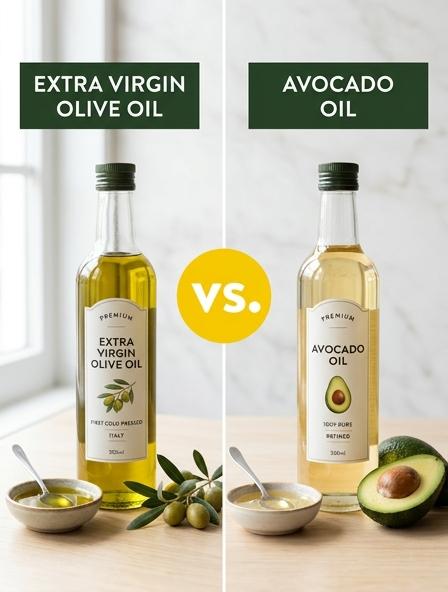
Smoke Point Differences for High Heat Cooking
Understanding the smoke point is crucial for maintaining both flavor and nutritional integrity. The smoke point is the specific temperature at which an oil begins to break down and produce visible smoke, leading to a burnt taste and the release of free radicals. Avocado oil is a high-heat champion, boasting a smoke point of approximately 520°F (271°C), making it one of the most stable plant-based fats available.
- Avocado Oil: ~520°F – Ideal for searing, grilling, and deep-frying.
- Extra Virgin Olive Oil: ~375°F to 410°F – Best for medium-heat sautéing, roasting, and baking.
While Extra Virgin Olive Oil (EVOO) contains polyphenols that offer some thermal protection, its lower threshold means it can degrade during intense stovetop charring. Avocado oil's monounsaturated fat structure remains stable under extreme conditions, ensuring your kitchen stays smoke-free and your food remains healthy.
You might reach for the avocado oil when searing a steak to a perfect crust, but prefer the peppery notes of extra virgin olive oil for a gentle vegetable sauté.
Fatty Acid Composition and Heart Health Impact
Extra virgin olive oil (EVOO) and avocado oil are nutritional powerhouses, primarily composed of heart-healthy monounsaturated fatty acids (MUFAs). Both oils are rich in oleic acid, a compound widely recognized for its ability to reduce systemic inflammation and improve cholesterol markers. While EVOO is celebrated for its dense concentration of bioactive polyphenols, avocado oil offers a comparable lipid profile that supports arterial flexibility.
- Monounsaturated Fats: Help lower LDL (bad) cholesterol while maintaining HDL (good) cholesterol levels.
- Antioxidants: EVOO contains high levels of Vitamin E and phenols that protect against oxidative stress.
- Phytosterols: Found in avocado oil to assist in blocking cholesterol absorption in the gut.
Health-conscious cooks love drizzling robust EVOO over a crisp Mediterranean salad to maximize antioxidant intake, while switching to avocado oil for high-heat searing to keep their heart-healthy fats stable and smoke-free.
Flavor Characteristics for Dressings and Drizzling
Choosing between extra virgin olive oil (EVOO) and avocado oil depends largely on how much flavor you want the oil to contribute to the final dish. Extra virgin olive oil is celebrated for its assertive, complex profile, often featuring notes of freshly cut grass, green fruit, or a peppery finish that tickles the throat. It is a "character" oil that defines the taste of the dressing.
In contrast, avocado oil is the ultimate chameleon. It offers a mild, slightly nutty, and buttery essence that is far more neutral than EVOO. This makes it ideal for emulsions where you want the other ingredients-like herbs or citrus-to remain the focal point without any bitterness.
- EVOO: Best for bold Mediterranean, rustic, and savory profiles.
- Avocado Oil: Best for delicate, creamy, or fruit-forward dressings.
Many food enthusiasts love drizzling a robust, peppery EVOO over a classic Caprese salad to elevate the tomatoes, while others prefer silky avocado oil for a lemon-tahini dressing to ensure the bright acidity isn't masked by heavy olive notes.
Stability and Oxidation Under Stovetop Heat
When evaluating oxidative stability, both oils perform exceptionally well due to their high monounsaturated fat content. Avocado oil is renowned for its high smoke point, reaching up to 520°F, which prevents the oil from breaking down during intense heat. Conversely, Extra Virgin Olive Oil (EVOO) has a lower smoke point (around 375-405°F), yet it exhibits superior resistance to oxidation. This is due to its high concentration of polyphenols and antioxidants, which act as a shield against the formation of harmful polar compounds.
- Avocado Oil: Ideal for high-heat searing and deep-frying without reaching its breaking point.
- Extra Virgin Olive Oil: Highly stable for sautéing and roasting thanks to natural protective nutrients.
Both oils are chemically resilient, though their stovetop applications differ based on the intensity of the flame. You might choose avocado oil for a high-heat steak sear to keep your kitchen smoke-free, while reaching for EVOO during a medium-heat vegetable sauté to infuse the dish with its signature heart-healthy antioxidants.
Vitamin Density and Nutrient Retention
Both Extra Virgin Olive Oil (EVOO) and Avocado Oil are nutrient-dense fats, yet they offer distinct biological benefits. EVOO is specifically celebrated for its high Vitamin K and Vitamin E content, paired with a robust profile of polyphenols that act as natural antioxidants. Avocado Oil provides a comparable amount of Vitamin E but stands out for its concentration of lutein, a carotenoid essential for eye health.
- Extra Virgin Olive Oil: Higher in Vitamin K and phenolic compounds that fight inflammation.
- Avocado Oil: Superior for absorbing fat-soluble vitamins (A, D, E, and K) from other vegetables.
Nutrient retention depends heavily on heat stability. While EVOO's antioxidants protect it during light sautéing, its most delicate compounds are best preserved in cold applications. Avocado Oil's higher smoke point ensures its nutritional integrity remains uncompromised during intense heat. Fitness enthusiasts often drizzle EVOO over a fresh Mediterranean bowl for an antioxidant boost, while using avocado oil for high-heat searing to keep the meal's nutrient profile intact.
Storage Stability and Shelf Life Requirements
Both Extra Virgin Olive Oil (EVOO) and avocado oil are susceptible to oxidation caused by light, heat, and oxygen. EVOO is particularly sensitive due to its chlorophyll content, which acts as a catalyst for photo-oxidation, necessitating dark glass or tin packaging. While both oils are rich in monounsaturated fats, avocado oil typically offers a slightly longer shelf life and higher thermal stability.
- Extra Virgin Olive Oil: Best consumed within 12–18 months of harvest to ensure peak polyphenol levels.
- Avocado Oil: Generally remains stable for up to 24 months if stored in a cool, dark environment.
- Optimal Temperature: Maintain storage between 55°F and 70°F, away from stovetops or windows.
To preserve maximum flavor, many home cooks prefer buying smaller bottles of EVOO frequently, ensuring that every drizzle over a fresh Caprese salad delivers that signature peppery bite.
Searing Performance and Roasting Results
The choice between Extra Virgin Olive Oil (EVOO) and avocado oil depends largely on your intended cooking temperature and flavor goals. Avocado oil is the champion of high-heat techniques, while EVOO excels in flavor-driven roasting applications.
- Avocado Oil: Boasting a smoke point of approximately 520°F, it maintains structural integrity and safety during intense searing and wok-frying.
- Extra Virgin Olive Oil: With a smoke point between 375°F and 405°F, it is ideal for roasting vegetables where a rich, peppery profile is desired.
While avocado oil offers a neutral profile that won't overshadow delicate proteins, EVOO contains robust antioxidants that remain remarkably stable at standard oven temperatures. However, for high-velocity heat, avocado oil prevents the bitter acridity associated with burnt fats. You might reach for avocado oil when searing a thick filet mignon to achieve a perfect golden-brown crust, but you will likely prefer drizzling EVOO over a tray of Mediterranean vegetables for that classic, aromatic finish people love.
Production Methods and Culinary Quality
The distinction between extra virgin olive oil (EVOO) and avocado oil begins with extraction. EVOO is strictly cold-pressed through mechanical means, ensuring the oil retains its biological antioxidants and signature peppery finish. In contrast, avocado oil is pressed from the fleshy pulp of the fruit. While unrefined versions are available, many commercial avocado oils undergo a refinement process to increase heat stability.
- Extra Virgin Olive Oil: Best for raw applications and low-to-medium heat to preserve its complex flavor profile.
- Avocado Oil: Favored for high-heat techniques like searing or roasting due to its neutral taste and high smoke point.
You might prefer drizzling a robust EVOO over a fresh caprese salad to enhance the tomatoes, while reaching for avocado oil when you need to perfectly sear a steak at high temperatures without filling your kitchen with smoke.
Impact on Daily Wellness and Cholesterol
Both Extra Virgin Olive Oil (EVOO) and avocado oil are cornerstone fats for cardiovascular health. They are rich in monounsaturated fatty acids, specifically oleic acid, which helps lower LDL (bad) cholesterol while maintaining protective HDL levels. Integrating these oils into a daily diet supports arterial function and reduces systemic inflammation.
- Extra Virgin Olive Oil: Renowned for high polyphenol counts, providing potent antioxidant protection against oxidative stress.
- Avocado Oil: Offers a high smoke point and significant levels of lutein, a carotenoid essential for eye health and skin repair.
While EVOO is the gold standard for raw applications and longevity, avocado oil excels in high-heat cooking without compromising its chemical integrity. Many health-conscious cooks prefer drizzling a robust, peppery EVOO over a Mediterranean salad for a polyphenol punch, while utilizing neutral avocado oil for searing salmon to ensure a heart-healthy, smoke-free kitchen experience.
Comparison of Baking and Finishing Versatility
Choosing between extra virgin olive oil (EVOO) and avocado oil depends largely on whether you want the oil to be a featured flavor or a silent partner. Avocado oil is celebrated for its high smoke point and neutral profile, making it a superior choice for delicate baking where you want ingredients like vanilla or citrus to lead. In contrast, EVOO brings a peppery, robust complexity perfect for dense chocolate cakes or rustic breads.
For finishing touches, the distinction becomes even clearer:
- Extra Virgin Olive Oil: Enhances raw dishes like salads and carpaccio with earthy, pungent notes.
- Avocado Oil: Provides a buttery, smooth texture to dressings without overpowering subtle ingredients.
You may find that drizzling EVOO over fresh burrata brings a traditional Mediterranean soul to your plate, while using avocado oil in a fruit-based muffin ensures a moist crumb without any lingering savory scent.
Extra Virgin Olive Oil vs Avocado Oil source and external links
- Extra virgin olive oil is a heart-healthy fat extracted from olives through mechanical pressing without the use of heat or chemicals, and you can learn more about Extra Virgin Olive Oil online.
- Known for its high smoke point and rich monounsaturated fats, Avocado Oil is an edible oil pressed from the pulp of the avocado fruit.