
Envy Apples vs Honeycrisp: The Differences in Culinary Performance, Cellular Texture, and Storage Longevity
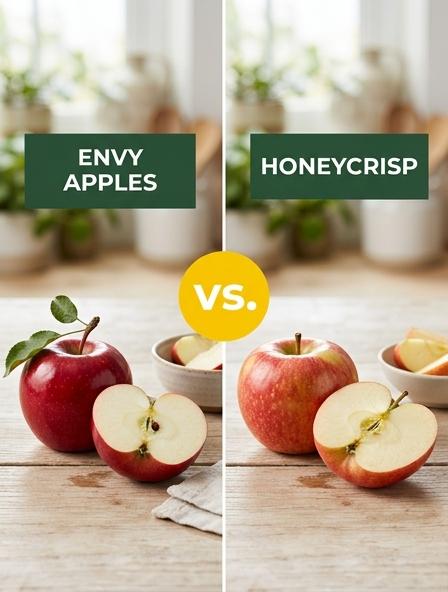
Texture Performance in High Heat Baking
When subjected to high temperatures, the cellular structure of an apple determines whether it retains its bite or dissolves into a puree. Envy apples possess a high-density flesh that maintains exceptional structural integrity, preventing the fruit from turning mushy. In contrast, the large, juice-filled cells of a Honeycrisp apple often collapse under intense heat, leading to a watery consistency in the oven.
| Feature | Envy Apple | Honeycrisp Apple |
|---|---|---|
| Heat Resistance | High (Stays Firm) | Low (Softens Quickly) |
| Moisture Release | Controlled | High/Watery |
Home bakers consistently prefer the Envy apple when crafting a deep-dish rustic galette to ensure every slice showcases distinct, beautifully caramelized layers of fruit that won't weep into the crust.
Browning Resistance in Fresh Fruit Preparations
When comparing Envy and Honeycrisp apples, oxidation rates significantly impact their utility in fresh culinary displays. Envy apples are renowned for their low-browning characteristics, a result of high Vitamin C content that naturally slows the enzymatic reaction when the flesh is exposed to oxygen.
- Envy Apples: Exceptional resistance; slices can remain white for up to 10 hours without additives.
- Honeycrisp Apples: Standard oxidation; typically begins browning within 30 to 60 minutes after cutting.
While Honeycrisp is a fan favorite for its explosive crunch, it often requires an acidulant bath, like lemon juice, to maintain its appearance in salads. Envy apples simplify food styling by staying pristine and bright without extra prep. You will find Envy apples perfect for an elegant afternoon charcuterie board where you need the fruit to look freshly sliced long after your guests have arrived.
Natural Sugar Content and Caramelization Potential
When evaluating Envy versus Honeycrisp, the sugar density significantly impacts both flavor and cooking performance. Envy apples are renowned for their exceptionally high Brix levels, consistently delivering a more concentrated sweetness than the balanced, sweet-tart profile of a Honeycrisp. This elevated sugar content is the catalyst for superior browning during thermal processing.
- Envy Apples: High fructose levels lead to rapid, deep caramelization and a rich, syrupy glaze when heated.
- Honeycrisp Apples: Lower sugar-to-acid ratio results in a lighter caramelization, maintaining a brighter, more acidic finish.
The dense cellular structure of the Envy apple allows these natural sugars to break down into complex, nutty flavors without the fruit losing its physical integrity. While Honeycrisp is a snacking favorite, Envy's chemical composition makes it a powerhouse for gourmet applications.
Home bakers often prefer sautéing Envy slices in a cast-iron skillet because the high natural sugars create a perfect golden-brown crust that pairs beautifully with savory pork chops or cinnamon-dusted tarts.
Nutritional Density and Dietary Benefits for Families
Choosing between Envy and Honeycrisp apples provides families with a nutrient-rich foundation for healthy snacking. Both varieties are excellent sources of dietary fiber, which aids digestion, and Vitamin C, which supports growing immune systems. While Honeycrisp is celebrated for its hydrating, high-water content and refreshing crunch, Envy apples offer a denser texture that provides a concentrated source of energy and phytonutrients.
- Dietary Fiber: Supports gut health and keeps children feeling full longer.
- Antioxidants: Help protect cells and support overall long-term wellness.
- Natural Energy: Low-glycemic carbohydrates provide a steady fuel source for extracurricular activities.
Because Envy apples are naturally resistant to browning, parents love slicing them in the morning for school lunchboxes, ensuring the fruit stays white and appetizing until the afternoon bell rings.
Cellular Structure and Mouthfeel in Cold Salads
The culinary performance of Envy and Honeycrisp apples in cold salads is largely dictated by their unique cellular builds. Honeycrisp apples feature exceptionally large cells that rupture when bitten, creating an "explosive" juiciness. While refreshing, these larger cells can sometimes weep excess moisture when macerated in acidic dressings, potentially thinning out your vinaigrette.
In contrast, Envy apples possess a denser, fine-grained cellular matrix. This structural integrity provides a consistent, heavy crunch that withstands the softening effects of moisture and oils. When evaluating mouthfeel for complex textures, consider these attributes:
- Honeycrisp: High juice release, airy crunch, best for immediate serving.
- Envy: Dense parenchyma, superior pressure resistance, maintains firmness longer.
Imagine preparing a Waldorf salad for a midday picnic; choosing the Envy apple ensures the fruit remains remarkably snappy and bright white even after hours of sitting in a creamy dressing.
Acidic Balance for Savory Entree Pairings
When selecting between Envy and Honeycrisp apples for savory culinary applications, the primary differentiator is the sugar-to-acid ratio. Honeycrisp apples are renowned for their balanced tartness, providing a sharp acidity that cuts through heavy fats and rich proteins. In contrast, Envy apples feature a much lower acid profile and higher Brix (sugar) levels, making them an ideal component for dishes requiring a mellow, sweet contrast without the sour bite.
Understanding their structural response to heat is also essential for recipe development:
- Honeycrisp: High moisture and balanced acid; perfect for fresh salsas or quick-seared garnishes where a juicy pop is required.
- Envy: Low acidity and slow oxidation; stays white longer and maintains a dense crunch when roasted alongside root vegetables.
Home chefs often choose to thin-slice a tart Honeycrisp over a pan-seared pork chop, enjoying how the bright juice cuts through the savory drippings and salt.
Storage Longevity and Retention of Freshness
When comparing the shelf life of Envy versus Honeycrisp apples, Envy typically offers superior longevity. Envy apples are bred for a dense cellular structure, which helps them retain their signature crunch and moisture levels far longer than many heritage varieties. Conversely, Honeycrisp apples are notoriously delicate; they are highly sensitive to temperature fluctuations and can develop "bitter pit" or lose their texture if not stored under precise conditions.
- Envy: High resistance to bruising and a slow oxidation rate that prevents the flesh from browning quickly after slicing.
- Honeycrisp: Thinner skin and a shorter peak freshness window, often requiring immediate refrigeration to maintain turgor pressure.
While Honeycrisp provides an iconic initial snap, Envy remains the more reliable choice for long-term pantry or crisper drawer storage. You will love the Envy apple for meal prepping, as you can slice it in the morning and find it still bright, white, and crisp in your lunch container hours later.
Moisture Levels and Juice Yield for Sauces
When comparing Envy and Honeycrisp for sauces, moisture content significantly dictates the final texture. Honeycrisp apples are renowned for their explosive juiciness, resulting in a high juice yield but a thinner sauce consistency that often requires extra simmering to reduce.
| Apple Variety | Moisture Level | Sauce Consistency |
|---|---|---|
| Honeycrisp | Very High | Light and Syrupy |
| Envy | Moderate | Thick and Velvety |
Conversely, Envy apples possess a denser cellular structure. They release less liquid during the cooking process, creating a naturally concentrated purée without requiring excessive reduction time. Imagine crafting a velvety, spiced apple butter for a family brunch; choosing the Envy apple ensures a rich, spreadable consistency that won't make your warm brioche soggy.
Visual Presentation and Skin Color Preservation
When comparing Envy and Honeycrisp apples, visual longevity is a deciding factor for many consumers. Envy apples are renowned for their striking ruby-red skin and a unique flesh composition that is naturally high in vitamin C. This internal chemistry acts as a barrier against oxidation, allowing the white flesh to remain bright and appetizing for hours after being cut. Conversely, while the Honeycrisp offers a beautiful dappled red and green exterior, its flesh tends to brown much faster once exposed to the air.
- Envy Apples: Exceptional resistance to browning; maintains a "just-sliced" look.
- Honeycrisp Apples: Classic aesthetic but requires acidic treatments like lemon juice to prevent rapid oxidation.
You will prefer the Envy apple when crafting a gourmet charcuterie board or packing a child's lunchbox, as the slices stay pristine and white well into the afternoon.
Yield per Unit and Culinary Efficiency for Meal Planning
When optimizing meal prep, the structural differences between Envy and Honeycrisp apples significantly impact culinary yield. Envy apples are notably denser, offering a higher ratio of flesh to core, whereas Honeycrisp apples feature a larger cellular structure that holds more juice but less solid mass. For efficiency, Envy is the superior choice for pre-cutting because its flesh resists oxidation far longer than the Honeycrisp.
- Envy: High density, slow-browning, holds shape when baked.
- Honeycrisp: High juice content, fast-browning, best for immediate raw consumption.
Using Envy apples allows home cooks to maximize their budget by reducing food waste, as slices remain pristine without the need for acidic treatments. Imagine slicing a batch of Envy apples during your Sunday meal prep and opening your lunch container on Wednesday afternoon to find the pieces as bright, white, and crisp as the moment they were first cut.
Envy Apples vs Honeycrisp source and external links
- Envy apples are a cross between Braeburn and Royal Gala known for their sweet flavor and crisp white flesh that stays fresh longer, as described on the official website for Envy Apples.
- The Honeycrisp apple is a widely popular variety developed at the University of Minnesota that is celebrated for its exceptionally juicy and crunchy texture.