
Envy Apple vs Fuji Apple: Comparing Sweetness Intensity, Texture Stability, and Baking Performance Differences
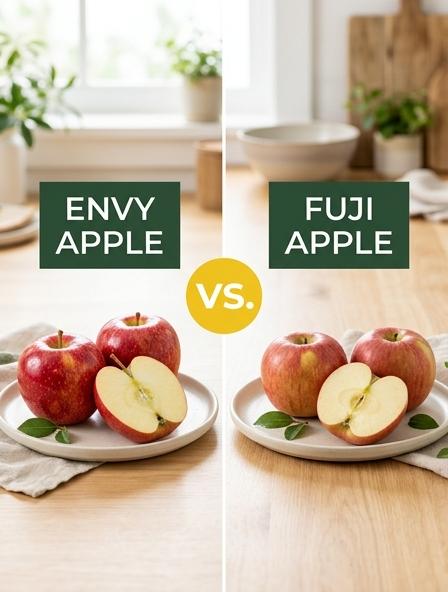
Baking Performance and Heat Resistance
When choosing between Envy and Fuji apples for the oven, their reaction to heat determines the final texture of your dish. Envy apples are specifically bred for high density, meaning they maintain their structural integrity and signature "crunch" even after prolonged baking. They also resist oxidative browning better than most varieties, ensuring a bright, appetizing appearance.
Fuji apples are also heat-tolerant but possess a higher juice-to-fiber ratio. This results in a softer, more succulent consistency once cooked. While they won't disintegrate into mush like a McIntosh, they offer less structural resistance than the Envy.
- Envy: Retains a firm, distinct shape; perfect for tiered pastries.
- Fuji: Becomes tender and juicy; ideal for moist cakes and crumbles.
Imagine pulling a golden-brown galette from the oven where every Envy slice remains perfectly defined and vibrant, providing that professional-grade look that home bakers love.
Browning Speed in Fresh Dishes
When comparing Envy versus Fuji apples for raw preparations, oxidation resistance is the primary differentiator. Envy apples are genetically characterized by a remarkably slow browning speed, largely due to high naturally occurring Vitamin C levels that inhibit enzymatic browning.
- Envy Apples: Stay white for several hours after slicing, maintaining a pristine appearance without citric acid.
- Fuji Apples: Possess a standard oxidation rate, typically showing signs of browning within 20 to 30 minutes of air exposure.
While Fuji apples offer incredible sweetness, their flesh reacts traditionally to oxygen. In contrast, the Envy variety was specifically developed to remain bright, making it the superior choice for aesthetic longevity in salads, bento boxes, and fruit platters.
You will appreciate the Envy apple's resilience when preparing a morning fruit salad for a late afternoon brunch, as the slices stay vibrant and appetizing without any extra prep or lemon juice.
Natural Sugar Levels and Sweetness Intensity
When comparing Envy and Fuji apples, both varieties rank at the top of the scale for Brix levels, which measures natural sugar content. Fuji apples have long been the gold standard for sweetness, characterized by a sugary, honey-like flavor and very low acidity. In contrast, Envy apples-a hybrid of Braeburn and Gala-offer a dense, intense sweetness that is often described as more complex, featuring subtle tropical or floral undertones.
| Feature | Fuji Apple | Envy Apple |
|---|---|---|
| Sugar Profile | Classic honey-sweet | Intense, high-Brix sweetness |
| Flavor Notes | Mild and clean | Aromatic and sophisticated |
While the Fuji is a reliable favorite for those who want a simple sugar rush, many gourmet enthusiasts prefer slicing an Envy apple onto a charcuterie board to pair its floral sweetness with sharp, aged cheddar.
Texture stability in cooked recipes
Choosing between Envy and Fuji apples for baking depends largely on how much structural integrity your recipe requires. Envy apples are celebrated for their dense cellular structure, which provides superior resistance to heat. Unlike many varieties that turn to mush, Envy slices remain firm and distinct, making them a favorite for professional-grade pastry work.
- Envy: Maintains a crisp, "al dente" bite even after prolonged baking; resists collapsing under heavy crusts.
- Fuji: Softens considerably due to higher juice content; better suited for recipes where the fruit should melt into a sauce.
While Fuji apples offer a lovely sweetness, their tendency to weep moisture can lead to a soggy bottom in tarts. Envy's low oxidation rate and physical sturdiness ensure that your finished dish looks as good as it tastes. You will find that Envy is the superior choice when preparing a rustic galette where you want every apple slice to maintain its elegant, defined shape against the golden pastry.
Nutritional Profile and Health Benefits
Both Envy and Fuji apples are nutritional powerhouses, offering high dietary fiber and essential vitamins that support digestive and heart health. While they share similar caloric values, their specific phytonutrient levels vary slightly, providing unique benefits for different dietary needs.
| Nutrient Feature | Envy Apple | Fuji Apple |
|---|---|---|
| Key Antioxidant | High Phenolics | Rich in Quercetin |
| Vitamin C | Very High | Moderate |
| Fiber | ~4g per serving | ~4g per serving |
Envy apples are noted for their high antioxidant stability, which prevents rapid browning and supports immune function. Fuji apples excel in flavonoid concentration, helping to reduce inflammation and manage blood pressure levels naturally. You might reach for a Fuji when you need a high-sugar energy kick before a workout, or slice up an Envy for a child's lunchbox to ensure it stays crisp and white until noon.
Juice Yield for Fresh Use
When comparing Envy and Fuji apples for fresh juicing, both varieties excel due to their dense, crisp cellular structures. However, subtle differences affect the total liquid output and flavor concentration. Fuji apples are renowned for their high water content, often yielding a greater volume of clear, refreshing liquid per fruit.
- Fuji Apple: Exceptionally high moisture levels; ideal for high-volume extraction and light refreshment.
- Envy Apple: Higher sugar concentration (Brix); produces a richer, syrupy juice that naturally resists browning.
In a head-to-head press, the Fuji typically provides more liquid, whereas the Envy offers a more concentrated, gourmet flavor profile. You might prefer the Fuji for a large batch of refreshing morning juice, but you will likely choose the Envy for a premium, naturally sweet cider that maintains its bright color long after pressing.
Skin Thickness and Texture
When comparing the Envy apple to the Fuji, the tactile experience of the skin and flesh differs significantly. Envy apples are celebrated for their thicker, more robust skin, which provides a protective barrier that helps the fruit stay crisp longer. In contrast, the Fuji apple features a much thinner, more delicate skin that is easy to bite through but makes the fruit slightly more prone to bruising. Their internal textures also offer distinct sensations:
- Envy Apple: Possesses a very dense, extra-crunchy flesh that maintains its structure even when sliced.
- Fuji Apple: Offers a crisp, fine-grained, and notably juicy texture that feels lighter on the palate.
You will likely reach for the Envy apple when you want a satisfyingly loud, firm crunch that holds up beautifully in a lunchbox without losing its snappy texture by midday.
Mouthfeel and Crunchiness
The primary distinction between Envy and Fuji apples lies in their structural density. Envy apples are renowned for their incredibly high pressure-test scores, resulting in a heavy, "snappy" mouthfeel that persists even after the fruit is cut. Fuji apples, while certainly crisp, possess a more delicate and fine-grained flesh that offers a refreshing, watery crunch rather than the dense, hard bite of an Envy.
- Envy: Extremely firm, dense cell structure, and long-lasting snap.
- Fuji: Crisp and succulent with a slightly more tender, fine-grained texture.
Professional caterers often prefer Envy apples for elaborate fruit platters because their superior cell walls prevent the flesh from softening, ensuring every guest experiences a loud, fresh crunch even hours after the event begins.
Caloric Density and Dietary Impact
When comparing Envy and Fuji apples, their caloric profiles are remarkably similar, typically ranging from 80 to 100 calories per medium-sized fruit. Both varieties are nutritionally dense, offering a high concentration of natural sugars balanced by essential dietary fiber. While the Fuji is celebrated for its refreshing juice content, the Envy apple is notably denser, which can lead to increased satiety and a lower glycemic response for some individuals.
- Caloric Value: Approximately 52 calories per 100g for both types.
- Fiber: High pectin levels in both aid in digestive health and cholesterol management.
- Micronutrients: Rich in Vitamin C and antioxidants like quercetin.
Health-conscious snackers often pack a sliced Envy apple in their gym bag because its dense flesh stays crisp longer and provides a steady energy release during a strenuous afternoon workout.
Storage longevity and flavor retention
When comparing Envy and Fuji apples, both varieties excel in shelf life, far outperforming softer heirloom types. Envy apples are particularly noted for their high vitamin C content, which provides a natural resistance to oxidation. This means the flesh remains white and crisp long after being cut, maintaining its sweet, aromatic profile without turning mealy.
Fuji apples are the gold standard for long-term refrigeration. Their dense cellular structure and high sugar concentration allow them to stay firm and juicy for several months. While Envy leads in "fresh-cut" longevity, Fuji wins for winter-long storage stability.
| Feature | Envy Apple | Fuji Apple |
|---|---|---|
| Browning Speed | Very Slow | Moderate |
| Cold Storage | Excellent | Superior |
Busy parents often choose Envy apples for school lunches because the slices stay bright, white, and crunchy until the afternoon bell rings.
Envy Apple vs Fuji Apple source and external links
- The Envy apple is a trademarked hybrid variety known for its sweet, sophisticated flavor and white flesh that stays crisp and resists browning long after being sliced.
- Originally developed in Japan, the Fuji apple is world-renowned for its dense, crunchy texture and exceptionally high sugar content.