
Envy Apple vs Standard Apples : Are They The Same? Baking Performance, Browning Resistance, and Culinary Versatility
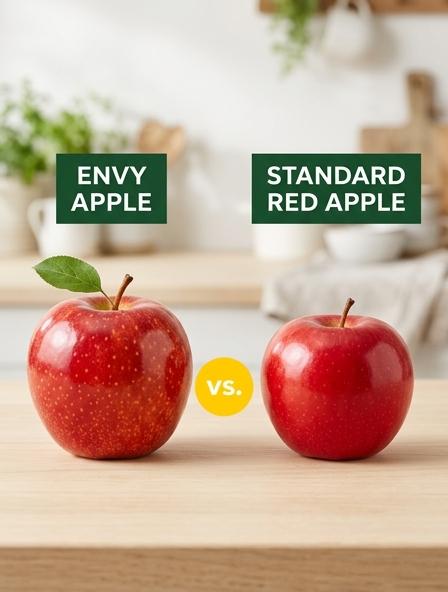
Comparing Flesh Firmness for Oven Roasted Desserts
When selecting fruit for high-heat applications, flesh density is the primary factor that prevents a dessert from becoming mushy. Envy apples are specifically bred for a high-density cellular structure, which provides superior resistance to thermal breakdown compared to many standard varieties. While softer apples like McIntosh or Gala may collapse into a puree, the Envy maintains its physical integrity and "toothsome" bite even after extensive caramelization.
| Apple Type | Flesh Density | Baking Result |
|---|---|---|
| Envy Apple | High/Compact | Retains shape and crunch |
| Standard Varieties | Medium/Low | Softens or loses definition |
This structural resilience makes them the ideal choice for professional-grade pastries. Home bakers love using Envy apples in rustic galettes where they want the fruit slices to remain distinct, golden-brown, and beautifully structured amidst a bubbling cinnamon glaze.
Resistance to Browning in Fresh Fruit Salads
One of the most significant advantages of the Envy apple over standard varieties is its remarkable ability to resist enzymatic browning. While most apples begin to oxidize and turn brown within minutes of being sliced, Envy apples are naturally high in Vitamin C, which slows down the oxidation process significantly. This natural defense ensures that the fruit maintains its pristine, white appearance and crisp texture long after preparation.
- Envy Apple: Stays white for several hours without the need for lemon juice or acidic treatments.
- Standard Varieties: Often begin to discolor and soften within 20 to 30 minutes of air exposure.
This makes Envy the preferred choice for hosts who want to prepare a vibrant fruit platter in the morning and have it look perfectly fresh and appetizing for a backyard brunch hours later.
Natural Sugar Content Impact on Homemade Pastry Fillings
When comparing Envy apples to traditional varieties, the primary distinction is their elevated Brix level. This high natural sugar content significantly alters the chemistry of homemade pastry fillings, providing both structural and flavor advantages.
- Sugar Reduction: Envy's inherent sweetness allows bakers to reduce added sugars, letting the fruit's natural profile shine.
- Enhanced Caramelization: The concentrated natural sugars facilitate a superior Maillard reaction, resulting in a rich, syrupy consistency without becoming watery.
- Texture Integrity: While many sweet apples break down quickly, the Envy maintains a remarkable "crunch" even after prolonged baking.
Choosing the right apple depends on your desired balance of tartness and moisture. You might prefer using Envy apples in a rustic galette to ensure the crust remains crisp while the filling develops a deep, honey-like glaze that requires no extra thickening agents.
Nutritional Density and Dietary Fiber Variations
When comparing Envy apples to standard commercial varieties, the primary difference lies in their physical density and nutrient concentration. Envy apples, a hybrid of Braeburn and Gala, are engineered for a thicker flesh that provides a higher concentration of dietary fiber per bite. This structural density not only aids in digestive health but also contributes to a lower glycemic response compared to softer, high-sugar apple varieties.
- Fiber Efficiency: Envy apples offer high pectin levels, essential for gut health.
- Antioxidant Stability: Their high Vitamin C content slows oxidation, preserving nutrients longer.
- Satiety: The dense cellular structure requires more chewing, promoting fullness.
In a head-to-head nutritional comparison, Envy apples often retain their elemental integrity better than generic cultivars:
| Nutrient | Envy Apple | Standard Apple |
|---|---|---|
| Fiber | High (approx. 5g) | Moderate (approx. 4g) |
Busy parents love packing sliced Envy apples in school lunches because they stay white and crunchy until noon, ensuring kids actually eat their daily serving of fiber.
Maintaining Shape During High Temperature Baking
When comparing baking performance, the structural integrity of an Envy apple far surpasses many common varieties. High-temperature baking typically causes softer apples to lose moisture and collapse into a grainy sauce as their cell walls rupture. However, Envy apples feature a remarkably dense cellular structure that withstands intense heat without dissolving into mush.
Key advantages of using Envy apples in high-heat scenarios include:
- Superior flesh density that prevents shrinking in the oven.
- Slow oxidation rates that maintain a bright, appetizing internal color.
- Strong fiber networks that hold a distinct "bite" in tarts and pies.
While standard apples might liquefy, the Envy variety caramelizes while remaining intact. You will notice the professional-grade difference immediately when your holiday galette emerges from the oven with every Envy slice still standing tall and beautifully defined rather than slumped into a sugary pool.
Balancing Sweet and Tart Notes in Savory Sauces
Achieving the perfect flavor profile in savory sauces requires understanding the inherent characteristics of your fruit. When comparing Envy apples to more traditional cooking varieties, the primary difference lies in the sugar-to-acid ratio. Envy apples are celebrated for their exceptionally high brix levels and low acidity, providing a consistent, floral sweetness that integrates seamlessly into complex culinary reductions.
- Envy Apples: Best for balancing salty or spicy bases like soy sauce, miso, or chipotle.
- Tart Varieties (e.g., Granny Smith): Ideal for cutting through the richness of heavy fats or heavy cream.
While a tart apple provides a sharp bite, the Envy apple acts as a natural sweetener and aromatic enhancer, often reducing the need for added refined sugars. Home chefs love simmering Envy slices in a balsamic glaze to top a pan-seared duck breast, creating a sophisticated balance that highlights the fruit's unique ability to hold its sweetness under high heat.
Moisture Release and Its Effect on Crust Crispness
The success of a baked pastry often hinges on how fruit behaves under heat. When apples are baked, their cellular structure breaks down, releasing internal water as steam and juice. In many apple varieties, this rapid moisture release saturates the bottom crust before it can fully bake, resulting in a soggy texture. Envy apples, however, possess a uniquely dense flesh that manages moisture more efficiently than standard baking apples.
- Standard Apples: High water expulsion often leads to "soggy bottom" syndrome.
- Envy Apples: Controlled moisture release preserves the structural integrity of the pastry.
By retaining more juice within the fruit slices rather than flooding the pan, Envy apples allow the crust to undergo proper Maillard browning. This ensures the dough dehydrates into a flaky, golden layer rather than a damp one. Home bakers love using Envy apples for open-faced tarts where a shatteringly crisp base must support a mountain of tender, caramelized fruit without losing its crunch.
Fragrance Intensity in Slow Cooked Compotes
Comparing Envy apples to standard varieties reveals a distinct advantage in olfactory appeal during slow cooking. While many apples lose their aromatic punch under prolonged heat, the Envy apple's high sugar content and dense cellular structure lock in its signature floral scent. When simmered into a compote, the fragrance intensity varies significantly:
- Envy Apples: Release concentrated notes of honey and vanilla that permeate the home without the need for heavy spices.
- Standard Apples: Often become aromatic-neutral or overly tart, frequently requiring supplemental cinnamon to regain depth.
Because Envy apples possess a naturally high brix level, the reduction process amplifies their sweetness rather than diluting it. This makes them the premier choice for chefs seeking a multi-sensory culinary experience. Imagine waking up on a brisk Sunday morning to a kitchen filled with the deep, caramelized perfume of an Envy apple compote simmering perfectly for your family breakfast.
Slicing Performance for Elegant Tart Arrangements
Achieving a professional aesthetic for high-end pastry work depends heavily on the physical properties of the fruit. Envy apples outperform many common varieties due to their remarkably dense cellular structure, which permits exceptionally clean, precise cuts without the fruit fraying or collapsing under a mandoline blade.
| Attribute | Envy Apple | Standard Varieties |
|---|---|---|
| Oxidation Rate | Very Slow | Rapid Browning |
| Structural Integrity | Firm and Crisp | Prone to Softening |
The standout feature for decorators is the Envy's high vitamin C content, which naturally slows enzymatic browning. This allows the flesh to remain a pristine white even when exposed to air during complex assembly. You will love how Envy slices maintain their porcelain-like appearance and sharp edges even after being meticulously fanned out across a salted caramel tart for a holiday dinner party.
Texture Longevity in Refrigerated Meal Prep
Envy apples significantly outperform standard varieties in refrigerated meal prep due to their unique cellular structure. While common apples often oxidize and soften shortly after slicing, Envy apples are naturally resistant to enzymatic browning. Their high density ensures they maintain a satisfying "snap" even after days in a sealed container, making them ideal for salads or snack boxes.
| Prep Feature | Envy Apple | Standard Apple |
|---|---|---|
| Oxidation Speed | Very Slow | Rapid |
| Crispness Retention | Up to 5 Days | 1-2 Days |
You will love opening your meal-prep container mid-week to find Envy slices that remain remarkably white and crunchy, unlike standard varieties that often turn brown and mealy by day two.
Envy Apple vs Apple source and external links
- The Envy Apple is a premium hybrid variety known for its sweet flavor, crisp texture, and flesh that stays white longer after being sliced.
- Apple is a global technology leader famous for designing innovative consumer electronics such as the iPhone, iPad, and Macintosh computers.