
Double Cream vs Clotted Cream : The Differences in Fat Content, Texture, and Culinary Applications
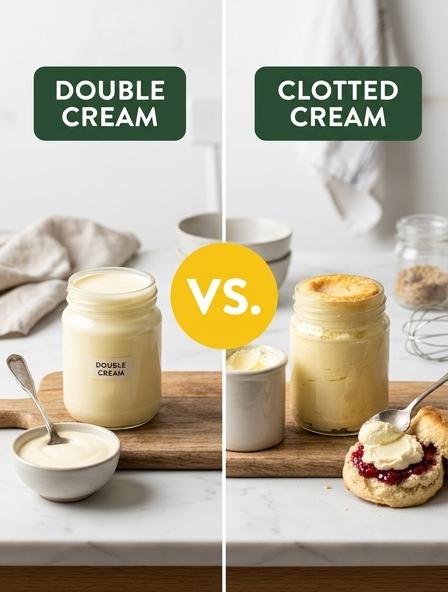
Fat Content and Texture Variations in Baking
Understanding the distinction between double cream and clotted cream is essential for achieving the desired crumb and mouthfeel in desserts. While both are prized for their richness, their fat concentrations and physical structures differ significantly:
| Feature | Double Cream | Clotted Cream |
|---|---|---|
| Fat Content | Approximately 48% | Minimum 55% |
| Consistency | Thick but pourable | Dense and spreadable |
Double cream is highly versatile; it can be whipped to create airy toppings or stirred into batters to add moisture. Clotted cream, created by heat-treating full-cream milk, possesses a buttery "crust" and a much lower moisture content. In baking, clotted cream acts more like a fat source, providing a fudgy density to cakes and shortbreads that liquid creams cannot achieve.
Many traditionalists insist on a dollop of thick, golden clotted cream atop a warm scone to provide that iconic, melt-in-the-mouth richness that defines a classic British afternoon tea.
Nutritional Profiles and Caloric Impact of Rich Dairy
Double cream and clotted cream represent the pinnacle of dairy richness, yet they differ significantly in nutritional density. Double cream typically contains around 48% butterfat, making it highly caloric but still pourable. In contrast, clotted cream is the most calorie-dense dairy product available, boasting a minimum fat content of 55%. This higher concentration is achieved through a slow-heating process that evaporates water, intensifying the fat, vitamins, and minerals.
| Metric (per 100g) | Double Cream | Clotted Cream |
|---|---|---|
| Average Fat | 48g | 55g - 64g |
| Approx. Calories | 470 kcal | 580+ kcal |
While double cream is often chosen for its ability to add a silky texture to savory sauces, most dessert lovers insist that only a thick, golden dollop of clotted cream will suffice when topping a warm, jam-slathered scone for afternoon tea.
Heat Stability in Savory Sauces and Reductions
When comparing double cream and clotted cream for savory cooking, heat stability is determined by fat concentration. Double cream, with a fat content of roughly 48%, is remarkably stable; it can be boiled and reduced without curdling, making it the industry standard for creating silky pan sauces and enriching soups. Its liquid state allows it to emulsify quickly with stocks and acids.
Clotted cream boasts an even higher fat content (minimum 55%) and has already undergone a heat-treatment process. While it is extremely resistant to splitting, its thick, spreadable texture behaves differently during reductions:
- Double Cream: Ideal for simmering and reducing to achieve a pourable, uniform glaze.
- Clotted Cream: Best used as a finishing agent to add instant body and a buttery richness.
Imagine whisking a dollop of clotted cream into a simmering wild mushroom sauce just before serving to create an incredibly thick, velvet-like coating that clings perfectly to every strand of pasta.
Flavor Nuances and Sweetness Levels in Desserts
While both creams boast exceptionally high butterfat content, their flavor profiles differ significantly due to processing techniques. Double cream provides a fresh, clean dairy taste that acts as a neutral canvas, allowing added sugars or vanilla extracts to shine. In contrast, clotted cream undergoes a slow-heating process, which creates a rich, caramelized nuttiness and a dense, velvety mouthfeel that feels much heavier on the palate.
- Double Cream: Bright, fresh, and liquid-smooth; ideal for balanced pouring and whisking.
- Clotted Cream: Nutty, buttery, and thick; possesses an inherent, concentrated sweetness from the "clotting" process.
Because clotted cream is so decadent, many people prefer it as a standalone topping for warm, jam-slathered scones during a traditional British afternoon tea.
Whipping Capabilities versus Spreading Consistency
The fundamental difference between these dairy staples lies in their fat content and structural behavior. Double cream, with roughly 48% butterfat, is a versatile liquid known for its superior whipping capabilities. When aerated, it doubles in volume to create soft or stiff peaks, making it ideal for folding into mousses or piping onto cakes.
In contrast, clotted cream undergoes a slow-heating process that results in a minimum of 55% fat, giving it a dense, non-pourable spreading consistency. Because the fat globules are already clustered, clotted cream cannot be whipped; attempting to do so will only result in butter.
- Double Cream: Liquid state; aerates into light, fluffy textures.
- Clotted Cream: Semi-solid state; rich, velvety, and heat-stable.
While chefs rely on double cream to add airy volume to a dessert, most traditionalists prefer a generous dollop of clotted cream spread over a warm, jam-topped scone for the ultimate afternoon tea experience.
Traditional Culinary Roles in Afternoon Tea
In the ritual of British afternoon tea, double cream and clotted cream fulfill distinct structural and sensory roles. Clotted cream is the crown jewel of the cream tea; its thick, butter-like consistency and characteristic golden crust are achieved by indirectly heating full-fat milk. In contrast, double cream is highly versatile, known for its ability to be whipped into stiff peaks or poured directly onto desserts.
- Clotted Cream: Traditionally served with scones and jam; it boasts a minimum fat content of 55% and does not require whipping.
- Double Cream: Contains roughly 48% fat; it is the preferred choice for topping sponges, filling eclairs, or enriching a cup of Earl Grey.
While clotted cream provides the heavy, luxurious spread needed to anchor a scone, double cream offers a lighter, aerated texture that complements delicate pastries. You might prefer the dense richness of clotted cream for a traditional Cornish tea, or perhaps you enjoy the velvety finish of double cream drizzled over a bowl of fresh summer berries.
Production Methods and Their Effect on Mouthfeel
The core distinction between double and clotted cream lies in how heat and fat concentration are managed during production. These methods directly influence the final sensory experience on the palate.
- Double Cream: Produced by separating fresh cow's milk to reach a fat content of roughly 48%. It remains liquid and unheated, resulting in a silky, pourable, and smooth mouthfeel.
- Clotted Cream: Created by indirectly heating full-fat milk in shallow pans for many hours before cooling it slowly. This evaporation process pushes fat content to at least 55%, creating a thick, buttery, and slightly granular texture.
While double cream provides a rich coating sensation perfect for drizzling, clotted cream offers a dense, spreadable resistance similar to softened butter. Many traditionalists believe that only a thick, golden dollop of clotted cream can provide the necessary indulgent weight to balance a warm, jam-slathered scone during a classic afternoon tea.
Shelf Life and Proper Storage in the Home Kitchen
Maintaining the quality of double cream and clotted cream requires strict temperature control. Both high-fat dairy products must be stored in the coldest part of the refrigerator, ideally between 1°C and 5°C, to prevent spoilage. Because they lack preservatives, their post-opening longevity is relatively short.
- Double Cream: Typically lasts 5 to 7 days once opened. While it can be frozen for use in cooked sauces, the texture may become slightly grainy.
- Clotted Cream: Generally stays fresh for 3 to 5 days. Freezing is not recommended, as it destroys the signature thick crust and silky consistency.
To maximize freshness, always keep the lids tightly sealed and avoid leaving the containers on the counter during mealtime. Many dessert lovers find that nothing beats the satisfaction of dolloping a perfectly chilled, velvety spoonful of clotted cream onto a warm, steaming scone during a traditional afternoon tea.
Cost Considerations for High Fat Dairy Options
When comparing the financial impact of high-fat dairy, the price often reflects the complexity of the production process. Double cream, with a fat content of around 48%, is generally the more economical choice and is widely available in various sizes. In contrast, clotted cream typically carries a higher price point per gram because it requires a labor-intensive, slow-heating process to achieve its minimum 55% butterfat density.
- Double Cream: Cost-effective for high-volume cooking, pouring, and large-scale dessert bases.
- Clotted Cream: A premium luxury item due to the evaporation process and artisanal manufacturing techniques.
Factors such as regional sourcing and protected status (like Cornish Clotted Cream) can further drive up costs compared to standard supermarket creams. Most hosts find that while double cream is the practical choice for a large bowl of whipped topping, they prefer to invest the extra money in a small, decadent jar of clotted cream specifically for a traditional afternoon tea with warm scones.
Impact on Final Dish Richness and Body
Choosing between double and clotted cream fundamentally alters a recipe's structural profile. While both boast high butterfat levels, their physical states dictate the final mouthfeel and viscosity of a dish.
| Feature | Double Cream | Clotted Cream |
|---|---|---|
| Fat Content | ~48% | ~55% minimum |
| Consistency | Liquid/Pourable | Thick/Spreadable |
| Effect | Velvety & smooth | Dense & buttery |
Double cream provides a silky, emulsified body, making it the superior choice for enriching savory sauces or creating aerated mousses. Conversely, clotted cream undergoes a gentle heating process that creates a heavy, concentrated texture and a unique "crust." It adds a luxurious, indulgent weight to desserts without thinning the mixture. You might prefer the dense, dollopable luxury of clotted cream for a traditional cream tea, while using double cream to achieve a perfectly smooth, pourable caramel sauce.
Double Cream vs Clotted Cream source and external links
- Double cream is a versatile, high-fat dairy product frequently used in British recipes for whipping or adding richness to sauces.
- Famous for its thick consistency and golden crust, clotted cream is a heat-treated spread traditionally served alongside scones and jam for afternoon tea.