
Delicata Squash vs Acorn Squash : Are They The Same? Flavor, Edibility, and Nutrition
Flavor Profiles and Natural Sugars
While both varieties belong to the Cucurbita pepo species, their sugar concentrations create distinct culinary experiences. Delicata squash is renowned for its high natural sugar content, earning it the nickname "sweet potato squash." Its flavor is rich, reminiscent of caramel and toasted corn. In contrast, acorn squash offers a more tempered, nutty sweetness with earthy undertones, making it a versatile base for both sweet and savory applications.
- Delicata: Intense honey-like sweetness that caramelizes deeply when roasted.
- Acorn: Mild, starchy profile that balances well with bold spices like cayenne or rosemary.
The thin skin of the Delicata allows its sugars to crisp up quickly, whereas the thicker flesh of the acorn squash absorbs surrounding fats and juices during longer bakes. You might find yourself reaching for the Delicata when you want a quick, candy-like vegetable side dish, or choosing the acorn squash to serve as a sturdy, savory vessel for a wild rice and sausage stuffing.
Skin Edibility and Peeling Requirements
The primary distinction between Delicata and Acorn squash lies in their preparation and skin texture. Delicata squash is famous for its exceptionally thin, tender skin that softens during cooking, making peeling entirely unnecessary. Conversely, while Acorn squash skin is technically edible, it is significantly thicker and more fibrous. Furthermore, the deep ridges of an Acorn squash make it nearly impossible to peel efficiently with a standard kitchen tool.
- Delicata Squash: Features a delicate rind that integrates seamlessly into bites, adding no toughness.
- Acorn Squash: Has a sturdy rind that is usually left intact during roasting to hold the shape of the flesh.
Busy home cooks often prefer Delicata for quick sheet-pan roasting because you can slice and eat the skin, while Acorn squash is the ideal choice for stuffing with quinoa or sausage where the skin provides a structural, natural bowl.
Roasting Performance and Heat Response
Delicata and acorn squash exhibit distinct reactions to high-heat roasting based on their physical composition. Delicata squash is characterized by its thin, edible skin and high sugar content, which allows it to caramelize rapidly and develop a crisp texture in a relatively short time. In contrast, acorn squash possesses a thicker, fibrous rind that acts as an insulator, necessitating a longer roasting period to soften the dense internal flesh.
- Delicata: High surface-to-flesh ratio; roasts quickly at 400°F (200°C) for a browned, nutty finish.
- Acorn: Better suited for steady heat; the thick skin holds its structural integrity, making it ideal for stuffed preparations.
You will likely reach for the delicata on a busy Tuesday evening when you want effortless, golden-brown rings that can go from the cutting board to the dinner plate in under twenty minutes.
Vitamin Density and Nutritional Value
Both Delicata and Acorn squash are nutrient-dense winter vegetables, yet they offer distinct profiles. Acorn squash generally leads in fiber and Vitamin C, making it excellent for digestive health and immune support. Delicata squash, while slightly lower in calories, provides significant Vitamin A and beta-carotene. A key advantage of Delicata is its thin, edible skin, which ensures you consume all the antioxidants often lost during the peeling process of tougher varieties.
| Nutrient Focus | Delicata Squash | Acorn Squash |
|---|---|---|
| Key Vitamin | Vitamin A | Vitamin C |
| Dietary Fiber | Moderate | High |
You might prefer roasting Delicata slices for a quick, nutrient-packed snack, whereas a stuffed Acorn squash serves as a hearty, fiber-rich centerpiece for a cold winter evening.
Caloric Differences and Fiber Content
When comparing Delicata and Acorn squash, caloric density and dietary fiber are key differentiators. While both are excellent low-calorie alternatives to heavier root vegetables, Acorn squash is slightly more caloric due to its higher starch content. However, it compensates with a more robust fiber profile.
- Delicata Squash: Approximately 35 calories and 1.5g of fiber per 100g.
- Acorn Squash: Approximately 40 calories and 3.5g of fiber per 100g.
The higher fiber content in Acorn squash is excellent for supporting digestive health and maintaining satiety. Meanwhile, Delicata is often favored for weight management because of its lower overall energy density. Furthermore, because Delicata has a thin, edible skin, you consume more of its natural nutrients compared to the thick, often discarded rind of the Acorn variety.
You will likely prefer roasting Delicata rings when you want a quick, low-calorie side dish that doesn't require the hassle of peeling a tough outer shell.
Preparation Speed and Slicing Ease
When comparing preparation speed, Delicata squash is significantly more user-friendly than Acorn squash. The defining factor is the skin; Delicata boasts a thin, tender rind that is entirely edible, whereas Acorn squash has a thick, waxy exterior that is difficult to peel and often discarded.
- Delicata: Easy to slice into uniform "half-moons" with minimal resistance; requires no peeling.
- Acorn: Its deep ridges and tough skin make it cumbersome to peel and require more physical force to cut through safely.
Because Delicata eliminates the labor-intensive peeling process, it reduces total prep time by several minutes. While Acorn squash is often halved and roasted to avoid the struggle of slicing, Delicata is designed for quick chopping and high-heat roasting.
You might prefer Delicata for a frantic weeknight dinner when you want effortless roasted rings without the hassle of wrestling a heavy chef's knife through a rock-hard Acorn shell.
Pantry Longevity and Storage Conditions
When comparing the shelf life of winter squash, rind thickness is the deciding factor. Acorn squash features a thick, hardy skin that acts as a natural preservative, whereas the Delicata's namesake "delicate" edible skin makes it more susceptible to moisture loss and bruising.
- Acorn Squash: Exceptionally durable; it typically lasts 1–2 months in a cool, dark pantry.
- Delicata Squash: More ephemeral; it is best consumed within 2–4 weeks for optimal sweetness and texture.
To maximize longevity, store both varieties in a dry area between 50°F and 55°F, away from direct sunlight and ripening fruits like apples, which release ethylene gas and accelerate spoilage. Home cooks love stocking up on acorn squash for mid-winter stews while grabbing a few Delicatas for a quick, roasted weeknight side dish that requires no peeling.
Structural Integrity and Texture After Cooking
Delicata and acorn squash offer distinct culinary experiences rooted in their density and skin composition. Delicata is celebrated for its thin, edible rind and fine-grained flesh that becomes velvety and sweet when caramelized. It maintains excellent structural integrity, allowing it to hold a crisp shape even when cut into delicate half-moons.
| Feature | Delicata Squash | Acorn Squash |
|---|---|---|
| Skin Texture | Thin and edible | Thick and fibrous |
| Flesh Consistency | Creamy and smooth | Dense and slightly stringy |
Acorn squash possesses a thicker, tougher exterior and a more fibrous interior. While its sturdy shell makes it the superior choice for edible bowls or heavy stuffing, the flesh is more prone to becoming moist or mushy if over-steamed. You might prefer roasting Delicata crescents when you need a quick, elegant side dish where every part of the vegetable-skin included-melts in your mouth.
Visual Appeal and Culinary Presentation
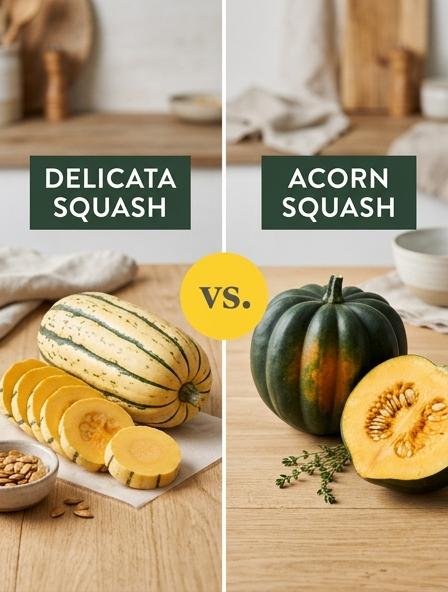
Distinguishing delicata from acorn squash begins with their unique geometries and skin textures. Delicata squash is celebrated for its pinstriped, cream-and-green exterior and oblong shape. Because its skin is thin and edible, it retains its decorative scalloped edges when sliced into rings, offering a high-contrast look. In contrast, acorn squash presents a stout, heart-like silhouette with deep ridges and a matte, forest-green finish that feels more traditional and rustic.
- Delicata Squash: Produces elegant, colorful crescents or "donuts" that require no peeling.
- Acorn Squash: Provides a sturdy, ribbed exterior that holds its shape perfectly as a natural vessel.
While acorn squash is the quintessential choice for creating a hearty, edible bowl for wild rice stuffings, many home cooks prefer roasting delicata slices to add a sophisticated, striped pop of color to festive autumn harvest salads.
Metabolic Impact and Glycemic Response
When comparing Delicata and Acorn squash, their influence on blood sugar is a vital metric for metabolic health. Both are nutrient-dense, complex carbohydrates that fall within the low-to-moderate range on the glycemic index. However, their specific fiber-to-sugar ratios create subtle differences in how the body processes them.
- Delicata Squash: Contains slightly more natural sugars but is lower in overall calories, making it a lighter option for caloric management.
- Acorn Squash: Boasts a higher fiber content per serving, which acts as a buffer to slow glucose absorption and prevent insulin spikes.
The edible skin of the Delicata also adds insoluble fiber, further stabilizing the glycemic response compared to peeled starchy vegetables. By opting for these whole-food sources over refined starches, you support better metabolic flexibility and sustained energy levels throughout the day. Home cooks love roasting Delicata slices as a satisfying, low-glycemic alternative to fries when they want a sweet flavor without the typical post-meal blood sugar crash.
Delicata Squash vs Acorn Squash source and external links
- Known for its thin edible skin and sweet flavor, Delicata squash is a popular winter variety that does not require peeling before cooking.
- Characterized by its distinct longitudinal ridges and sweet, nutty interior, Acorn squash is a versatile vegetable often prepared by roasting or stuffing.