
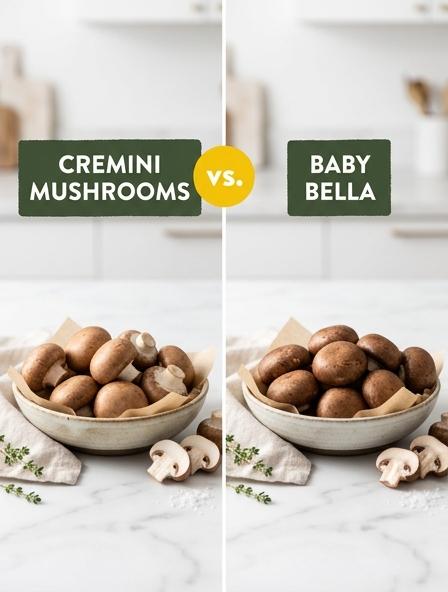
Cremini Mushrooms vs Baby Bella: The Differences in Culinary Texture, Flavor Profile, and Nutritional Value.
Textural Differences During Sautéing and Roasting
Cremini and Baby Bella mushrooms are actually the same variety (Agaricus bisporus), harvested at the same mid-maturity stage. Because they are denser and contain less water than white button mushrooms, they behave exceptionally well under high heat, maintaining a firm, "meaty" bite rather than becoming soggy.
- Sautéing: When tossed in a hot skillet, they quickly develop a caramelized Maillard crust. The flesh remains resilient, absorbing fats and aromatics without losing its structural integrity.
- Roasting: Dry oven heat evaporates surface moisture, concentrating the earthy flavors. This results in a slightly chewy, leathery exterior with a tender, succulent center.
Whether sliced or kept whole, their ability to hold their shape makes them a favorite for home cooks preparing a robust mushroom marsala or a hearty, oven-roasted vegetable medley for Sunday dinner.
Nutritional Density and Health Impact Comparison
When evaluating cremini mushrooms vs. baby bella, it is important to recognize they are biologically identical-both are the Agaricus bisporus species harvested at a mid-growth stage. Consequently, their nutritional profiles are indistinguishable, offering a denser concentration of nutrients than younger white button mushrooms. They are powerhouse sources of essential vitamins and minerals that support metabolic and cardiovascular health.
- Selenium: A potent antioxidant that bolsters the immune system and thyroid function.
- B-Vitamins: Rich in riboflavin and niacin, which are critical for energy production.
- Potassium: Helps regulate blood pressure and supports muscle recovery.
- Ergothioneine: A unique sulfur-containing amino acid known for its cytoprotective properties.
Their low-calorie, fiber-rich composition makes them a staple for those managing weight or blood sugar. Home chefs frequently reach for these brown-capped mushrooms to provide a savory, umami-rich "meaty" texture to vegetarian stroganoffs or as a hearty topping for grilled steaks.
Umami Depth and Flavor Performance in Savory Dishes
While often marketed under different names, Cremini and Baby Bella mushrooms are biologically identical. As the slightly matured version of white button mushrooms, they possess a lower moisture content, which significantly concentrates their natural savory compounds. This evolution results in a deeper umami profile and a robust, earthy flavor that excels in complex savory applications.
- Texture: Their dense structure maintains a "meaty" bite even after prolonged cooking.
- Browning: Lower water retention allows for superior caramelization and Maillard reaction during sautéing.
- Absorbency: They effectively soak up stocks, fats, and aromatics, enriching the overall flavor profile of the meal.
You will love using these when searing a steak or preparing a rich beef bourguignon, as they hold their shape perfectly while soaking up every drop of the savory red wine sauce.
Moisture Retention and Structural Integrity in Stews
While Cremini and Baby Bella mushrooms are technically the same variety, their dense cellular structure makes them the gold standard for slow-cooked liquids. Unlike white button mushrooms, which have a high water content and tend to collapse, these brown mushrooms possess a firmer flesh that withstands prolonged heat.
Their structural advantages in stews include:
- Low Shrinkage: They maintain their physical size even after hours of simmering.
- Porous Absorption: They act as sponges, soaking up wine, stock, and herbs without losing their shape.
- Meaty Texture: The chitin in their cell walls provides a "toothsome" bite that mimics protein.
Home cooks love tossing whole Baby Bellas into a slow-simmering beef bourguignon because they emerge plump and savory rather than dissolving into the sauce.
Antioxidant Content and Bioavailability for Wellness
When comparing Cremini mushrooms and Baby Bellas, it is important to note they are biologically identical, offering the same potent nutritional profile. Both are rich in essential antioxidants that combat oxidative stress and support long-term wellness. To maximize their health benefits, cooking is essential; heat breaks down the indigestible chitin cell walls, significantly increasing the bioavailability of their nutrients.
- Ergothioneine: A stable antioxidant that protects cells from oxidative damage.
- Selenium: A trace mineral that supports immune function and thyroid health.
- Glutathione: Known as a "master antioxidant" for its role in detoxification.
By consuming these mushrooms cooked rather than raw, you ensure your body can access their full medicinal potential. You can easily elevate a simple weeknight risotto by folding in these earthy, sautéed gems to enjoy a savory meal that actively supports your cellular defense system.
Aroma Profiles and Culinary Character in Home Cooking
In the culinary world, cremini mushrooms and baby bellas are essentially the same variety-immature Portobellos. They offer a more sophisticated aroma profile than common white buttons, characterized by deep, earthy scents and a distinct nuttiness. Their culinary character is defined by a firm texture and a rich, savory umami flavor that intensifies significantly during the cooking process.
- Aroma: Damp earth, woodsy, and mildly musky.
- Texture: Dense and meaty, holding shape well under high heat.
- Flavor: Robust umami with a subtle toasted nut finish.
Because these mushrooms release less moisture than younger varieties, home cooks love tossing them into a scorching hot cast-iron skillet with garlic and thyme to achieve a perfect golden-brown sear for an elevated steak topping.
Storage Longevity and Freshness Maintenance
Because Cremini and Baby Bella mushrooms are essentially the same variety, their storage requirements and shelf lives are identical. To maintain their firm texture and earthy flavor for up to 10 days, proper moisture management is essential. Avoiding airtight plastic containers is the most critical step in preventing spoilage and bacterial growth.
- Breathability: Store them in a brown paper bag to allow airflow and absorb excess condensation.
- Location: Keep them in the main body of the refrigerator rather than high-humidity crisper drawers.
- Preparation: Never wash your mushrooms until you are ready to use them, as they act like sponges and will deteriorate quickly if stored wet.
Home cooks love tossing these firm, earthy gems into a hot cast-iron skillet for a quick weekday balsamic sauté once they have been properly preserved in the fridge.
Browning Capabilities and Searing Efficiency
Technically, cremini mushrooms and baby bellas are the same variety (Agaricus bisporus). Their culinary appeal lies in their moderate maturity, which results in a lower moisture content compared to white button mushrooms. This attribute is essential for searing efficiency, as it allows the mushrooms to reach high temperatures quickly without releasing excessive liquid that would otherwise lead to steaming.
When exposed to dry heat, these mushrooms undergo the Maillard reaction more effectively, creating a deeply savory crust. To maximize their browning potential, consider these factors:
- Preheat the skillet thoroughly before adding the mushrooms.
- Avoid overcrowding the pan to ensure moisture evaporates instantly.
- Delay salting until the end of the process to prevent premature water release.
Home chefs love tossing these into a screaming-hot cast-iron skillet with butter and fresh thyme to create a perfectly golden-brown, umami-rich topping for a seared steak.
Heat Resistance and Firmness After Cooking
Cremini and Baby Bella mushrooms are essentially the same variety, characterized by their superior heat resistance compared to younger white button mushrooms. Because they are harvested at a later stage of maturity, they possess a lower moisture content and a denser cellular structure. This allows them to withstand high temperatures without losing significant volume or becoming excessively mushy.
- Durability: They retain their shape during long braising or roasting processes.
- Texture: Their firm flesh provides a "meaty" bite that mimics protein in vegetarian dishes.
- Maillard Reaction: Lower water release enables better browning and caramelization in the pan.
Their ability to stay plump makes them an ideal candidate for stews, stir-fries, and grilled skewers. You will love how they maintain a satisfying, robust texture when you sauté them in garlic butter to top a juicy ribeye steak.
Cost Efficiency and Serving Value for Family Meals
Understanding the value of Cremini versus Baby Bella mushrooms begins with a simple truth: they are the same mushroom. Both are immature Portobellos, offering a denser texture and deeper flavor than white buttons. Because they are botanically identical, cost efficiency is typically driven by marketing and packaging rather than different growth requirements.
- Yield: Their firm structure means less shrinkage during cooking compared to white mushrooms, providing better plate coverage.
- Versatility: The earthy flavor serves as a "meat stretcher" in stews or pasta, reducing the need for expensive animal proteins.
- Shelf Life: These varieties generally stay firm longer than white mushrooms, minimizing household food waste.
To get the best price, compare the price-per-ounce of loose bins versus pre-packaged containers. You will love grabbing a bulk scoop of these savory gems to bulk up a Sunday night Bolognese, ensuring a hearty, nutrient-dense meal that stays within your weekly grocery budget.
Cremini Mushrooms vs Baby Bella source and external links
- Cremini mushrooms are a popular culinary ingredient known for their firm texture and mild, earthy flavor. Cremini mushrooms
- The Baby Bella is essentially a more mature version of the common white button mushroom, offering a deeper color and richer taste profile. Baby Bella