
Condensed Milk vs Regular Milk: Comparing Nutrition, Baking Texture, and Shelf Stability Differences
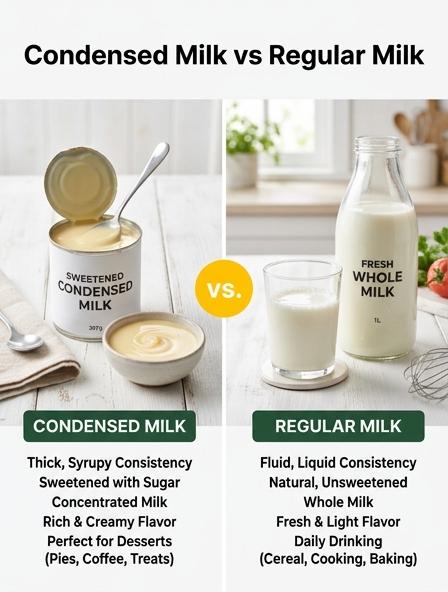
Nutritional Density and Caloric Differences in Dairy Bases
The primary distinction between condensed milk and regular milk lies in water concentration and caloric intensity. Regular milk is a high-volume liquid consisting of approximately 87% water, providing a balanced profile of proteins and fats. In contrast, condensed milk is created by removing about 60% of the water through evaporation. This process significantly concentrates the nutrients, making it far more energy-dense. When sugar is added to create sweetened condensed milk, the caloric count rises sharply compared to the natural lactose found in standard dairy.
| Attribute | Regular Milk (Whole) | Condensed Milk (Sweetened) |
|---|---|---|
| Caloric Density | Low (~150 kcal/cup) | Very High (~980 kcal/cup) |
| Consistency | Thin, liquid | Thick, syrupy |
You might prefer a splash of regular milk in your morning tea for a light refreshment, but you will likely crave the indulgent, velvety texture of sweetened condensed milk when whisking together a homemade key lime pie or a rich dulce de leche.
Impact of Concentrated Sugar on Baking Texture
The primary distinction between condensed milk and regular milk is the intense sugar concentration. Sweetened condensed milk contains roughly 45% sugar, which functions as a powerful humectant. While regular milk provides the hydration necessary for a light, airy crumb, the sugar in condensed milk alters the final texture through these effects:
- Moisture Retention: Sugar binds to water molecules, preventing evaporation and ensuring a fudgy consistency.
- Tenderization: High sugar levels interfere with gluten development, resulting in a softer, denser bite.
- Caramelization: The concentrated solids promote rapid browning and a rich, toffee-like flavor profile.
Because regular milk has a higher water-to-sugar ratio, it facilitates better steam production for a traditional cake-like rise. You might reach for sweetened condensed milk when you want to achieve the decadent, chewy texture found in premium brownies or a rich, moist tres leches cake.
Consistency Variations in Creamy Dessert Foundations
The primary distinction between regular milk and condensed milk lies in their water content and viscosity, which dictates the final structure of a dessert. Regular milk is a thin liquid with a high water ratio, often requiring stabilizers or heat-reduction to provide body to custards. Conversely, condensed milk is a concentrated product where approximately 60% of the water has been removed, resulting in a thick, syrupy texture that acts as both a sweetener and a structural binder.
| Feature | Regular Milk | Condensed Milk |
|---|---|---|
| Consistency | Fluid and light | Dense and viscous |
| Sugar Content | Low (natural) | High (added) |
You will likely reach for condensed milk when you want to achieve a rich, fudge-like consistency in a no-churn ice cream, whereas regular milk remains the standard for a light and airy rice pudding.
Moisture Content and its Effect on Dough Structure
The primary structural difference between condensed and regular milk lies in their water-to-solids ratio. Regular milk consists of approximately 87% water, whereas condensed milk has roughly 60% of its water removed. This disparity fundamentally alters hydration and gluten development during the mixing process.
- Regular Milk: Provides high hydration, facilitating extensive gluten networking and a more elastic, airy crumb.
- Condensed Milk: The low moisture and high sugar concentration interfere with gluten strands, resulting in a tighter, more tender crumb structure.
Because condensed milk limits elasticity while adding richness, it is the preferred choice for bakers wanting to achieve the signature pillowy, melt-in-your-mouth texture of traditional Japanese milk bread or dense, velvety sweet rolls.
Caramelization and Browning Reactions in Sweetened Liquids
The chemical transformation of milk during heating depends heavily on its sugar concentration and moisture levels. Sweetened condensed milk contains high amounts of sucrose and lactose, which trigger rapid Maillard reactions and caramelization when heat is applied. In contrast, regular milk maintains a high water content and lower sugar density, making it resistant to significant browning unless subjected to prolonged evaporation.
- Condensed Milk: Low moisture and high sugar content allow it to turn golden-brown quickly, developing complex toffee notes.
- Regular Milk: Higher water content buffers the temperature, requiring extensive reduction to achieve even slight color changes.
You will love the deep, amber hue and velvety texture that occurs when simmering condensed milk to create a DIY dulce de leche for your favorite holiday desserts.
Shelf Stability and Pantry Storage Considerations
The primary difference between condensed milk and regular milk lies in their storage requirements and longevity. Regular milk is a highly perishable fresh product that requires continuous refrigeration and typically lasts only one to two weeks. In contrast, condensed milk undergoes a rigorous heating process to remove 60% of its water content and is vacuum-sealed, making it incredibly shelf-stable.
- Regular Milk: Requires refrigeration at or below 40°F; has a short lifecycle.
- Condensed Milk: Can be stored in a cool, dry pantry for years; only needs refrigeration after the seal is broken.
This stability is enhanced in sweetened versions, where high sugar concentrations act as a natural preservative against bacterial growth. You might prefer keeping a few cans of condensed milk tucked away in your pantry as a reliable backup for holiday baking or emergency kits when fresh dairy isn't readily available.
Richness Levels in Stovetop Sauces and Custards
When comparing condensed milk vs. regular milk in stovetop recipes, the primary difference lies in the concentration of milk solids and sugar. Regular milk provides a light, fluid base that typically requires additional thickening agents like flour or cornstarch to achieve body. In contrast, condensed milk has had 60% of its water removed and contains significant added sugar, resulting in a naturally viscous, syrupy consistency.
- Regular Milk: Produces a subtle, clean flavor profile suitable for savory béchamel or light vanilla puddings.
- Condensed Milk: Delivers an intense, caramelized richness and a velvety mouthfeel perfect for dense custards.
The choice fundamentally alters the fat-to-liquid ratio, where condensed milk acts as a shortcut to achieving a professional-grade "coating" consistency without lengthy reduction times. You might prefer the instant silkiness of condensed milk when whisking together a quick salted caramel sauce to drizzle over homemade brownies for a dinner party.
Comparative Analysis of Fluid Volume in Recipe Ratios
Understanding the structural differences between condensed milk and regular milk is essential for maintaining moisture balance in culinary applications. Regular milk is approximately 87% water, providing a high fluid volume and thin consistency. Conversely, condensed milk undergoes an evaporation process where roughly 60% of the water content is removed, resulting in a dense, viscous liquid with a significantly higher concentration of milk solids and sugar.
- Regular Milk: High hydration, low viscosity, neutral sweetness.
- Condensed Milk: Low hydration, high density, intense sweetness.
Because of this disparity, substituting one for the other requires precise adjustments to the recipe's total liquid ratio to prevent the final product from becoming too dry or overly saturated. Professional pastry chefs often choose the heavy, syrupy texture of condensed milk to achieve the iconic, fudgy center in specialty macaroons that regular milk simply cannot provide.
Dietary Impacts of Processed Versus Fresh Dairy Staples
Choosing between condensed and regular milk fundamentally alters your nutritional intake. Regular milk provides essential hydration and a balanced profile of proteins, fats, and calcium with only natural lactose. Conversely, condensed milk undergoes intensive processing to remove water, often resulting in a calorie-dense product with significant added sucrose for preservation and texture.
| Nutrient Factor | Regular Milk | Condensed Milk |
|---|---|---|
| Sugar Content | Natural Sugars Only | High Added Sugars |
| Caloric Density | Low to Moderate | Very High |
| Shelf Life | Short (Perishable) | Long (Shelf-stable) |
Whether you are a baker drizzling thick, sweetened condensed milk over a decadent tres leches cake for that signature richness or a fitness enthusiast pouring fresh cold milk over morning oats, your choice dictates the glycemic impact of the meal.
Flavor Profile Intensities in Home Cooking Applications
The culinary impact of condensed milk versus regular milk depends largely on their concentration and sugar content. Regular milk provides a mild, neutral dairy base that complements ingredients without overpowering them. In contrast, condensed milk undergoes an evaporation process that intensifies its flavor, resulting in a rich, syrupy profile with distinct caramelized notes.
- Regular Milk: Light, refreshing, and subtly sweet due to natural lactose.
- Condensed Milk: Highly concentrated, viscous, and intensely sweet from added sucrose and the Maillard reaction.
While regular milk is ideal for thinning sauces or balancing bold spices, condensed milk acts as a flavor anchor in desserts, providing a dense mouthfeel and deep sweetness. You might choose regular milk for a balanced bowl of cereal, but when crafting a velvety tres leches cake, the concentrated intensity of condensed milk is what creates that signature, indulgent taste people crave.
Condensed Milk vs Regular Milk source and external links
- Condensed Milk is a thick, sweetened dairy product made by removing most of the water from cow's milk and adding sugar.
- Regular Milk is a nutrient-rich liquid produced by mammals that serves as a primary source of calcium and protein for people around the world.