
Coffee Cream vs Half-and-Half: The Differences in Fat Content, Culinary Performance, and Nutritional Profile.
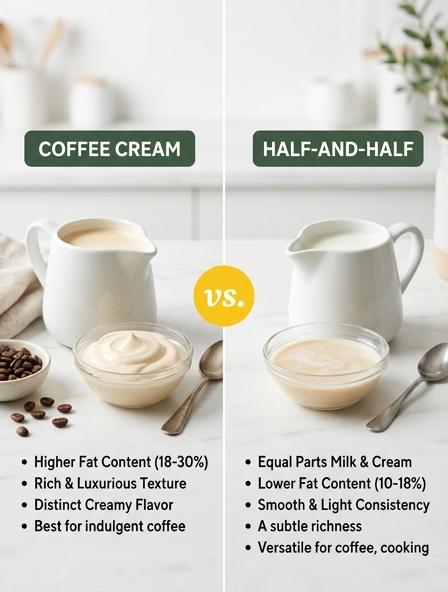
Fat Content Variations in Coffee Cream and Half-and-Half
The primary distinction between these dairy options lies in their milkfat percentages, which directly influence the mouthfeel and flavor profile of your brew. Half-and-half is a standardized mixture of equal parts whole milk and light cream, resulting in a lighter consistency. In contrast, products labeled as coffee cream-often referred to as table cream-provide a more luxurious density due to a higher lipid concentration.
- Half-and-Half: Contains between 10.5% and 18% milkfat.
- Coffee Cream: Typically contains between 18% and 30% milkfat.
Understanding these variations is essential for balancing the acidity and bitterness of different roasts. While those seeking a subtle, low-calorie splash often reach for half-and-half, many coffee enthusiasts prefer the velvety, dessert-like indulgence of coffee cream to transform a sharp dark roast into a smooth, silk-textured morning treat.
Health and Nutritional Profiles of Coffee Cream versus Half-and-Half
Understanding the nutritional distinctions between these dairy products is essential for health-conscious consumers. Half-and-half is a blend of equal parts whole milk and cream, resulting in a moderate fat content. In contrast, coffee cream-often labeled as light cream-possesses a significantly higher concentration of milkfat, leading to increased caloric density and a richer texture.
- Half-and-Half: Contains approximately 10–12% milkfat and is lower in calories.
- Coffee Cream: Contains 18–30% milkfat, providing a higher concentration of saturated fats.
While both options offer small amounts of calcium and Vitamin A, the primary difference lies in their lipid profiles. Half-and-half is generally preferred by those monitoring daily caloric intake, whereas coffee cream is prized for its ability to cut through the acidity of dark roasts. You might choose half-and-half for your routine weekday morning cup, while reserving the velvety indulgence of coffee cream for a special brunch with friends.
Heat Resistance of Coffee Cream and Half-and-Half in Savory Dishes
When incorporating dairy into hot savory recipes, fat content is the primary factor in heat stability. Coffee cream (often labeled as light cream or table cream) typically contains 18% milkfat, whereas half-and-half contains between 10.5% and 12%. Higher fat concentrations protect milk proteins from denaturing and clumping.
| Dairy Type | Fat Content | Cooking Performance |
|---|---|---|
| Half-and-Half | 10.5% – 12% | Prone to curdling at high heat or with acids. |
| Coffee Cream | 18% | More stable; resists breaking in simmering sauces. |
Because half-and-half has a higher water-to-fat ratio, it is more likely to "break" or create a grainy texture when introduced to boiling liquids or acidic ingredients like lemon and tomato. You might choose coffee cream when whisking together a velvety pan sauce for steak to ensure the emulsion remains perfectly smooth and rich.
Texture Differences in Soups Prepared with Coffee Cream or Half-and-Half
The primary distinction in soup texture arises from varying milkfat concentrations. Coffee cream, typically containing 18% fat, provides a luxurious, velvety mouthfeel and greater stability against curdling when exposed to acidic ingredients or high heat. In contrast, half-and-half-a blend of milk and cream containing roughly 10-12% fat-offers a thinner consistency that lightens the dish without the heavy caloric density of richer dairy.
- Viscosity: Coffee cream creates a thicker, more opaque liquid base for purees.
- Emulsification: Higher fat levels ensure a smoother, more stable integration with savory broths.
- Heat Stability: Half-and-half requires gentle simmering to prevent the proteins from separating.
Home cooks often reach for the decadent richness of coffee cream when perfecting a classic lobster bisque, while opting for half-and-half in a daily corn chowder for a lighter, more fluid texture.
Calorie Density Comparison of Coffee Cream and Half-and-Half
The calorie density of dairy additives is primarily determined by their butterfat concentration. Half-and-half is a balanced blend of equal parts whole milk and light cream, typically hovering between 10% and 12% fat content. In contrast, standard coffee cream-often labeled as table cream-contains a higher fat percentage, ranging from 18% to 30%. Because fat provides more than double the calories of proteins or carbohydrates per gram, coffee cream is significantly more energy-dense.
| Product Type | Average Fat Content | Calories (per Tbsp) |
|---|---|---|
| Half-and-Half | 10% – 12% | ~20 kcal |
| Coffee Cream | 18% – 30% | ~30 – 45 kcal |
Weight-conscious drinkers typically reach for half-and-half to lighten their morning brew, while those hosting a decadent weekend brunch often prefer the rich, velvety mouthfeel that only a splash of true coffee cream can provide.
Baking Performance of Coffee Cream and Half-and-Half in Desserts
In the realm of pastry arts, the fat content of your dairy dictates the final crumb structure and moisture levels. Coffee cream, boasting 18% to 30% fat, provides a luxurious mouthfeel and structural stability in high-fat recipes like ganache or panna cotta. Half-and-half, containing roughly 10.5% to 18% fat, acts as a leaner substitute that adds subtle tenderness without the weight of heavy cream.
| Dairy Type | Fat Percentage | Baking Result |
|---|---|---|
| Coffee Cream | 18% - 30% | Dense, Rich, Velvety |
| Half-and-Half | 10.5% - 18% | Light, Moist, Airy |
You may find that reaching for the coffee cream is the secret to achieving that bakery-style richness in a homemade crème brûlée.
Mouthfeel Variations Between Coffee Cream and Half-and-Half
The primary distinction in mouthfeel stems from butterfat concentration, which dictates how the liquid coats the palate. Half-and-half, a blend of equal parts milk and cream, provides a light, silky consistency that softens the "bite" of caffeine without masking the coffee's intrinsic flavors. Coffee cream-often referred to as table cream-possesses a higher fat content, resulting in a significantly more viscous and velvety texture.
| Product | Average Fat | Palate Sensation |
|---|---|---|
| Half-and-Half | 10.5% – 12% | Smooth and balanced |
| Coffee Cream | 18% – 30% | Rich, heavy, and decadent |
If you prefer a luxurious morning ritual where a dark roast is transformed into a thick, dessert-like treat that lingers on the tongue, you will likely favor the heavy richness of coffee cream.
Viscosity Levels of Coffee Cream and Half-and-Half in Pan Sauces
The viscosity of a pan sauce is primarily determined by the lipid concentration of the dairy used. Coffee cream, typically containing 18% to 30% milkfat, possesses a significantly higher thickness compared to half-and-half, which ranges between 10.5% and 18%. This fat content dictates how effectively the sauce emulsifies and coats the back of a spoon.
- Coffee Cream: High fat levels create a stable, velvety texture that resists curdling when introduced to acidic deglazing liquids like wine or lemon juice.
- Half-and-Half: Lower fat content results in a thinner consistency, often requiring a longer reduction time or a starch-based thickener to achieve the desired body.
You might prefer using coffee cream for a quick steak au poivre, as its superior viscosity ensures a rich, glossy glaze that clings perfectly to the meat without thinning out on the plate.
Storage Longevity of Coffee Cream and Half-and-Half
Understanding the shelf life of your dairy and non-dairy additions is essential for food safety and flavor quality. Half-and-half, a blend of equal parts whole milk and light cream, typically lasts seven to ten days once opened, provided it is kept strictly refrigerated. In contrast, many liquid coffee creamers are ultra-pasteurized or contain stabilizers and oils that extend their freshness to approximately two weeks after opening.
| Product Type | Refrigerated Life (Opened) |
|---|---|
| Half-and-Half | 7–10 Days |
| Coffee Creamer (Liquid) | 14 Days |
Many busy professionals prefer stocking up on long-lasting flavored creamers to ensure they never face the disappointment of curdled dairy during a rushed Monday morning brew.
Dairy Fat Impact of Coffee Cream and Half-and-Half on Meal Consistency
The primary differentiator between coffee cream and half-and-half lies in their lipid concentration, which fundamentally alters the viscosity and stability of culinary preparations. Coffee cream, typically ranging from 18% to 30% milkfat, provides a velvety mouthfeel and superior thickening properties. In contrast, half-and-half-a blend of equal parts whole milk and light cream-contains approximately 10.5% to 12% fat, offering a lighter, more fluid profile.
When integrated into recipes, these variations influence heat resistance and emulsification:
- Coffee Cream: Resists curdling in high-heat or acidic environments, ensuring a stable, rich sauce.
- Half-and-Half: Ideal for subtle enrichment without the heavy caloric density of pure cream.
Home cooks often prefer heavy coffee cream when whisking a decadent, silk-smooth vodka sauce that clings perfectly to every ridge of the pasta.
Coffee Cream vs Half-and-Half source and external links
- Coffee cream is a dairy product with a high fat content that adds a rich, velvety texture and balances the bitterness of brewed coffee.
- Consisting of an equal blend of whole milk and light cream, half-and-half provides a creamy consistency that is lighter than heavy cream but richer than standard milk.