
Coconut Sugar vs White Sugar : Are They The Same? Glycemic Index, Baking Performance, and Nutritional Value.
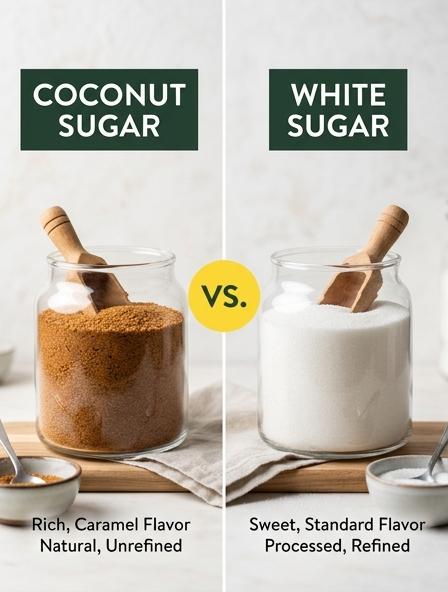
Glycemic Index and Blood Glucose Impact
The primary difference between coconut sugar and white sugar lies in their Glycemic Index (GI), which measures how quickly a carbohydrate raises blood glucose levels. White sugar is a highly refined sweetener with a GI typically ranging from 60 to 65, leading to rapid insulin spikes and subsequent energy crashes.
- White Sugar: GI of approximately 65 (High)
- Coconut Sugar: GI of approximately 35–54 (Low to Moderate)
Coconut sugar retains a small amount of inulin, a prebiotic fiber that slows glucose absorption. While it is still a caloric sweetener, its lower GI profile offers a more gradual rise in blood sugar compared to the aggressive impact of refined sucrose. This makes it a popular alternative for those aiming to manage metabolic responses more effectively.
You might choose coconut sugar for your morning coffee to enjoy a gentle sweetness that helps you avoid the sudden mid-morning energy slump often caused by refined white sugar.
Texture and Crumb Structure in Home Baking
The choice between coconut sugar and white sugar dramatically influences the crumb morphology of your bakes. White granulated sugar features fine crystals that cream efficiently with fats, aerating the batter to produce a light, uniform rise. In contrast, coconut sugar is coarser and less hygroscopic, often leading to a denser, more rustic texture.
- White Sugar: Creates a crisp, aerated, and delicate crumb.
- Coconut Sugar: Results in a moist, chewy, and slightly granular structure.
While white sugar provides the structural snap needed for shortbread, coconut sugar offers a rich depth perfect for brownies. You will find that coconut sugar is the ideal choice when you want to achieve a soft, fudgy center in chocolate chip cookies rather than a traditional crunch.
Nutritional Comparisons of Natural and Refined Sweeteners
When evaluating coconut sugar versus white sugar, the primary differences lie in processing and nutrient retention. White sugar is highly refined, stripped of all minerals to create pure sucrose. Conversely, coconut sugar is a minimally processed natural sweetener derived from coconut palm sap, allowing it to retain trace amounts of potassium, magnesium, and antioxidants.
| Metric | Coconut Sugar | White Sugar |
|---|---|---|
| Glycemic Index | Approximately 35–54 | Approximately 65 |
| Fiber Content | Contains Inulin | None |
| Flavor Profile | Caramel-like | Neutral Sweet |
Many home bakers prefer using coconut sugar in their chewy chocolate chip cookie recipes to achieve a deeper, toasted flavor while benefiting from a slightly lower glycemic impact compared to traditional refined sugars.
Flavor Profiles in Traditional Dessert Preparation
When choosing between coconut sugar and white sugar for traditional desserts, the primary distinction lies in flavor complexity. White sugar is highly refined, offering a neutral, sharp sweetness that allows the primary ingredients of a dish to remain the focal point. Conversely, coconut sugar is minimally processed, retaining a rich profile that adds depth to baked goods.
- White Sugar: Clean, straightforward sweetness with a quick-dissolving crystalline structure.
- Coconut Sugar: Deep, earthy notes reminiscent of caramel, toasted nuts, and butterscotch.
Because coconut sugar contains natural molasses, it behaves similarly to brown sugar but with a lower moisture content. This makes it an excellent choice for recipes requiring a warm, rustic undertone rather than just pure saccharine intensity. You might find that substituting coconut sugar in a classic apple crisp or chewy ginger cookie provides a sophisticated, caramelized finish that many gourmet bakers prefer for a more artisanal taste.
Heat Stability and Caramelization Characteristics
Both coconut sugar and white sugar exhibit high heat stability, making them versatile for various culinary applications. However, their chemical structures lead to different caramelization points. White sugar, which is 99.9% sucrose, melts and turns into a clear liquid before caramelizing at approximately 320°F. Conversely, coconut sugar begins to caramelize at a lower temperature-roughly 275°F-due to its natural mineral content and moisture.
- White Sugar: Best for high-heat recipes requiring a neutral, sweet profile and a crisp texture.
- Coconut Sugar: Ideal for recipes where a fast, deep browning and a toasted flavor are desired.
Home bakers often reach for coconut sugar when making chewy ginger molasses cookies because it achieves a rich, dark caramelization that perfectly enhances the warmth of traditional spices.
Environmental Sustainability and Sourcing Standards
When comparing environmental footprints, coconut sugar is widely regarded as the more sustainable alternative to refined white sugar. Coconut palms are considered "lifegiver" trees that produce significantly more sugar per acre than sugarcane while requiring minimal water and synthetic nutrients. In contrast, industrial white sugar production often relies on intensive monoculture, heavy irrigation, and soil-depleting harvest cycles.
- Resource Efficiency: Coconut palms produce sap for decades, requiring less land clearing than annual cane or beet crops.
- Soil Conservation: The perennial nature of palms helps prevent the erosion and topsoil loss common in tilled sugar fields.
- Sourcing Ethics: Most high-quality coconut sugars are harvested by hand, supporting small-scale farmers and fair-trade cooperatives.
Eco-conscious bakers often reach for coconut sugar when crafting organic desserts to ensure their treats are as kind to the planet as they are to the palate.
Moisture Retention and Freshness in Baked Goods
The primary difference between coconut sugar and white sugar lies in their hygroscopic properties-the ability to attract and hold water molecules. Coconut sugar is less refined and contains trace amounts of inulin fiber, which helps it retain moisture more effectively than the dry, crystalline structure of white sugar. This results in significant differences in the final crumb and shelf-life of your recipes.
- Coconut Sugar: Produces a moist, dense, and soft texture similar to brown sugar.
- White Sugar: Creates a lighter, crispier finish due to its lack of residual moisture.
While white sugar is ideal for airy sponges or crunchy shortbread, coconut sugar acts as a natural humectant that keeps treats from drying out too quickly. You will find that substituting coconut sugar into your favorite banana bread recipe results in a decadent, fudgy consistency that stays fresh and tender on your counter for days.
Metabolic Health and Energy Level Stability
The primary metabolic difference between coconut sugar and white sugar lies in their Glycemic Index (GI) and fiber content. While white sugar is a highly refined carbohydrate that triggers rapid insulin spikes, coconut sugar contains inulin, a prebiotic fiber that slows glucose absorption.
- White Sugar: Features a GI of approximately 65, leading to immediate energy surges and subsequent "crashes."
- Coconut Sugar: Maintains a lower GI (around 35–54), promoting more stable blood glucose levels.
Lower glycemic responses reduce the metabolic strain on the pancreas and help prevent the "rollercoaster" effect of energy fluctuations throughout the day. By choosing a sweetener that digests more slowly, you support long-term insulin sensitivity and hormonal balance. You might swap white sugar for coconut sugar in your pre-workout smoothie to enjoy a sustained release of energy that powers your entire session without a sudden mid-routine slump.
Solubility and Consistency in Beverage Applications
When comparing coconut sugar to white sugar in drinks, the primary differences lie in dissolution speed and visual clarity. White sugar is highly refined, allowing it to dissolve almost instantly in both hot and cold liquids without altering the beverage's color. Conversely, coconut sugar is a less processed, granular sweetener that contains natural fibers and minerals, leading to a slower solubility rate and a tendency to leave fine sediment at the bottom of the cup.
- Refined White Sugar: Dissolves completely; ideal for clear spirits, iced teas, and delicate floral infusions.
- Coconut Sugar: Dissolves best in warm liquids; adds a cloudy, amber tint and a subtle earthy texture.
You might prefer stirring a teaspoon of coconut sugar into a warm matcha latte, where its caramel-like notes perfectly complement the grassy tea while providing a rustic, unrefined mouthfeel that many health-conscious drinkers enjoy.
Caloric Density and Long Term Dietary Outcomes
When comparing coconut sugar and white sugar, their caloric density is nearly identical, with both providing approximately 16 calories per teaspoon. Consequently, replacing one with the other does not automatically result in weight loss. However, the long-term dietary outcomes may differ based on metabolic response and glycemic impact.
- White Sugar: Highly refined with a high Glycemic Index (GI) of around 65, leading to rapid insulin spikes.
- Coconut Sugar: Contains inulin fiber, which helps lower its GI to approximately 35, promoting more stable blood glucose levels.
While coconut sugar retains trace minerals like iron and zinc, it remains 70-80% sucrose. Overconsumption of either sweetener is linked to increased risks of obesity and type 2 diabetes. Many health-conscious home cooks prefer using coconut sugar in slow-baked granola recipes because they enjoy the deep caramel notes and the benefit of a sustained energy release compared to the sharp crash associated with refined white sugar.
Coconut Sugar vs White Sugar source and external links
- Coconut sugar is a natural sweetener produced from the sap of the flower bud stem of the coconut palm tree.
- Commonly derived from sugar cane or sugar beets, white sugar is a highly refined carbohydrate used as a primary sweetener in many foods.