
Chicken Stock vs Bone Broth: Comparing Nutrition, Culinary Application, and Extraction Differences
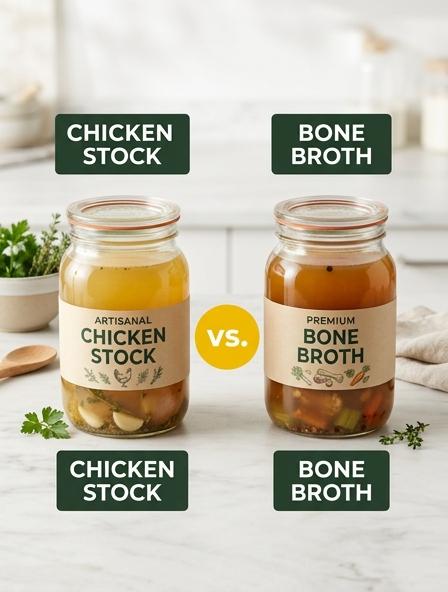
Comparing Nutrient Density and Essential Mineral Content
The primary distinction between bone broth and chicken stock lies in their nutritional concentration. Bone broth is simmered for significantly longer periods-often up to 24 hours-which facilitates the breakdown of collagen and the extraction of trace minerals from the bone marrow. In contrast, chicken stock is cooked for a shorter duration, resulting in a lighter liquid with lower concentrations of bioavailable nutrients.
- Collagen and Gelatin: Bone broth provides high levels of these proteins, essential for joint health and gut integrity.
- Mineral Bioavailability: Prolonged simmering releases higher amounts of calcium, magnesium, and phosphorus into the broth.
- Amino Acids: Bone broth is a denser source of glycine and proline compared to standard stock.
You might reach for a steaming mug of bone broth as a nutrient-dense ritual to support your recovery after a long workout, whereas you would likely use chicken stock as a quick, flavorful base for a light weekday vegetable soup.
Impact of Gelatin Concentration on Sauce Consistency
The primary culinary distinction between chicken stock and bone broth lies in their gelatin density. While both provide a savory base, bone broth undergoes an extended simmering process-often exceeding 12 hours-to extract significant collagen from connective tissues. This higher gelatin concentration directly dictates the "mouthfeel" and thickening power of the resulting liquid.
| Liquid Type | Gelatin Content | Sauce Result |
|---|---|---|
| Chicken Stock | Moderate | Light body; usually requires roux or starch. |
| Bone Broth | High | Rich, syrupy finish; natural emulsification. |
When reduced, the concentrated proteins in bone broth create a luxurious, velvet-like consistency that coats a spoon without the need for additional thickeners. Home chefs love using a gelatin-rich bone broth to create a glossy pan sauce that clings perfectly to a seared chicken breast for a professional, restaurant-style presentation.
Distinct Savory Profiles for Everyday Cooking
Choosing between chicken stock and bone broth depends on the desired depth of flavor and mouthfeel. Chicken stock is typically simmered for a shorter duration using meaty bones and aromatics, yielding a light, versatile base that complements ingredients without overpowering them. Conversely, bone broth is defined by an extended extraction process-often simmering for 12 to 24 hours-which releases collagen and marrow to produce a thick, deeply savory liquid with a velvety texture.
- Chicken Stock: Provides a clean, subtle finish perfect for risottos and delicate sauces.
- Bone Broth: Offers a robust, hearty profile rich in protein and minerals.
For a quick weeknight dinner, many home cooks prefer the neutral profile of chicken stock for a classic vegetable soup, while health enthusiasts often enjoy a steaming mug of seasoned bone broth as a nourishing, protein-rich sipping tonic.
Differences in Extraction Methods and Simmering Times
The primary distinction between chicken stock and bone broth lies in the intensity of the extraction process and the duration of heat exposure. Chicken stock is typically crafted by simmering meaty bones and aromatics for a moderate period to achieve a balanced flavor and light body. In contrast, bone broth focuses on deep nutrient extraction, utilizing roasted bones simmered for a significantly longer duration to break down collagen and release marrow minerals.
| Feature | Chicken Stock | Bone Broth |
|---|---|---|
| Simmering Time | 2–4 Hours | 12–24+ Hours |
| Key Component | Meat and connective tissue | Marrow-rich bones and acid |
| Consistency | Liquid/Thin | Gelatinous when chilled |
Home cooks often reach for a quick-simmered chicken stock to deglaze a pan for Sunday risotto, while health-conscious individuals prefer sipping a warm mug of 24-hour bone broth to support gut health and joint recovery.
Bioavailability of Collagen for Gut Support
When comparing chicken stock and bone broth, the primary differentiator is the concentration and bioavailability of collagen. Bone broth undergoes a prolonged simmering process-often exceeding 12 to 24 hours-which effectively breaks down connective tissues into gelatin. This hydrolyzed form of collagen is highly bioavailable, allowing the body to easily absorb essential amino acids like glycine and glutamine, which are critical for sealing the intestinal lining.
- Bone Broth: High gelatin density; optimal for repairing "leaky gut" and reducing inflammation.
- Chicken Stock: Lower collagen content; primarily used for culinary flavor rather than therapeutic support.
Many wellness enthusiasts prefer sipping a warm mug of slow-simmered bone broth as a daily ritual to soothe their digestive tract and naturally reinforce gut integrity after a heavy meal.
Suitability for Various Culinary Applications
Choosing between chicken stock and bone broth depends on the desired depth of flavor and texture in your dish. Chicken stock is generally simmered for a shorter period, providing a light, savory foundation that complements rather than overpowers. In contrast, bone broth is simmered for up to 24 hours to extract maximum collagen and minerals, resulting in a viscous, nutrient-dense liquid with a robust mouthfeel.
- Chicken Stock: Perfect for deglazing pans, poaching poultry, or as a liquid base for risottos and delicate sauces.
- Bone Broth: Ideal for hearty stews, sipping as a restorative tonic, or adding protein-rich body to grain-free soups.
You might prefer a clear chicken stock when preparing a light lemon-herb soup, while the rich, gelatinous texture of bone broth is what people love for a deeply satisfying and healing winter braise.
Variations in Protein Levels and Mouthfeel
The primary distinction between chicken stock and bone broth lies in their structural composition and nutrient density. Bone broth is defined by an extended simmering process, often exceeding 12 to 24 hours, which maximizes the extraction of collagen from animal bones. As this collagen breaks down into gelatin, it creates a thick, viscous mouthfeel and a significantly higher protein count per serving. In contrast, chicken stock is simmered for a shorter duration, resulting in a lighter body and a more subtle protein profile.
- Bone Broth: High gelatin content, rich in amino acids, and creates a velvety coating on the palate.
- Chicken Stock: Moderate protein levels, thinner consistency, and a clean finish.
You might prefer the heavy, restorative richness of a bone broth when sipping it solo for health benefits, while a standard chicken stock is often better for a delicate poaching liquid or a bright summer vegetable soup.
Evaluating Cost Per Serving and Ingredient Utilization
When analyzing the economics of chicken stock versus bone broth, the primary variables are ingredient density and simmering time. Chicken stock typically utilizes meaty carcasses and aromatics, requiring a shorter 2-to-4-hour cook time. In contrast, bone broth demands a higher volume of marrow-rich bones and a 12-to-24-hour extraction process, leading to higher energy costs per batch.
- Chicken Stock: Higher yield from fewer bones; lower utility cost due to brief simmering.
- Bone Broth: Maximum ingredient utilization by breaking down collagen; higher cost per serving due to bone density.
While bone broth is more expensive to produce, it excels in waste reduction by extracting every possible nutrient from kitchen scraps. Chicken stock remains the more budget-friendly option for high-volume culinary bases.
You might prefer the quick affordability of chicken stock for a weekday risotto, whereas the nutrient-dense efficiency of bone broth is ideal when you want to maximize the value of a high-quality Sunday roast.
Caloric Content and Weight Management Roles
When comparing chicken stock and bone broth for weight management, the primary distinction lies in nutrient density and satiety. Bone broth is simmered for extended periods to extract collagen, resulting in a higher protein concentration that helps regulate appetite. In contrast, chicken stock is lighter and contains fewer calories per serving, making it an excellent base for high-volume cooking where minimizing total energy intake is the priority.
| Metric (per cup) | Chicken Stock | Bone Broth |
|---|---|---|
| Calories | ~15–30 kcal | ~40–60 kcal |
| Protein | ~1–2g | ~9–12g |
Health-conscious professionals often swap their afternoon snack for a warm mug of seasoned bone broth to curb hunger pangs and maintain focus until dinner.
Structural Differences in Long and Short Simmered Bases
The primary distinction between chicken stock and bone broth lies in the extraction time and the resulting molecular viscosity. Chicken stock is typically simmered for 2 to 4 hours, utilizing a mix of meat and bones to create a light, liquid foundation. In contrast, bone broth undergoes a prolonged simmering process, often exceeding 12 to 24 hours, to maximize nutrient density.
- Chicken Stock: Thinner consistency, focused on flavor, remains liquid when chilled.
- Bone Broth: High gelatin content, viscous texture, transforms into a jelly-like state when cold.
This extended heat exposure breaks down collagen from connective tissues into gelatin, providing bone broth with its signature structural "jiggle." While stock provides a subtle aromatic base, bone broth offers a rich mouthfeel due to its concentrated protein profile. You might prefer the delicate clarity of a short-simmered stock for a refined lemon chicken soup, whereas people love a hearty bone broth as a restorative, protein-packed warm beverage during the winter months.
Chicken Stock vs Bone Broth source and external links
- Commonly used as a base for soups and sauces, chicken stock is prepared by simmering chicken bones with vegetables and aromatics for several hours.
- Known for its high collagen content and long cooking process, bone broth is made by boiling animal bones and connective tissue for an extended period.