
Chestnut Honey vs Regular Honey: Are They The Same? Flavor Profiles, Nutritional Density, and Culinary Performance
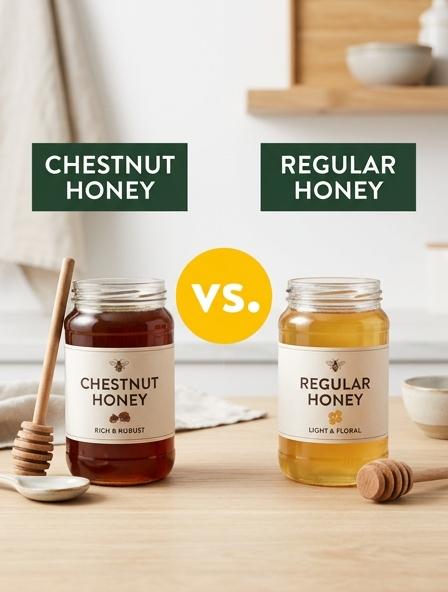
Flavor profile variations in dark and light nectar varieties
Honey flavor profiles are primarily dictated by their botanical origin, creating a distinct spectrum between light, floral varieties and dark, resinous types. Regular honeys, such as Clover or Acacia, are prized for their mild sweetness, delicate fruity notes, and clean finish. In contrast, Chestnut honey is a monofloral variety renowned for its intense, sophisticated character.
- Regular Honey: Typically light to amber, offering a sugary, mild, and floral palate.
- Chestnut Honey: Deep reddish-brown with a pungent aroma and a complex, slightly bitter aftertaste.
The stark difference lies in the mineral and tannin content; while light honeys provide straightforward sweetness, the dark nectar of the chestnut tree offers woody, malt-like undertones. Gastronomy enthusiasts often prefer drizzling the bold, smoky notes of Chestnut honey over sharp Gorgonzola or aged Pecorino to create a perfect savory-sweet balance.
Nutritional Density and Antioxidant Concentration Differences
Chestnut honey significantly outperforms standard wildflower or clover honey in terms of micronutrient density. While regular honey is primarily valued for its natural sugars and mild enzymes, chestnut honey contains exceptionally high levels of essential minerals like potassium, iron, and manganese. Its deep, dark pigment is a direct indicator of its superior antioxidant profile, specifically rich in phenolic acids and flavonoids, which help neutralize oxidative stress more effectively than lighter floral varieties.
| Nutritional Factor | Chestnut Honey | Regular Honey |
|---|---|---|
| Antioxidant Capacity | Very High | Low to Moderate |
| Mineral Concentration | High (Rich in K, Fe) | Trace amounts |
| Glycemic Index | Lower | Higher |
You might prefer drizzling this robust, woody nectar over aged pecorino cheese to balance its characteristic bitterness with savory notes, much like gourmet enthusiasts in the Mediterranean do.
Performance and Stability During High-Heat Cooking
Chestnut honey exhibits remarkable thermal stability compared to regular floral honeys like clover or wildflower. Due to its high mineral content and lower moisture levels, chestnut honey maintains its structural integrity and complex flavor profile even when exposed to intense heat. While regular honey often loses its delicate floral notes and becomes unidimensionally sweet or even acrid when scorched, chestnut honey's robust tannins provide a buffer against degradation.
- Chestnut Honey: High resistance to flavor loss; develops deep, smoky caramelization without becoming cloying.
- Regular Honey: Rapidly loses volatile aromas; sugar profile tends to burn or "thin out" under high heat.
Professional chefs often choose chestnut honey for glazing slow-roasted meats or flavoring dense spice cakes, as its signature bitter-sweet depth survives the oven's intensity far better than standard varieties.
Aromatic impact on hot beverages and infusions
Chestnut honey offers a distinctive sensory profile that contrasts sharply with the neutral sweetness of regular honey. When added to hot beverages, regular honeys-such as wildflower or clover-primarily function as sweeteners, enhancing the liquid's natural profile without altering its core essence. In contrast, chestnut honey introduces deep, woody, and slightly bitter undertones that fundamentally shift the drink's aromatic structure.
- Regular Honey: Delivers a clean, floral sweetness ideal for delicate white or green teas.
- Chestnut Honey: Provides a tannic, malty pungency that stands up to robust black teas or espresso.
Because chestnut honey is rich in minerals and tannins, its aroma becomes more pronounced when hit by the steam of a hot infusion. While regular honey blends into the background, the chestnut variety adds a sophisticated depth for those who find standard sweeteners too simplistic. You might enjoy stirring a spoonful of chestnut honey into a dark roasted coffee to highlight its smoky notes and temper the acidity with a complex, herbal finish.
Texture and Viscosity Effects in Homemade Dressings
The structural integrity of a homemade dressing depends heavily on the honey's viscosity. Regular varieties, such as clover or wildflower honey, possess a thinner, more fluid consistency. These are ideal for light vinaigrettes where quick dispersion is required. Conversely, chestnut honey is notably dense and viscous, acting as a powerful emulsifier that binds oil and acid more effectively.
- Regular Honey: Low viscosity; creates fluid, highly pourable dressings.
- Chestnut Honey: High density; provides a thick, velvety "cling" to ingredients.
Its unique rheological properties mean it doesn't just sweeten; it adds significant body to the sauce. Home chefs often prefer whisking chestnut honey into a bold mustard vinaigrette to ensure the dressing perfectly coats a hearty radicchio and pear salad without pooling at the bottom of the bowl.
Glycemic impact and metabolic health considerations
When comparing chestnut honey to regular wildflower or clover varieties, the glycemic index (GI) is a primary differentiator. Most honey types possess a relatively balanced glucose-to-fructose ratio, which can cause a rapid spike in blood sugar. In contrast, chestnut honey is characterized by a significantly higher fructose content, resulting in a lower glycemic index.
- Chestnut Honey: High fructose-to-glucose ratio; slower digestion and lower insulin demand.
- Regular Honey: Higher glucose levels; faster absorption and more immediate glycemic impact.
This metabolic advantage makes chestnut honey a more favorable option for those looking to manage insulin sensitivity and avoid the oxidative stress associated with blood sugar fluctuations. Because it provides a more sustained release of energy, it supports metabolic stability better than processed alternatives. Health-conscious professionals often stir a teaspoon of chestnut honey into their morning oats to ensure they remain focused and energized without the mid-morning sugar crash.
Color intensity and visual results in culinary glazes
The choice between chestnut honey and regular honey dramatically alters the visual appeal of a finished dish. Regular varieties, such as clover or wildflower honey, typically possess a light, translucent amber hue. When used as a glaze, they provide a subtle, golden shimmer and a glassy finish that enhances the food's natural tones without overpowering them.
Conversely, chestnut honey is renowned for its deep, dark brown, and sometimes nearly opaque pigment. Due to its high mineral content and resistance to high heat, it produces a much more intense color transformation during the cooking process. The visual differences are distinct:
- Regular Honey: Delivers a bright, pale gold glow ideal for light poultry or fruit tarts.
- Chestnut Honey: Creates a rich, mahogany-colored crust with a rustic, lacquered appearance.
Professional chefs often choose chestnut honey when roasting a rack of lamb to achieve that perfectly dark, bronzed exterior that signals deep, savory caramelization to the diner.
Trace mineral content and micronutrient availability
The nutritional profile of chestnut honey is significantly more robust than that of regular floral honeys. While standard honey primarily offers simple sugars, chestnut honey is a dense source of essential trace minerals. Its deep, dark amber hue is a direct indicator of its high mineral concentration and antioxidant capacity.
- Potassium: Vital for heart health and maintaining cellular fluid balance.
- Iron and Manganese: Crucial for metabolic function, enzyme activation, and blood health.
- Copper: Supports immune response and the structural integrity of connective tissues.
The micronutrients in chestnut honey are highly bioavailable because they are naturally chelated within the honey's organic matrix, making them easier for the body to absorb compared to synthetic alternatives. Research shows chestnut honey can contain significantly higher levels of these elements than lighter varieties like clover. You can stir a spoonful into your post-workout tea to naturally replenish electrolytes and minerals lost during physical exertion.
Bitterness and Sweetness Levels in Dessert Applications
Regular honey, such as clover or wildflower, is prized for its high glycemic sweetness and delicate floral notes, making it a versatile sweetener for light sponges and fruit tarts. Conversely, chestnut honey offers a sophisticated, dark profile characterized by intense woody tannins and a distinct, lingering bitterness. This complexity allows it to function more like a flavor enhancer than a simple sugar source.
- Regular Honey: High perceived sweetness, mild aroma, and a clean, sugary finish.
- Chestnut Honey: Low perceived sweetness, malty undertones, and a bold, bitter aftertaste.
The choice between these two depends on whether you want to amplify a dish's sugar content or introduce a savory contrast. You might choose chestnut honey to drizzle over a wedge of salty Gorgonzola or a decadent dark chocolate mousse to cut through the richness with its unique, smoky-bitter complexity.
Crystallization rates and pantry storage characteristics
The primary difference in shelf stability between chestnut honey and regular varieties, such as clover or wildflower, lies in their specific sugar composition. Most floral honeys contain a high glucose-to-fructose ratio, which triggers rapid crystallization, turning the liquid into a firm, gritty solid within months. Chestnut honey, however, is naturally high in fructose, allowing it to remain in a fluid, viscous state for up to two years.
- Regular Honey: High glucose leads to fast crystallization and a shorter liquid shelf life.
- Chestnut Honey: High fructose content ensures it stays liquid and dark for extended periods.
- Storage: Both types should be kept in a cool, dark pantry to prevent heat-induced flavor degradation.
You will appreciate the persistent liquidity of chestnut honey when you want to drizzle a smooth, dark ribbon of syrup over a platter of gorgonzola and walnuts without needing to thaw out a jar of hardened sugar crystals.
Chestnut Honey vs Regular Honey source and external links
- Known for its dark color and complex, slightly bitter flavor profile, Chestnut Honey is highly valued for its high mineral content and antioxidant properties.
- Commonly harvested from various floral sources, Regular Honey serves as a versatile natural sweetener with a characteristically mild and floral taste.