
Chestnut Honey vs Raw Honey: The Differences in Culinary Performance, Nutritional Composition, and Storage Stability
Flavor Profile Variations in Daily Cooking
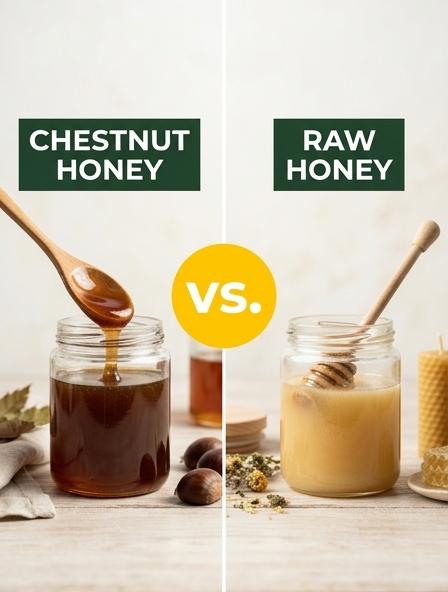
Distinguishing between chestnut honey and raw honey is essential for mastering culinary balance. Chestnut honey is prized for its intense, dark profile, offering a sophisticated bitterness with smoky, woody undertones. In contrast, standard raw honey-often sourced from wildflowers-delivers a bright, clean sweetness with mild floral notes and a creamy texture.
| Honey Variety | Dominant Notes | Best Culinary Pairings |
|---|---|---|
| Chestnut Honey | Bitter, Nutty, Tannic | Gamey meats, gorgonzola, dark rye bread |
| Raw Honey | Sweet, Floral, Fruity | Yogurt, light vinaigrettes, herbal teas |
Because chestnut honey lacks the cloying sweetness of processed varieties, it excels in savory marinades and high-heat applications where its depth persists. You might prefer drizzling robust chestnut honey over a platter of aged Pecorino for an earthy finish, while raw clover honey remains the quintessential choice for sweetening your morning smoothie or delicate pastries.
Heat Tolerance and Performance in Baking
When comparing chestnut honey to standard raw honey in the kitchen, heat tolerance is a defining factor. Raw honey is prized for its live enzymes and delicate floral notes, which are often compromised at temperatures exceeding 104°F. Consequently, raw varieties are best reserved for drizzling or low-heat applications to preserve their nutritional integrity and subtle aromatics.
- Chestnut Honey: Boasts a high mineral content and robust profile that maintains its deep, woody flavor even during high-temperature baking.
- Raw Honey: Contains heat-sensitive antioxidants; flavor profiles can become muted or overly acidic when subjected to oven heat.
Chestnut honey's low acidity and unique sugar composition prevent it from thinning out too rapidly, providing a consistent structure in sponges and artisanal breads. You might prefer the bold, smoky undertones of chestnut honey when crafting a rustic sourdough or a spiced gingerbread where the honey's character needs to punch through the heat.
Comparison of Mineral and Enzyme Content
While all raw honey contains beneficial bioactive compounds, chestnut honey is particularly distinguished by its superior mineral density. Unlike lighter polyfloral raw honeys, chestnut honey is a powerhouse of potassium, manganese, and iron. These minerals contribute to its dark pigment and its reputation for supporting cardiovascular health and blood circulation.
| Nutrient Profile | Chestnut Honey | Standard Raw Honey |
|---|---|---|
| Mineral Content | Exceptionally High | Moderate |
| Enzyme Activity | Very High (Diastase) | High (If unheated) |
| Antioxidants | High Phenolic Content | Variable |
Both varieties preserve vital enzymes like glucose oxidase and catalase because they remain unpasteurized. However, the specific chemical structure of chestnut honey offers a higher antioxidant capacity, making it more effective at neutralizing free radicals. You might choose chestnut honey as a functional food during your morning routine to provide a mineral-rich energy boost that supports your immune system better than standard sweeteners.
Visual Contrast and Color Presentation in Dishes
The aesthetic appeal of a dish often depends on the color profile of its ingredients. When comparing chestnut honey to typical raw honey varieties, the visual difference is profound. Chestnut honey is celebrated for its deep, dark brown to mahogany tones, providing a moody and sophisticated look. Conversely, standard raw honeys, such as wildflower or clover, usually range from pale translucent gold to a creamy, opaque yellow.
- Chestnut Honey: Offers a bold, high-contrast syrup that stands out against light-colored foods.
- Raw Honey: Provides a bright, sun-kissed glow that complements fruits and golden pastries.
The viscosity and clarity also play a role; while many raw honeys crystallize into a thick, pale paste, chestnut honey remains liquid and dark for longer periods due to its high fructose content. You might love drizzling the ink-like chestnut honey over a snowy white ricotta or a sharp Pecorino cheese to create a dramatic, gourmet centerpiece that guests will find irresistible.
Viscosity and Texture in Cold Applications
When comparing chestnut honey to typical raw floral varieties, the most significant difference in cold applications is the resistance to crystallization. Chestnut honey features a high fructose-to-glucose ratio, which allows it to maintain a consistently fluid, low-viscosity state even when refrigerated or drizzled over chilled foods.
- Chestnut Honey: Remains dark, translucent, and runny; rarely crystallizes.
- Typical Raw Honey: Often thickens, becomes opaque, or develops a grainy texture as glucose crystals precipitate in cool temperatures.
This structural stability ensures that chestnut honey provides a persistent, smooth mouthfeel without the gritty interference often found in raw multi-floral honeys that have begun to set. Chefs and home cooks particularly love drizzling glossy chestnut honey over a bowl of cold Greek yogurt and toasted walnuts for a sophisticated, bittersweet finish that stays perfectly liquid until the last bite.
Aromatic Influence on Hot Infusions
The choice between chestnut honey and standard raw honey significantly alters the sensory profile of hot beverages. While most raw honeys offer delicate floral notes that can dissipate under high heat, chestnut honey is uniquely heat-stable. Its high mineral content and tannic properties ensure that its bold, woodsy aroma persists even in boiling water.
- Chestnut Honey: Deep, smoky, and slightly bitter; it stands up to strong flavors like coffee or dark tea.
- Raw Wildflower Honey: Light and fruity; its subtle aromatics are best preserved in lukewarm infusions to protect sensitive enzymes.
Unlike lighter varieties that simply add sweetness, chestnut honey introduces a complex, malty dimension that balances the astringency of herbal brews. You might prefer stirring a generous dollop of chestnut honey into a robust black tea or a dark roast coffee to experience how its earthy bitterness complements the brew's natural toasted notes.
Nutritional Stability During Thermal Processing
Thermal processing significantly impacts the bioactivity of honey. While raw honey retains its full enzymatic profile, standard pasteurization can degrade heat-sensitive compounds like diastase and invertase. Chestnut honey stands out in this regard due to its unique chemical composition. Studies indicate that its high phenolic content and mineral density provide a natural defense against thermal degradation compared to lighter floral varieties.
- Enzymatic Retention: Raw honey preserves live enzymes often lost during industrial heating.
- Antioxidant Buffering: Chestnut honey's high tannin levels resist oxidation at slightly elevated temperatures.
- HMF Levels: Darker honeys typically show slower development of hydroxymethylfurfural (HMF), a marker of heat damage.
You might prefer drizzling raw chestnut honey over warm morning porridge to enjoy its robust, woody flavor without compromising the delicate antioxidants that health-conscious foodies prioritize.
Balancing Sharp and Mild Notes in Savory Recipes
When developing savory profiles, the choice between chestnut honey and typical raw honey depends on the intensity of your base ingredients. Chestnut honey is uniquely bold, featuring a dark, smoky, and slightly bitter character that stands up to pungent flavors. In contrast, most raw floral honeys provide a clean, delicate sweetness that rounds out sharp vinegars or citrus without dominating the palate.
- Chestnut Honey: Enhances gamey meats, smoked salts, and earthy mushrooms through its tannic depth.
- Raw Honey: Softens the heat in spicy glazes and balances acidity in light vinaigrettes.
Food enthusiasts often drizzle chestnut honey over a board of aged Gorgonzola and toasted walnuts to let its sophisticated, woody notes cut through the intense richness of the cheese.
Effect on Fermentation and Bread Rise
Honey acts as a natural catalyst in baking by providing fermentable sugars that fuel yeast activity. Raw honey, rich in living enzymes, typically accelerates the fermentation process, leading to a rapid rise and a soft, airy crumb. In contrast, chestnut honey has a unique chemical profile characterized by high mineral content and lower acidity, which can lead to a more controlled and steady fermentation.
| Feature | Raw Honey | Chestnut Honey |
|---|---|---|
| Yeast Response | Rapid Acceleration | Steady/Moderate |
| Crust Development | Golden Brown | Dark Caramelized |
Artisan bakers often reach for chestnut honey when crafting a rustic sourdough loaf to achieve a bold, nutty aroma and a deeply bronzed crust that pairs perfectly with aged cheeses.
Crystallization Tendencies and Storage Durability
The primary difference in the shelf life and texture of these honeys lies in their sugar composition. Most raw honeys contain high levels of glucose, which causes them to crystallize and turn solid or grainy within a few months. In contrast, chestnut honey is prized for its high fructose-to-glucose ratio, a trait that allows it to remain in a liquid state for several years.
- Raw Multi-flower Honey: High glucose leads to rapid crystallization and a shorter liquid shelf life.
- Chestnut Honey: High fructose content ensures long-term fluidity and resistance to granulating.
- Storage Stability: While both require airtight containers, chestnut honey is significantly more durable against texture changes.
You will love keeping a jar of chestnut honey in your pantry if you enjoy drizzling a perfectly smooth, dark syrup over gourmet cheeses without ever having to melt away gritty sugar crystals.
Chestnut Honey vs Raw Honey source and external links
- Known for its dark color and distinctively bitter undertone, Chestnut Honey is highly valued for its unique flavor profile and rich mineral content.
- Unlike processed alternatives, Raw Honey remains unheated and unfiltered to preserve its natural enzymes, antioxidants, and pollen.