
Charlotte Potatoes vs Yukon Gold Potatoes: Which is Best for Roasting, Mashing, and Boiling?
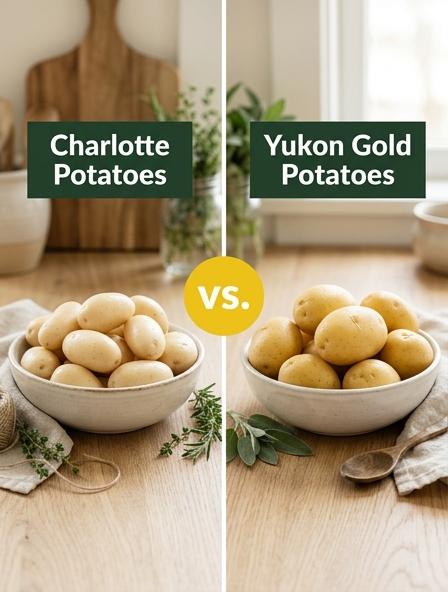
Texture Stability in Boiling and Steaming
The primary difference between Charlotte and Yukon Gold potatoes during wet-heat cooking lies in their starch-to-moisture ratio. Charlotte potatoes are a premier waxy variety, characterized by low starch content that prevents the cell walls from breaking down. This ensures they maintain their exact shape and a firm, silky bite even after intensive boiling.
In contrast, Yukon Gold potatoes are classified as all-purpose. While they possess enough waxiness to hold together better than floury varieties, they have a higher starch content than Charlottes. This results in a texture that softens at the edges and becomes somewhat creamier, rather than remaining strictly firm.
- Charlotte: Exceptional integrity; stays translucent and firm.
- Yukon Gold: Moderate integrity; develops a tender, velvety surface.
You will appreciate the resilient Charlotte when preparing a classic cold potato salad that requires clean, defined slices, whereas the Yukon Gold is the go-to choice for a rustic steamed side dish where you want a slightly softer, buttery mouthfeel.
Starch Content and Mash Consistency
The primary difference between Charlotte and Yukon Gold potatoes lies in their starch-to-water ratio, which dictates their final culinary texture. Charlotte potatoes are a classic waxy variety with low starch content, meaning they hold their structure firmly under heat. In contrast, Yukon Gold potatoes are categorized as medium-starch or "all-purpose," offering a unique balance between waxy and floury characteristics.
- Charlotte: Low starch; results in a firm, waxy, or even gluey mash if over-processed.
- Yukon Gold: Medium starch; yields a smooth, naturally buttery, and velvety consistency.
Because Charlotte potatoes resist breaking down, they are difficult to whip into a smooth purée, whereas Yukon Golds naturally emulsify with dairy for a superior mouthfeel. You will likely reach for the Yukon Gold when you want to prepare a luxurious, cloud-like side dish that perfectly absorbs gravy during a traditional Sunday roast.
Health Benefits and Nutrient Profiles
Both Charlotte and Yukon Gold potatoes provide essential nutrients like potassium and vitamin C, which support heart health and immune function. However, their specific profiles vary based on their starch content and pigmentation.
| Feature | Charlotte Potatoes | Yukon Gold Potatoes |
|---|---|---|
| Glycemic Index | Lower (Waxy texture) | Medium (All-purpose) |
| Key Nutrients | High Vitamin C, Potassium | Beta-carotene, Antioxidants |
Charlotte potatoes are excellent for those monitoring blood sugar due to their lower glycemic index. In contrast, the yellow hue of Yukon Golds indicates the presence of carotenoids, which help neutralize free radicals and support eye health. Both varieties are naturally fat-free and provide dietary fiber when consumed with the skin on.
You might prefer the firm Charlotte for a gut-healthy cold potato salad, or reach for the Yukon Gold when you want a naturally buttery, antioxidant-rich mash that satisfies the whole family.
Roasting Results and Internal Density
The culinary performance of Charlotte and Yukon Gold potatoes is defined by their specific internal densities. Charlotte potatoes are quintessentially waxy; their high moisture and low starch content create a dense, firm structure. When roasted, they maintain their precise shape and provide a smooth, creamy mouthfeel rather than breaking down.
Yukon Gold potatoes serve as a middle ground, possessing a medium-starch density that bridges the gap between waxy and floury varieties. This makes them incredibly versatile for high-heat cooking:
- Charlotte: Best for a firm, "al dente" texture and skin-on roasting.
- Yukon Gold: Best for achieving a caramelized, crispy exterior with a buttery, soft interior.
While the Charlotte is prized for its resilience in gourmet salads, the Yukon Gold is the gold standard for traditional roasting. You will likely reach for the Charlotte when preparing a structured, herb-infused side dish, but choose the Yukon Gold when you want a roast potato that perfectly absorbs fats for a melt-in-your-mouth experience.
Skin Thickness and Preparation Time
When comparing Charlotte and Yukon Gold potatoes, skin texture significantly impacts preparation efficiency. Charlotte potatoes are celebrated for their exceptionally thin, delicate skins. This characteristic eliminates the need for peeling, as a quick rinse is typically sufficient before cooking. In contrast, Yukon Gold potatoes feature a slightly thicker, medium-density skin. While their yellow skin is smooth and edible, it provides a bit more structural resistance than the Charlotte variety.
- Charlotte: Ultra-thin skin that integrates seamlessly into dishes; saves significant prep time.
- Yukon Gold: Medium-thin skin; while often left on, some prefer peeling them for a perfectly uniform mash.
Busy home cooks often reach for Charlotte potatoes when they want to toss a vibrant, herb-flecked potato salad together in minutes without ever touching a peeler.
Moisture Levels and Culinary Impact
The moisture content of Charlotte and Yukon Gold potatoes fundamentally changes their performance under heat. Charlotte potatoes are distinctly waxy, containing high moisture and low starch, which ensures they retain their structural integrity after cooking. In contrast, Yukon Golds are considered "all-purpose" tubers, offering a medium starch-to-moisture ratio that results in a naturally creamy, buttery texture.
- Charlotte: High moisture; remains firm and holds its shape when boiled or steamed.
- Yukon Gold: Moderate moisture; develops a tender, fluffy interior that absorbs fats efficiently.
This variance dictates their culinary utility. While Charlottes excel in wet-heat methods where firmness is required, Yukon Golds are prized for their versatility in roasting, mashing, and frying. Home cooks typically choose the waxy Charlotte for a resilient, sliced Niçoise salad, while they favor the gold-hued Yukon for achieving a smooth, decadent holiday mash that resists becoming gluey.
Taste Intensity and Natural Flavor
When comparing the flavor profiles of Charlotte and Yukon Gold potatoes, the distinction lies in their subtle undertones and richness. Charlotte potatoes are celebrated for their delicate, nutty sweetness and a classic "new potato" freshness. In contrast, Yukon Golds provide a more robust, earthy profile with a signature buttery finish that often requires less seasoning.
- Charlotte: Noted for a refined, chestnut-like aroma and clean, sweet finish.
- Yukon Gold: Known for a dense, savory depth that mimics the taste of incorporated fats.
While both varieties offer high taste intensity compared to standard white potatoes, the Charlotte stays firm and bright, whereas the Yukon Gold develops a creamy, mellow complexity during cooking. You might prefer the Charlotte for a vibrant cold Niçoise salad where its nuttiness shines, or choose the Yukon Gold when you want that rich, velvety mash that guests often assume is loaded with extra butter.
Storage Stability and Sprouting
When comparing storage longevity, the Charlotte and Yukon Gold varieties offer different performance levels based on their skin thickness and dormancy periods. Charlotte potatoes, typically classified as second earlies, have relatively thin skins, making them more susceptible to moisture loss and sprouting if not kept in strictly controlled conditions.
| Potato Variety | Storage Potential | Sprouting Risk |
|---|---|---|
| Charlotte | Moderate (3–4 months) | Higher in humid conditions |
| Yukon Gold | High (4–6 months) | Lower; stays dormant longer |
While Yukon Golds are more resilient against shriveling, both require a dark, well-ventilated space to prevent greening. You will likely prefer stocking up on Yukon Golds for your long-term winter pantry needs, whereas Charlottes are best purchased in smaller batches to ensure they retain their firm, waxy bite before the eyes begin to sprout.
Color Retention and Visual Presentation
When comparing Charlotte and Yukon Gold potatoes, their visual appeal often dictates their culinary application. Charlotte potatoes are prized for their elegant, pale-yellow flesh that maintains a translucent, waxy sheen after boiling. In contrast, Yukon Gold potatoes are famous for their signature "built-in butter" look, showcasing a vibrant, golden-yellow interior that remains rich and saturated even after intense cooking processes like mashing or roasting.
- Charlotte: Maintains a delicate, creamy ivory appearance that stays firm on the plate.
- Yukon Gold: Retains a deep, buttery golden hue that looks naturally seasoned.
While both varieties resist the graying oxidation common in starchy tubers, the Yukon Gold offers a more rustic, warm glow compared to the Charlotte's sophisticated, clean aesthetic. You will love serving a vibrant Yukon Gold mash to brighten up a festive holiday dinner, whereas a cold Charlotte potato salad provides a professional, polished look for your next gourmet summer picnic.
Slow Cooking Performance and Shape Integrity
The primary difference in slow-cooking performance between Charlotte and Yukon Gold potatoes lies in their starch-to-moisture ratio. Charlotte potatoes are classic waxy tubers, characterized by a firm texture that resists breaking down. They are the superior choice when distinct, clean-cut shapes are required even after hours of consistent heat.
Yukon Gold potatoes occupy the middle ground as an "all-purpose" variety. While they offer admirable shape integrity compared to russets, their medium-starch density allows the exterior to soften and slightly dissolve into surrounding liquids.
- Charlotte: High moisture, low starch; remains waxy, firm, and holds its skin.
- Yukon Gold: Moderate starch; offers a creamy mouthfeel with a gentle edge breakdown.
You might choose Charlotte potatoes for a slow-cooked Niçoise salad to ensure every cube remains intact, whereas Yukon Gold is the preferred choice for a hearty beef stew where you want the potato to release just enough starch to naturally thicken the gravy.
Charlotte Potatoes vs Yukon Gold Potatoes source and external links
- Charlotte potatoes are a popular French salad variety known for their waxy texture and creamy yellow flesh.
- Yukon Gold potatoes are a versatile cultivar prized for their thin skin and buttery flavor, making them ideal for mashing or roasting.