
Bread Flour vs AP Flour: The Differences in Protein Levels, Gluten Development, and Crumb Structure.
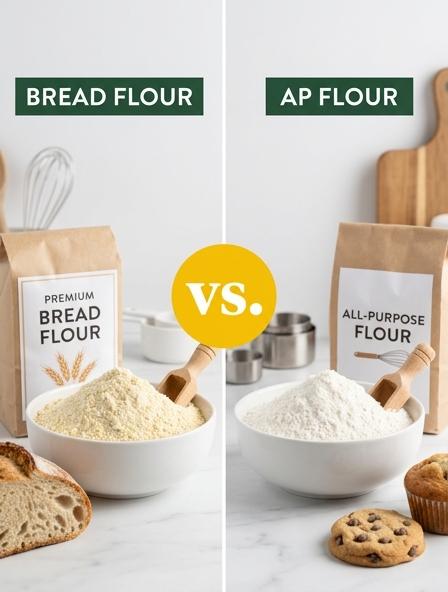
Protein Levels and Dough Strength
The fundamental difference between bread flour and all-purpose (AP) flour is their protein concentration, which directly dictates gluten development. Protein acts as the structural framework; when mixed with water, it forms gluten strands that provide elasticity and gas retention.
- Bread Flour: Typically contains 12% to 14% protein, resulting in high-tension dough and a chewy crumb.
- All-Purpose Flour: Ranges from 9% to 11% protein, creating a more fragile gluten network suitable for lighter textures.
Higher protein levels allow bread flour to withstand long fermentation periods, ensuring the loaf maintains its shape and achieves a significant rise. Conversely, the moderate protein in AP flour prevents baked goods from becoming overly tough. Most bakers prefer bread flour for the airy, open crumb of a rustic sourdough, while they rely on all-purpose flour to ensure a tender, crumbly finish for a batch of homemade blueberry muffins.
Gluten Development in Yeast-Based Recipes
The fundamental difference between bread flour and all-purpose (AP) flour is their protein concentration. Bread flour typically contains 12% to 14% protein, while AP flour averages 10% to 12%. In yeast-leavened doughs, these proteins-glutenin and gliadin-bond to create a stretchy gluten network that traps carbon dioxide gases produced during fermentation.
- Bread Flour: High protein creates a high-tension web, resulting in maximum volume and a characteristic chewy texture.
- AP Flour: Lower protein yields a weaker structure, leading to a more tender, delicate crumb.
Stronger gluten development allows the dough to endure long proofing times and high-heat expansion without collapsing. You might reach for the bread flour when crafting a rustic sourdough with large air pockets, but swap to AP flour when you want your homemade cinnamon rolls to remain soft and pillowy for brunch.
Nutritional Profiles of Milled Wheat Varieties
The primary nutritional difference between bread flour and all-purpose (AP) flour lies in their protein concentration and wheat origin. Bread flour is typically milled from hard red spring wheat, which yields a high protein content ranging from 12% to 14%. Conversely, AP flour is a blend of hard and soft wheat, resulting in a more moderate protein profile of 9% to 12%. These proteins-glutenin and gliadin-are essential for developing the gluten network required for structural integrity in baked goods.
- Bread Flour: Highest protein for maximum elasticity and rise.
- All-Purpose Flour: Balanced protein for tender yet sturdy crumbs.
- Fortification: Both varieties are commonly enriched with iron, thiamin, riboflavin, and folic acid.
While professional bakers demand the high-protein strength of bread flour for chewy artisanal loaves, most home enthusiasts reach for all-purpose flour to achieve that perfectly soft, nostalgic texture in classic chocolate chip cookies.
Impact on Crumb Structure and Density
The protein content in flour directly dictates the final crumb architecture and density of your bake. Bread flour, boasting 12% to 14% protein, facilitates a robust gluten network that traps carbon dioxide efficiently during fermentation. This results in an airy, irregular crumb structure with a satisfying, elastic chew. In contrast, All-Purpose (AP) flour typically contains 10% to 12% protein, yielding a weaker gluten bond that creates a tighter, more uniform, and softer texture.
- Bread Flour: High elasticity, large air pockets, and a sturdy, chewy density.
- AP Flour: Moderate elasticity, fine-grained texture, and a light, tender density.
You will appreciate the structural strength of bread flour when crafting a tall, hole-filled artisanal sourdough, whereas AP flour is the ideal choice for a soft, velvety sandwich loaf that provides a gentle bite.
Liquid Absorption and Hydration Factors
The primary difference in liquid absorption between bread flour and all-purpose (AP) flour lies in their protein content. Bread flour typically contains 12% to 14% protein, while AP flour ranges from 9% to 11%. Higher protein levels mean the flour is "thirstier," as protein molecules absorb significantly more water than starch molecules do.
When substituting one for the other, you must consider these hydration dynamics:
- Bread Flour: Requires more liquid to achieve a supple consistency; provides better structure for high-hydration recipes.
- AP Flour: Reaches saturation faster; using too much liquid can result in a slack, sticky dough that lacks strength.
Home bakers often prefer bread flour when making overnight no-knead loaves because its superior absorption allows the dough to hold its shape even with extra water for that signature open crumb.
Effects on Chewiness and Tenderness in Pastries
The primary difference between bread flour and all-purpose (AP) flour lies in protein content, which directly dictates the texture of your bake. Bread flour contains roughly 12-14% protein, facilitating robust gluten development. This creates a sturdy, elastic network that results in a distinct chewiness and significant structural integrity.
In contrast, AP flour features a moderate protein level (10-12%), yielding a softer, more tender crumb. When selecting a flour, consider these textural outcomes:
- Bread Flour: High elasticity, large air pockets, and a firm, "toothy" bite.
- AP Flour: Fine-textured crumb, delicate structure, and a crumbly finish.
Excessive gluten from bread flour can make delicate pastries like pie crusts unpleasantly tough, while AP flour may lack the strength required for heavy, yeast-raised doughs. You will love the toothsome pull of bread flour in a rustic sourdough, but switch to AP flour when you want a biscuit that shatters with every buttery bite.
Storage Life and Freshness of Finished Goods
The protein content in flour plays a pivotal role in the shelf life and moisture retention of baked items. Bread flour, with its high protein levels, develops a strong gluten network that effectively traps moisture and gasses. This structural integrity slows down retrogradation-the process where starch molecules crystallize and cause staling.
- Bread Flour: Higher gluten helps maintain a moist, chewy crumb in artisan loaves for several days.
- All-Purpose Flour: A weaker protein bond leads to a more delicate crumb that may dry out or become crumbly faster in yeast-based recipes.
While all-purpose flour is excellent for cakes meant to be eaten fresh, bread flour is superior for products requiring a longer counter life. You will appreciate the extra protein in bread flour when baking a large batch of sandwich bread that needs to stay soft and flexible for your family's school lunches all week long.
Caloric Density and Fiber in Grain Products
When analyzing bread flour versus all-purpose (AP) flour, their caloric density is remarkably similar, typically ranging from 360 to 400 calories per 100 grams. Because both are refined wheat products, the fiber-rich bran and germ are removed during the milling process, resulting in a relatively low fiber content-usually around 2 to 3 grams per serving. The primary distinction lies in protein concentration rather than energy density.
- Bread Flour: Contains 12% to 14% protein, ideal for high-yield gluten development.
- AP Flour: Contains 10% to 12% protein, offering a more tender crumb for diverse recipes.
While the nutritional profiles are comparable, the structural differences are significant for baking outcomes. You might opt for the higher protein content of bread flour when preparing a rustic sourdough loaf to ensure the dough maintains the strong, elastic structure that artisanal bread lovers prioritize for a perfect rise.
Rise Potential and Structural Support During Baking
The fundamental distinction between bread flour and all-purpose (AP) flour is their protein content, which directly influences the structural integrity of the crumb. Bread flour contains roughly 12% to 14% protein, while AP flour averages 10% to 12%. This protein variance determines the strength of the gluten network formed during kneading.
- Bread Flour: Creates a rigid, elastic framework that traps carbon dioxide, allowing dough to expand significantly without collapsing.
- AP Flour: Produces a weaker gluten bond, resulting in a more tender, delicate texture but less vertical "lift."
Higher protein levels provide the necessary scaffolding for heavy inclusions like seeds or high-hydration doughs that require extra tension to hold their shape. You will notice the professional difference when your sourdough transforms from a flat, spreading disc into a towering, airy boule with a distinct artisanal ear.
Performance in Standard Home Kitchen Environments
In a typical home kitchen, the primary distinction between bread flour and all-purpose (AP) flour is protein content. Bread flour generally contains 12% to 14% protein, while AP flour ranges from 10% to 12%. This protein variance dictates the strength of the gluten network formed during mixing.
- Bread Flour: Provides the structural integrity and elasticity required for high-rising yeast breads and chewy artisanal loaves.
- All-Purpose Flour: Offers a balanced, tender crumb, making it the most versatile option for chemically leavened recipes.
While AP flour is a reliable "jack-of-all-trades," it may struggle to support heavy grains or long fermentation periods compared to its high-protein counterpart. You might reach for the bread flour when crafting a sturdy, rustic sourdough, but AP flour is what people like for achieving that perfectly soft, melt-in-your-mouth texture in a batch of classic chocolate chip cookies.
Bread Flour vs AP Flour source and external links
- With a high protein content designed to create strong gluten networks for chewy yeast breads, bread flour is the ideal choice for professional-quality loaves.
- Serving as a versatile middle ground for most baking needs, AP flour features a moderate protein content suitable for everything from cookies to pie crusts.
Understanding the fundamental differences between bread flour and all-purpose flour is essential for achieving the desired crumb structure and texture in baking. The primary distinction lies in protein content; bread flour typically contains 12% to 14% protein, whereas all-purpose flour ranges from 10% to 12%. This higher protein concentration facilitates superior gluten development, creating a strong, elastic network capable of trapping gases during fermentation. Consequently, bread flour yields a chewy, artisanal crumb with significant volume, while all-purpose flour produces a softer, more tender result suitable for cookies and quick breads. Selecting the appropriate flour based on these gluten-forming capabilities ensures structural integrity and professional results, whether you are seeking a resilient sourdough or a versatile, multi-purpose crumb for everyday baking applications.