
Black Rice vs Basmati Rice : Comparing Nutrition, Texture, and Health Impact Differences
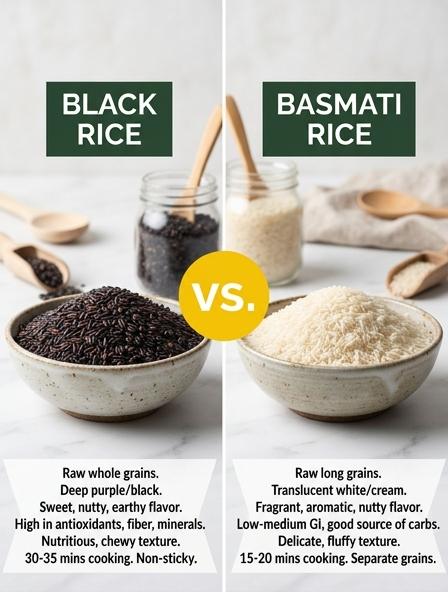
Nutritional Value and Essential Mineral Content
Comparing black rice and basmati rice reveals distinct nutritional advantages. Black rice, often termed "forbidden rice," is a nutritional powerhouse rich in anthocyanins-the same antioxidants found in blueberries. It provides significantly more protein, fiber, and iron than standard white basmati. Conversely, basmati rice is celebrated for its lower glycemic index and high manganese and selenium content, which support metabolism and thyroid function.
- Black Rice: Superior in iron, vitamin E, and fiber for digestive health.
- Basmati Rice: Provides essential B-vitamins and offers a lighter, easily digestible energy source.
While black rice offers a denser mineral profile, basmati remains a staple for those needing quick-absorbing complex carbohydrates. You might choose the aromatic fluffiness of basmati for a light evening curry, but reach for the nutty, deep-purple grains of black rice when you want a high-fiber boost for your midday power bowl.
Blood Sugar Response and Energy Stability
The choice between black and basmati rice significantly impacts metabolic health and daily vitality. Black rice, often categorized as a "superfood," possesses a lower Glycemic Index (GI) and higher fiber concentration. Its deep purple pigment contains anthocyanins, which slow down the breakdown of carbohydrates and prevent sharp insulin spikes.
While Basmati rice is superior to standard short-grain white rice, it remains a medium-GI food. It offers a quicker source of energy, which may be less effective for those managing long-term glucose levels.
| Feature | Black Rice | Basmati Rice |
|---|---|---|
| Glycemic Index | Low (approx. 42) | Medium (50–58) |
| Fiber Content | High | Moderate |
You might choose black rice to maintain steady focus during a high-pressure afternoon at the office, whereas basmati is the classic favorite for a light, aromatic dinner that digests easily before bed.
Cooked Texture and Kernel Firmness
The culinary experience of black rice versus basmati rice is defined by their distinct physical structures. Black rice is a whole grain with its bran layer intact, resulting in a firm, chewy texture that maintains its shape even after boiling. Conversely, basmati rice is a long-grain variety celebrated for its "al dente" yet soft consistency, where grains elongate and remain separate rather than clumping together.
| Feature | Black Rice | Basmati Rice |
|---|---|---|
| Mouthfeel | Dense and Hearty | Light and Airy |
| Grain Integrity | Robust and Nutty | Delicate and Fluffy |
Fitness enthusiasts often enjoy the robust, nutty bite of black rice in cold power bowls, whereas those preparing a traditional pilaf rely on the delicate, non-sticky separation of basmati grains to complement fragrant spices.
Natural Fragrance and Flavor Intensity
Comparing black rice and basmati rice reveals two distinct aromatic profiles. Basmati, often referred to as the "Queen of Fragrance," is world-renowned for its delicate, floral, and popcorn-like scent. This aroma is light and refined, complementing rather than overpowering a dish. In contrast, black rice offers a much bolder, earthy intensity. It features a deep, nutty flavor with subtle sweet undertones, often compared to roasted seeds or blackberries.
- Basmati Rice: High fragrance, subtle buttery flavor.
- Black Rice: Moderate fragrance, intense nutty flavor.
Many home cooks prefer the floral notes of Basmati to balance a spicy lamb curry, while health enthusiasts choose black rice for its ability to add a rich, toasted depth to a fresh Mediterranean grain bowl.
Dietary Fiber and Gut Health Impact
When comparing black rice and basmati rice, the dietary fiber content marks a significant distinction for digestive wellness. Black rice is an unrefined whole grain, retaining its bran layer which provides approximately 5 grams of fiber per cup. This insoluble fiber acts as a prebiotic, supporting the microbiome and improving metabolic health. In contrast, traditional white basmati rice is processed to remove the husk and bran, resulting in a lower fiber profile that is gentler on the digestive tract but less effective for long-term satiety.
| Nutritional Factor | Black Rice | Basmati Rice (White) |
|---|---|---|
| Fiber Content | High (approx. 5g) | Low (approx. 1g) |
| Digestive Speed | Slow (Complex) | Fast (Simple) |
You might choose the robust, nutty texture of black rice when prepping a hearty meal prep bowl to ensure you stay full and your gut bacteria remains thriving throughout a long workday.
Preparation Duration and Water Volume Requirements
Cooking black rice versus Basmati rice requires different approaches to timing and hydration. Black rice is a dense whole grain with an intact bran layer, necessitating more liquid and a longer simmer to achieve a tender texture. In contrast, white Basmati rice is known for its speed and light, airy finish.
| Rice Variety | Water-to-Rice Ratio | Average Cook Time |
|---|---|---|
| Black Rice | 2.5 : 1 | 35–50 Minutes |
| Basmati Rice | 1.5 : 1 | 15–20 Minutes |
While Basmati requires a thorough rinse to remove surface starch, black rice often benefits from a pre-cook soak to help soften its hearty exterior. You might choose aromatic Basmati for a lightning-fast Tuesday stir-fry, or select the deep, chewy texture of black rice when crafting a gourmet, antioxidant-rich salad for a leisurely Sunday brunch.
Color Presentation and Visual Influence on Meals
The visual appeal of a dish is significantly influenced by the choice between black rice and basmati rice. Black rice, often referred to as "forbidden rice," contains high levels of anthocyanins, giving it a deep purple or obsidian hue that provides a dramatic, gourmet contrast on the plate. Conversely, basmati rice is prized for its snowy white or creamy appearance and long, slender grains that offer a clean, traditional aesthetic.
- Black Rice: Delivers a bold, exotic look that acts as a focal point for modern fusion cuisine.
- Basmati Rice: Provides a neutral, elegant backdrop that highlights the vibrant colors of stews, dals, and stir-fries.
You might choose the striking dark sheen of black rice to create a sophisticated "wow factor" for a dinner party, or rely on the fluffy, pearlescent grains of basmati to perfectly balance a colorful, spicy curry.
Antioxidant Levels and Long Term Wellness Support
When comparing black rice to basmati rice, the most significant health distinction is the presence of anthocyanins. Black rice is a nutritional powerhouse, containing high levels of these potent antioxidants which give the grain its signature deep purple pigment. These compounds are instrumental in long-term wellness, as they help neutralize oxidative stress and may lower the risk of chronic inflammatory conditions.
- Black Rice: Rich in anthocyanins and Vitamin E for cellular protection and heart health.
- Basmati Rice: While offering a lower glycemic index, it lacks the dense phytonutrient concentration found in pigmented varieties.
While basmati is prized for its light texture and fragrance, black rice functions as a true superfood for those prioritizing longevity. Health-conscious home cooks often swap their traditional basmati pilaf for a black rice base when preparing weekly meal preps to ensure every bite actively supports their body's defense against environmental toxins.
Satiety Factors and Caloric Density Variations
Understanding the metabolic impact of black rice versus basmati rice is essential for weight management. Black rice is a dense, whole grain rich in fiber and anthocyanin antioxidants, which significantly slows digestion and triggers long-term satiety. In contrast, white basmati rice, while lower in glycemic index than standard white rice, lacks the fibrous bran layer, leading to a faster caloric absorption rate.
| Metric | Black Rice | Basmati Rice (White) |
|---|---|---|
| Fiber Content | High (approx. 5g) | Low (approx. 1g) |
| Digestive Speed | Slow | Moderate |
While both varieties contain roughly 160–210 calories per cooked cup, the structural complexity of black rice prevents the "hunger spikes" often associated with lighter grains. Weight-conscious diners often prefer black rice for dense meal-prep bowls to stay full until dinner, while athletes may favor aromatic basmati for a quicker-digesting energy source before a heavy workout.
Performance Results in Savory and Sweet Applications
Choosing between black rice and basmati rice depends on your desired texture and flavor profile. Basmati rice is the gold standard for savory, aromatic dishes where long, separate, and fluffy grains are essential. Conversely, black rice offers a dense, chewy texture and a nutty flavor that provides a striking visual contrast in modern culinary displays.
- Basmati Rice: Its slender grains absorb broths perfectly, making it the top choice for pilafs and biryanis.
- Black Rice: Its high anthocyanin content creates a deep purple hue, excelling in hearty grain bowls and antioxidant-rich salads.
In sweet applications, black rice is legendary for making Thai-style sticky puddings due to its natural richness. While basmati is often used in creamy Indian kheer, it remains light rather than starchy. You might find yourself reaching for aromatic basmati to balance a spicy garlic shrimp stir-fry, or choosing black rice simmered in coconut milk for a decadent, health-conscious dessert that wows your dinner guests.
Black Rice vs Basmati Rice source and external links
- Often referred to as forbidden rice, Black Rice is a highly nutritious whole grain packed with powerful antioxidants known as anthocyanins.
- Prized for its distinct aroma and long, slender grains, Basmati Rice is a fragrant variety traditionally grown in the foothills of the Himalayas.