
Bintje Potatoes vs Potato Chips: The Differences in Nutrition, Health Impact, and Culinary Versatility.
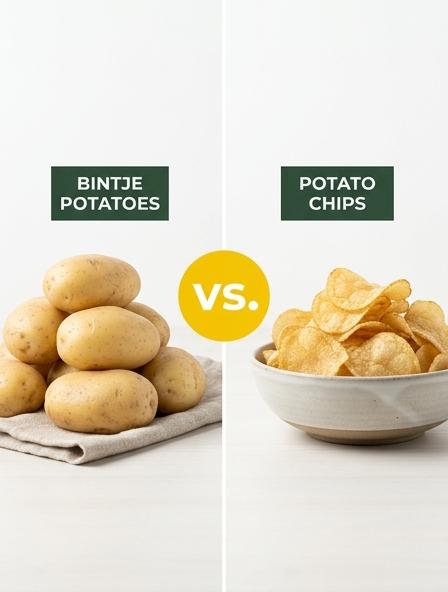
Nutritional Comparison of Fresh Tubers and Fried Crisps
Comparing whole Bintje potatoes to commercial potato chips reveals a significant nutritional divide. While the Bintje is a nutrient-dense whole food, the industrial frying process transforms it into a high-calorie snack. Fresh Bintje potatoes are naturally rich in potassium, fiber, and Vitamin C, particularly when steamed or boiled.
- Caloric Density: Boiled Bintje potatoes contain roughly 77 kcal per 100g, whereas fried chips often exceed 500 kcal.
- Fat Content: Fresh tubers are virtually fat-free; chips contain high levels of saturated or trans fats from frying oils.
- Sodium: Processed crisps are heavily salted, while fresh potatoes are naturally low in sodium.
The transition from tuber to crisp involves high-heat processing, which can lead to the formation of acrylamides and the loss of water-soluble vitamins. You might prefer a fluffy, herb-roasted Bintje for a balanced weekday dinner, while a bag of salty crisps is what you reach for when craving an occasional indulgent crunch during a football game.
Caloric Impact of Whole Food Sides versus Packaged Slices
Bintje potatoes represent a nutrient-dense whole food option compared to the ultra-processed nature of packaged potato chips. While a medium Bintje is naturally low in fat and composed largely of water, the commercial frying process used for chips removes moisture and introduces significant caloric density through processed oils.
The discrepancy in caloric load is striking when comparing equal weights:
- Boiled Bintje: Approximately 77 calories per 100g.
- Fried Potato Chips: Approximately 536 calories per 100g.
Choosing the whole tuber ensures higher satiety and better weight management by avoiding the "empty calories" typical of snack foods. The fiber content in a Bintje potato also helps regulate blood sugar more effectively than the hyper-palatable, salted slices found in foil bags. You might prefer serving a buttery, steamed Bintje alongside a grilled steak for a gourmet dinner that satisfies your hunger far better than a fleeting snack of greasy crisps.
Healthy Cooking Performance of Natural Produce in Home Recipes
Choosing Bintje potatoes over processed potato chips significantly impacts the nutritional profile of your meals. While commercial chips are often deep-fried and heavily salted, natural Bintje potatoes provide a clean source of complex carbohydrates, Vitamin C, and potassium. Their unique waxy-yet-fluffy texture allows them to perform architectural wonders in health-conscious recipes without requiring excessive fats or oils.
- Nutrient Retention: Roasting or boiling Bintje potatoes preserves essential minerals lost during industrial chip processing.
- Caloric Control: Using fresh produce eliminates the hidden trans fats and artificial preservatives found in bagged snacks.
- Versatility: The yellow flesh holds its shape, making it superior for low-oil home fries or creamy mashes.
Home cooks love slicing Bintje potatoes thinly for homemade air-fried crisps, achieving that perfect golden crunch with just a dash of sea salt for a heart-healthy snack the whole family enjoys.
Comparing Sodium Levels in Homemade Dishes and Bagged Snacks
The nutritional profile of a potato changes drastically from the soil to the snack aisle. Bintje potatoes, a beloved yellow-fleshed variety, are naturally low in sodium. However, when these tubers are industrially processed into potato chips, sodium levels skyrocket due to added salts and preservatives used for flavor enhancement and shelf stability.
| Form of Potato | Average Sodium (per 100g) |
|---|---|
| Fresh Bintje Potato | ~5 mg |
| Commercial Potato Chips | ~500 mg - 600 mg |
Cooking with whole Bintje potatoes allows for complete control over seasoning. While bagged snacks rely on heavy sodium loads to remain palatable, homemade dishes can utilize herbs and spices to highlight the Bintje's natural buttery flavor without the health risks associated with high salt intake.
Imagine a family dinner where you serve golden, oven-roasted Bintje wedges seasoned with fresh rosemary and a light mist of olive oil instead of reaching for a high-sodium bag of processed chips.
Vitamin Retention in Boiled Vegetables and Processed Crisps
The nutritional profile of a potato changes drastically based on its preparation. Bintje potatoes, known for their yellow flesh and versatile texture, are ideal for boiling. This gentle cooking method helps retain significant levels of Vitamin C and B-complex vitamins, especially when the skin is left intact to prevent nutrient leaching.
Conversely, potato chips undergo high-temperature frying, which leads to the thermal degradation of heat-sensitive micronutrients. While chips offer a concentrated source of energy, they lack the antioxidant density found in their boiled counterparts.
- Boiled Bintje: High retention of Vitamin C and Potassium; low fat.
- Processed Chips: High acrylamide risk; loss of water-soluble vitamins due to extreme heat.
When planning a nutritious weekday dinner, many health-conscious home cooks prefer mashing freshly boiled Bintje potatoes with a touch of olive oil to ensure their family gets the maximum vitamin boost without the empty calories of a bag of crisps.
Fat Content and Oil Absorption in Different Preparation Methods
The culinary reputation of Bintje potatoes stems from their unique starch composition, which directly influences fat uptake during cooking. Unlike purely waxy varieties, the Bintje provides a moderate dry matter content that yields a crisp crust while minimizing deep oil penetration. In contrast, commercially produced potato chips are sliced thin to maximize surface area, leading to significantly higher lipid retention compared to whole or wedge preparations.
- Boiling: Maintains a near-zero fat profile, preserving the potato's natural nutrients.
- Air-Frying: Utilizes convection and minimal oil to trigger the Maillard reaction without heavy saturation.
- Deep-Frying: Results in the highest calorie density, though the Bintje's dense structure absorbs less oil than standard russets.
You might prefer thick-cut Bintje wedges over thin-sliced chips when hosting a dinner party to provide guests with a satisfying, buttery texture that feels indulgent without being overly greasy.
Satiety and Portion Control for Daily Family Dinner Sides
When selecting side dishes for a family dinner, the satiety levels of Bintje potatoes far outweigh those of processed potato chips. Bintje potatoes are a culinary staple known for their creamy texture and ability to fill you up without the excessive oils and sodium found in snack foods. While chips are calorie-dense and easy to overconsume, fresh Bintje potatoes provide complex carbohydrates that regulate appetite more effectively.
- Bintje Potatoes: High water content and natural fiber help signal fullness quickly.
- Potato Chips: Low moisture and hyper-palatable fats often lead to mindless snacking and poor portion control.
Choosing whole tubers allows for better management of caloric intake, as the physical volume of a boiled or roasted Bintje is significantly higher than an equivalent calorie serving of thin chips. You might roast a batch of Bintje wedges with fresh rosemary for a Tuesday night meal, watching your family stay satisfied until breakfast without reaching for late-night snacks.
Cost Per Serving of Raw Bulk Staples versus Convenience Bags
Analyzing the economics of Bintje potatoes versus commercial potato chips highlights the significant premium paid for convenience. Raw Bintje potatoes, prized for their yellow flesh and versatility, are affordable staples when purchased in bulk. In contrast, potato chips carry heavy markups to cover industrial processing, nitrogen-flushed packaging, and logistics.
- Bulk Bintje Potatoes: Low unit price, high nutritional density, and yields multiple meals.
- Convenience Chips: High price per ounce, often costing five to ten times more than the raw equivalent.
While a bag of chips offers instant gratification, the price per gram of actual potato solids is remarkably high compared to a 5kg sack of tubers. You might find that prepping a batch of homemade, oven-roasted Bintje wedges for a Friday movie night saves you enough over a month to upgrade your entire grocery list.
Impact of Industrial Processing on Natural Tuber Nutrients
Converting a fresh Bintje potato into an industrial chip involves intense thermal and mechanical changes. While the raw tuber is a natural source of Vitamin C and potassium, the high-heat frying process-often exceeding 170°C-drastically alters its nutritional integrity.
- Vitamin Degradation: Heat-sensitive nutrients like Vitamin C and B6 are largely destroyed during deep frying.
- Sodium and Fat: Industrial processing introduces high levels of added sodium and oxidized vegetable oils.
- Acrylamide Formation: High temperatures can trigger a chemical reaction between sugars and amino acids, creating harmful compounds.
Bintje potatoes are prized for their low sugar content, which minimizes browning, yet even they cannot escape the nutrient loss inherent in mass production. You might enjoy the satisfying snap of a salted Bintje chip at a summer barbecue, but for maximum nutritional density, you likely prefer the vitamin-rich profile of a lightly steamed whole tuber.
Culinary Versatility of Fresh Starches Compared to Ready to Eat Options
Bintje potatoes represent the pinnacle of culinary flexibility. As a multi-purpose fresh starch, their unique medium-starch content allows chefs to transition seamlessly between diverse cooking methods. Unlike ready-to-eat potato chips, which are processed for a singular, static crunch, fresh Bintjes can be manipulated to achieve specific gastronomic outcomes.
Key differences in versatility include:
- Bintje Potatoes: Adaptable for boiling, mashing, roasting, or crafting authentic Belgian fries.
- Potato Chips: Limited to immediate snacking with fixed sodium levels and pre-applied flavorings.
While processed chips offer convenience, they lack the structural integrity and nutritional profile found in whole tubers. Choosing fresh produce over pre-packaged options grants total control over texture and seasoning. Imagine the satisfaction of hand-peeling golden Bintjes to create a batch of thick, double-fried frites that are perfectly crisp on the outside and pillowy within for a festive family gathering.
Bintje Potatoes vs Potato Chips source and external links
- Bintje potatoes are a versatile, yellow-fleshed variety originally developed in the Netherlands that is highly prized for making traditional French fries. Bintje Potatoes
- Potato chips are thin, crunchy slices of potato that have been deep-fried or baked and are widely enjoyed as a popular snack food. Potato Chips