
Beef Master Tomato vs Cherry Tomato : The Differences in Culinary Performance, Nutritional Density, and Structural Integrity.
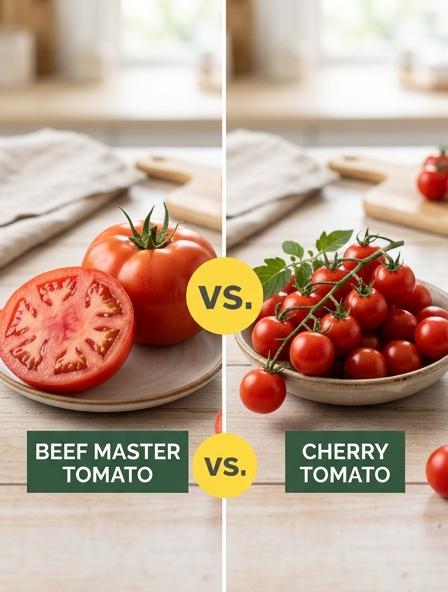
Culinary Performance Comparison of Beef Master and Cherry Varieties
Understanding the structural differences between Beef Master and cherry tomatoes is essential for peak culinary results. The Beef Master is a "slicing" titan, characterized by its dense, meaty flesh and low seed-to-pulp ratio, making it the gold standard for applications requiring structural integrity. In contrast, cherry tomatoes are prized for their high sugar-to-acid ratio and thin, snappy skins that offer a burst of juice.
| Attribute | Beef Master | Cherry Tomato |
|---|---|---|
| Texture | Fleshy and solid | Crisp and juicy |
| Best Use | Burgers and Steaks | Salads and Snacking |
You might prefer the thick, savory slabs of a Beef Master for a hearty heirloom sandwich, while reaching for a handful of sweet cherry tomatoes to toss into a quick balsamic pasta dish.
Nutritional Density and Antioxidant Levels in Large and Small Tomatoes
When comparing Beef Master tomatoes to cherry varieties, size plays a pivotal role in nutritional concentration. Cherry tomatoes generally offer a higher density of vitamins and antioxidants per gram. This is primarily due to their higher skin-to-flesh ratio; many essential phytonutrients, including flavonoids and phenolic acids, are concentrated within the peel.
- Beef Master: Provides substantial lycopene and hydration, though its high water content slightly dilutes the concentration of minerals.
- Cherry Tomatoes: Typically boast higher levels of Vitamin C, beta-carotene, and dry matter, offering a more concentrated nutrient profile.
While both varieties support heart health through potassium and fiber, the intensity of their bioactive compounds differs based on their growth structure. You might prefer the Beef Master for a thick, lycopene-heavy slice on a burger, whereas you would choose cherry tomatoes for a potent, antioxidant-rich snack that bursts with concentrated sweetness.
Impact of Flesh Volume on Sauce Consistency and Texture
The structural composition of a tomato directly influences the viscosity and mouthfeel of a finished sauce. Beef Master tomatoes are prized for their high flesh-to-seed ratio, featuring thick walls and minimal gel cavities. This dense "meatiness" provides the necessary solids to create a thick, emulsified sauce that clings effectively to pasta without lengthy reduction times.
In contrast, Cherry tomatoes possess a high skin-to-flesh ratio. Their significant water content and numerous seeds result in a thinner, more fluid consistency. When heat is applied, the skins often separate, adding a rustic, heterogeneous texture rather than a uniform smoothness.
| Tomato Type | Flesh Density | Sauce Consistency |
|---|---|---|
| Beef Master | High / Meaty | Thick and Velvety |
| Cherry | Low / Juicy | Light and Fluid |
Home chefs typically choose slow-simmered Beef Masters for a rich Sunday gravy, while using quick-burst cherry tomatoes for a light, vibrant summer pasta tossed with fresh basil.
Heat Resistance and Structural Stability During Roasting Processes
Roasting reveals distinct differences in how Beef Master and cherry tomatoes handle thermal stress. Due to their dense flesh and high moisture content, Beef Master tomatoes often lose their shape, collapsing into a jam-like texture that is perfect for concentrated bases. In contrast, cherry tomatoes exhibit superior structural stability; their tight skins trap steam until they eventually "burst," yet they maintain a distinct individual form through high-heat applications.
| Metric | Beef Master | Cherry Tomato |
|---|---|---|
| Roasting Outcome | Soft and pulpy | Caramelized and intact |
| Best Heat Method | Slow roasting | High-heat blistering |
You might choose to blister cherry tomatoes quickly in a hot pan for a vibrant salad pop, while utilizing the Beef Master's tendency to break down for a rich, slow-roasted tray bake sauce.
Acidity and Flavor Balance in Fresh and Cooked Applications
Beefmaster tomatoes offer a classic, mild profile with lower acidity, making them ideal for heavy slicing. In contrast, cherry tomatoes provide a concentrated burst of sugars and sharp acids. While the Beefmaster maintains a savory, balanced tone, the cherry variety delivers a high-intensity sweetness that cuts through rich fats.
| Feature | Beefmaster | Cherry Tomato |
|---|---|---|
| Flavor Profile | Mild and Earthy | Sweet and Tangy |
| Acidity Level | Low to Moderate | High Concentration |
When heat is applied, Beefmasters break down into a smooth, subtle sauce, whereas cherry tomatoes caramelize rapidly, creating explosive flavor pockets. Home cooks love layering thick, velvety Beefmaster slices onto a backyard burger while tossing blistered, honey-sweet cherry tomatoes into a zesty quick-fire pasta.
Vitamin and Mineral Profiles of Beefsteak and Snacking Types
Comparing the Beef Master tomato to the bite-sized cherry variety reveals distinct nutritional advantages. While both are rich in potassium and Vitamin K, their concentration levels vary based on size and water content. Beef Master tomatoes, known for their large, meaty texture, offer significant amounts of Vitamin C and lycopene, though their high water volume slightly dilutes nutrient density compared to smaller cultivars.
Cherry tomatoes are often considered more nutrient-dense per gram. Because they possess a higher skin-to-flesh ratio, they typically pack more antioxidants and vitamins. Key benefits include:
- Vitamin C: Higher concentration often found in snacking types.
- Lycopene: Potent antioxidants in both that support heart health.
- Fiber: Abundant in the skins of cherry varieties.
You might prefer slicing a thick Beef Master for a nutrient-packed sandwich, while others enjoy popping cherry tomatoes like candy for a quick, vitamin-rich office snack.
Moisture Content Effects on Dough and Pastry Integrity
The choice between Beef Master and cherry tomatoes is critical for maintaining pastry structural integrity. Beef Master tomatoes are prized for their size, but their high water-to-flesh ratio often leads to excessive moisture release during baking. This liquid can cause starch gelatinization, resulting in a "soggy bottom" that compromises the gluten structure of tarts and pizzas.
- Beef Master: High moisture volume; requires seeding or pre-salting to protect dough.
- Cherry Tomatoes: Lower total moisture per unit; the skin acts as a natural barrier to juice leakage.
While Beef Master slices offer a meaty bite, they require careful moisture management to prevent the crust from becoming waterlogged. Conversely, the concentrated sugars and structural stability of cherry tomatoes make them ideal for high-heat applications where a crisp base is essential. You might prefer roasting halved cherry tomatoes on a focaccia to achieve a blistered, sweet finish without compromising the bread's airy, crisp crumb.
Natural Sugar Concentrations and Caramelization Potential
The primary chemical difference between Beef Master and cherry tomatoes lies in their Brix rating, which measures sucrose concentration. Cherry tomatoes typically boast higher sugar-to-water ratios, resulting in intense sweetness and rapid caramelization. Conversely, Beef Master tomatoes are engineered for size and moisture; their high water content dilutes natural sugars, requiring longer reduction times to achieve a Maillard reaction.
| Tomato Type | Sugar Concentration | Caramelization Speed |
|---|---|---|
| Beef Master | Moderate (Low Brix) | Slow / Subtle |
| Cherry Tomato | High (High Brix) | Fast / Intense |
Due to their concentrated fructose and lower mass, cherry tomatoes blister and brown quickly under high heat, whereas Beef Masters are better suited for fresh applications where their mild sweetness complements savory profiles. You might choose to slow-roast cherry tomatoes in olive oil until they burst, creating a rich, jam-like topping that many people love on crusty sourdough bread.
Skin Texture and Mouthfeel Differences in Prepared Dishes
The culinary application of Beef Master versus Cherry tomatoes is largely dictated by their distinct epidermal structures. Beef Master tomatoes feature a thin, tender skin that yields easily, complemented by a dense, "meaty" pericarp. In contrast, Cherry tomatoes are characterized by a resilient, snappy skin designed to contain a high-moisture seed cavity, creating a significant tactile contrast during consumption.
| Feature | Beef Master | Cherry Tomato |
|---|---|---|
| Skin Tension | Low (Delicate) | High (Snappy) |
| Mouthfeel | Buttery and uniform | Explosive and juicy |
While the Beef Master is the ultimate choice for a smooth, integrated mouthfeel in a thick deli sandwich, many foodies prefer roasting cherry tomatoes whole to experience that signature textural pop alongside a piece of charred sourdough.
Cooking Time Requirements and Liquid Release in Household Recipes
Choosing between Beef Master and Cherry tomatoes significantly alters a dish's moisture balance and preparation speed. Beef Master tomatoes are large and succulent, containing a high water-to-seed ratio. They require prolonged simmering to evaporate excess liquid, which is essential for achieving a thick, concentrated sauce texture.
In contrast, Cherry tomatoes offer a rapid cooking profile. Their thick skins trap internal juices, leading to a quick "burst" effect rather than a total watery breakdown. Because they release less overall fluid, they maintain better structural integrity during high-heat applications like roasting or quick sautés.
| Tomato Variety | Avg. Cooking Time | Liquid Release |
|---|---|---|
| Beef Master | 20–40 minutes | High |
| Cherry | 5–10 minutes | Minimal |
Busy home cooks often love tossing whole Cherry tomatoes into a pan for a five-minute blistered pasta topping, whereas Beef Masters remain the gold standard for a slow-simmered Sunday ragu.
Beef Master Tomato vs Cherry Tomato source and external links
- The Beef Master Tomato is a popular hybrid variety known for producing exceptionally large, meaty fruits that are ideal for slicing.
- The Cherry Tomato is a small, round variety that is highly valued for its sweet flavor and bite-sized convenience in salads.