
Basmati Rice vs Quinoa: Which is Best for Nutritional Density, Blood Sugar Stability, and Digestive Comfort?
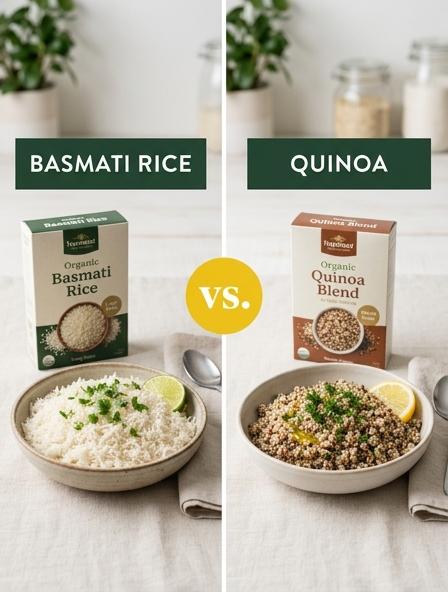
Nutritional Density and Caloric Impact for Healthy Family Dinners
Choosing between Basmati rice and quinoa involves balancing energy needs with nutrient density. Basmati rice is a refined carbohydrate known for its lower glycemic index compared to standard white rice, providing clean energy. Conversely, quinoa is a pseudo-cereal that functions as a complete protein, offering all nine essential amino acids and significantly higher fiber.
| Nutrient (per cooked cup) | Basmati Rice | Quinoa |
|---|---|---|
| Calories | 210 kcal | 222 kcal |
| Protein | 4.5g | 8g |
| Fiber | 0.7g | 5g |
While their caloric impact is nearly identical, quinoa's fiber and mineral profile, including magnesium and iron, promotes longer satiety. This makes it ideal for weight management, whereas Basmati is gentler on sensitive digestive systems. You might choose the light, aromatic grains of Basmati to complement a traditional family curry, while opting for quinoa to add a nutty, protein-rich punch to a vibrant weekday power bowl.
Glycemic Index and Blood Sugar Stability for Daily Cooking
Choosing between basmati rice and quinoa often comes down to how they affect your blood glucose levels. Both are categorized as low-to-medium glycemic index (GI) foods, offering more stable energy than refined white grains. Basmati rice, particularly the brown variety, has a GI of approximately 50-58. Its high amylose content ensures a slower release of sugars into the bloodstream compared to short-grain rice.
- Basmati Rice: Provides steady energy, making it a reliable choice for long-term satiety.
- Quinoa: Boasts a similar GI (around 53) but carries a higher fiber and protein load, which further blunts insulin spikes.
While basmati is excellent for digestive comfort, quinoa's complex carbohydrate structure offers a slight edge for those monitoring metabolic health or managing diabetes. Busy professionals often opt for a chilled quinoa Mediterranean salad during lunch to maintain sharp mental focus and avoid the dreaded mid-afternoon energy crash.
Protein Content and Fiber Profiles in Common Side Dishes
When comparing basmati rice and quinoa, the nutritional disparity lies primarily in their protein quality and fiber density. Quinoa is celebrated as a complete protein, meaning it contains all nine essential amino acids necessary for tissue repair. In contrast, white basmati rice is a refined carbohydrate with lower protein levels and minimal fiber.
| Nutrient (Per Cooked Cup) | Basmati Rice | Quinoa |
|---|---|---|
| Protein | 4g | 8g |
| Fiber | 1g | 5g |
The high fiber content in quinoa supports digestive health and stabilizes blood sugar levels, whereas basmati rice provides faster-releasing energy. While quinoa leads in nutrient density, basmati rice is often preferred for its unique floral aroma and light, non-sticky texture.
Fitness enthusiasts frequently swap rice for quinoa in meal-prep bowls to increase satiety, while culinary purists insist on long-grain basmati to achieve the perfect fluffy base for an authentic saffron pilaf.
Texture Performance and Mouthfeel in Traditional Recipes
Choosing between Basmati rice and quinoa significantly alters the culinary profile of a dish. Basmati is prized for its long, slender grains that remain distinct and fluffy after cooking. Its soft, dry texture excels in absorbing fats and spices without becoming sticky, making it the gold standard for traditional pilafs and biryanis.
In contrast, quinoa offers a more complex mouthfeel. Each seed possesses a tiny outer husk that provides a subtle "pop" and a nutty crunch, adding structural depth to recipes. While Basmati provides a smooth, uniform experience, quinoa delivers a hearty, fibrous consistency.
- Basmati Rice: Silky, elongated, and tender "al dente" bite.
- Quinoa: Granular, resilient, and slightly springy texture.
You will likely favor the airy lightness of Basmati for a festive saffron pilau, whereas quinoa is your go-to when looking for a satisfying, textured crunch in a protein-packed Mediterranean grain bowl.
Essential Amino Acids and Mineral Benefits for Child Development
When comparing Basmati rice and quinoa for pediatric nutrition, quinoa offers a distinct advantage as a complete protein source. While Basmati rice provides quick-burning energy for active toddlers, it lacks certain essential amino acids like lysine. In contrast, quinoa contains all nine essential amino acids necessary for muscle repair and cognitive growth.
- Quinoa: High in iron, magnesium, and phosphorus for bone density and brain health.
- Basmati Rice: Provides easily digestible carbohydrates that are gentle on developing digestive systems.
For optimal development, quinoa's superior mineral density supports metabolic health more effectively than traditional white rice varieties. Many health-conscious parents like to mix quinoa into a fluffy Basmati pilaf to ensure their children receive a nutrient-dense meal without sacrificing the familiar texture they enjoy.
Preparation Time and Water Absorption in the Home Kitchen
Efficient meal prep depends on understanding how these grains behave in the pot. While both require precise liquid-to-grain ratios, their timelines and preparation rituals differ significantly.
| Feature | Basmati Rice | Quinoa |
|---|---|---|
| Water Ratio | 1:1.5 or 1:2 | 1:2 |
| Cook Time | 12–15 Minutes | 15 Minutes |
| Pre-treatment | 30-minute soak | Thorough rinse |
Basmati demands patience; soaking the grains for 30 minutes is the secret to achieving that iconic, non-sticky length. Quinoa is more straightforward, requiring only a quick rinse to remove bitter saponins before boiling. You might prefer the rapid 15-minute simmer of quinoa for a high-protein weekday lunch, while the delicate soaking process of basmati is the preferred choice for a fragrant, ceremonial Friday night curry.
Aroma and Flavor Profiles for Everyday Meal Planning
Understanding the distinct sensory characteristics of basmati rice and quinoa is essential for successful meal pairing. Basmati rice, often called the "Prince of Rice," is prized for its intoxicating, popcorn-like aroma and delicate, floral sweetness. Its light, elongated grains provide a neutral yet fragrant canvas. Conversely, quinoa delivers a more robust, earthy flavor with a signature nutty finish and a satisfyingly chewy "pop" in every bite.
- Basmati Rice: Best for absorbing complex spices in Indian and Middle Eastern cuisine.
- Quinoa: Ideal for adding texture and a savory depth to plant-based bowls and salads.
The choice typically hinges on whether you want a fragrant, soft companion or a structural, earthy highlight for your ingredients. You might opt for the silky fragrance of basmati to balance a spicy chickpea vindaloo, while you likely choose the nutty resilience of quinoa for a protein-packed Mediterranean tabbouleh.
Metabolic Impact and Satiety for Long Term Energy
Choosing between Basmati rice and quinoa significantly influences metabolic health and energy duration. Basmati rice, particularly the brown variety, has a lower glycemic index (GI) than most white rice, providing efficient energy. However, quinoa is a complete protein powerhouse containing all nine essential amino acids and higher dietary fiber. This nutrient density slows glucose absorption, preventing the insulin spikes often associated with simple carbohydrates.
- Basmati Rice: Offers quick-to-moderate energy release; ideal for glycogen replenishment.
- Quinoa: Enhances satiety through protein-fiber synergy; stabilizes blood sugar for hours.
- Metabolic Efficiency: Quinoa typically wins for weight management due to its higher thermic effect of food.
While Basmati is prized for its aroma and easy digestibility, quinoa's complex structure provides the sustained stamina needed for high-performance lifestyles. You might prefer a fluffy Basmati side to complement a spicy curry, but choose a protein-packed quinoa salad when you need to power through a six-hour shift without a mid-afternoon energy crash.
Digestive Comfort and Gut Health for Sensitive Stomachs
When comparing Basmati rice and quinoa for digestive ease, Basmati rice is often the preferred choice for those with sensitive systems. White Basmati is a low-fiber, low-FODMAP carbohydrate that is rapidly absorbed, placing minimal strain on the gastrointestinal tract. In contrast, quinoa is a nutrient-dense pseudo-cereal containing high levels of insoluble fiber and saponins, which can occasionally trigger bloating or irritation in individuals with IBS or inflammatory conditions.
- Basmati Rice: Refining removes the hull, making it a "safe food" for acute digestive distress.
- Quinoa: While its prebiotic properties support long-term microbiome health, its complex structure requires more digestive effort.
You might find that a steaming bowl of fluffy white Basmati rice is the most comforting, bloat-free base for your dinner when your stomach feels particularly sensitive or overstimulated.
Cooking Versatility and Dietary Performance for Busy Households
When balancing a hectic schedule, choosing between Basmati rice and quinoa depends on your specific nutritional needs and flavor preferences. Basmati rice offers a light, aromatic experience and acts as a superior vessel for absorbing rich sauces in curries or stir-fries. Conversely, quinoa serves as a nutrient-dense "superfood" with a lower glycemic index and a complete amino acid profile, making it a favorite for those prioritizing protein intake and long-lasting satiety.
- Basmati Rice: Takes approximately 15–20 minutes; ideal for traditional family comfort meals.
- Quinoa: Cooks in about 12–15 minutes; perfect for gluten-free diets and boosting fiber.
Busy parents often prefer prepping a large batch of quinoa on Sunday nights to quickly toss with fresh greens, feta, and vinaigrette for a healthy, five-minute office lunch during the workweek.
Basmati Rice vs Quinoa source and external links
- Basmati rice is a long-grain, aromatic rice variety traditionally grown in the foothills of the Himalayas.
- Quinoa is a nutrient-dense pseudo-cereal native to the Andean region that is widely recognized as a complete protein source.