
Basmati Rice vs Jasmine Rice : Are They The Same? Texture, Aroma, and Nutritional Value
Texture and Moisture Differences in Long Grain Varieties
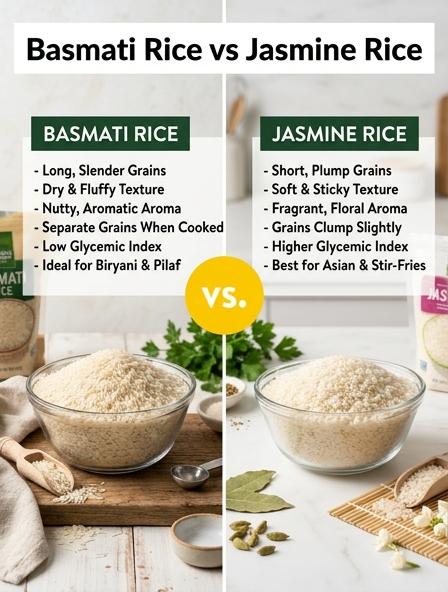
While both are celebrated long-grain aromatic rices, Basmati and Jasmine differ significantly in their moisture retention and starch profiles. Basmati rice is traditionally aged to minimize moisture, ensuring that the grains remain distinct, firm, and elongated after cooking. Conversely, Jasmine rice possesses a higher amylopectin content, which creates a characteristic silkiness, making the grains soft and naturally prone to clinging together.
| Feature | Basmati Rice | Jasmine Rice |
|---|---|---|
| Cooked Texture | Fluffy and dry | Moist and tender |
| Grain Structure | Individual separation | Slightly sticky |
You might choose the distinct grains of Basmati for a traditional Indian pilaf where separation is key, or opt for the velvety texture of Jasmine to perfectly complement a saucy Thai green curry.
Nutritional Value and Glycemic Impact for Family Health
When selecting the best staple for your kitchen, understanding the metabolic impact of Basmati versus Jasmine rice is essential. The primary distinction lies in their Glycemic Index (GI), which determines how quickly carbohydrates affect blood glucose levels.
| Nutritional Factor | Basmati Rice | Jasmine Rice |
|---|---|---|
| Glycemic Index (GI) | Low to Medium (50–58) | High (68–80) |
| Energy Release | Slow and sustained | Rapid spike |
| Texture/Starch | Firm, high amylose | Soft, high amylopectin |
Basmati rice is often recommended for blood sugar management due to its higher amylose content, which slows digestion. Jasmine rice, while offering a floral aroma and soft texture, converts to sugar more quickly. Both varieties provide essential B vitamins and are naturally gluten-free.
You might opt for Basmati for a hearty, healthy weekday stir-fry to keep everyone full until dinner, or enjoy the fluffy, comforting stickiness of Jasmine rice when your family craves an authentic, melt-in-the-mouth Thai red curry.
Floral and Nutty Aroma Profiles in Home Cooking
The distinction between Basmati and Jasmine rice lies primarily in their unique aromatic compounds. Basmati rice is celebrated for its nutty, popcorn-like scent, a result of the compound 2-acetyl-1-pyrroline, which is further concentrated through traditional aging processes. Conversely, Jasmine rice emits a sweet, floral fragrance similar to pandan leaves, providing a delicate olfactory experience that is most potent when the rice is freshly harvested.
- Basmati: Features a dry, woody aroma that complements savory spices and herbs.
- Jasmine: Delivers a buttery, floral bouquet that enhances sweet and creamy ingredients.
While both are long-grain varieties, their scents dictate their culinary roles; home cooks typically reach for the nutty depth of Basmati when preparing a robust saffron-infused Biryani, while they prefer the floral elegance of Jasmine rice to balance the heat of a spicy Thai red curry.
Cooking Performance and Grain Separation Results
The primary distinction in cooking performance between Basmati and Jasmine rice lies in their starch profiles. Basmati rice is high in amylose, which results in a firm, dry texture where individual grains remain distinct and elongate significantly during steaming. In contrast, Jasmine rice has a higher amylopectin content, producing a moist, slightly translucent grain that tends to cling together.
| Attribute | Basmati Rice | Jasmine Rice |
|---|---|---|
| Grain Separation | Excellent; non-sticky | Moderate; soft and tacky |
| Post-Cook Shape | Long, thin needles | Plump, moist kernels |
You might choose the airy, separate grains of Basmati for a traditional Indian pilaf, whereas Jasmine's subtle stickiness is exactly what people love for scooping up rich, aromatic Thai red curries.
Starch Content and Its Effect on Digestive Health
The primary difference between Basmati and Jasmine rice lies in their starch composition, specifically the ratio of amylose to amylopectin. Basmati rice is high in amylose, which creates a firm structure that digests slowly. This results in a lower Glycemic Index (GI), providing sustained energy and better blood sugar management. In contrast, Jasmine rice contains more amylopectin, leading to a softer texture and faster glucose absorption.
| Feature | Basmati Rice | Jasmine Rice |
|---|---|---|
| Starch Type | High Amylose | High Amylopectin |
| Digestive Rate | Slow (Low GI) | Fast (High GI) |
For those focused on gut health, Basmati's resistant starch acts as a prebiotic, fueling beneficial gut bacteria. You might prefer Basmati for a meal that keeps you full during a long workday, whereas Jasmine is the ideal choice for a quick-digesting energy boost after a heavy gym session.
Culinary Compatibility with International Dishes
Choosing between Basmati and Jasmine rice depends largely on the regional origin of your meal and the desired texture. Basmati rice is celebrated for its long, slender grains that remain distinct and fluffy after cooking, making it the essential choice for South Asian and Middle Eastern recipes. In contrast, Jasmine rice has a shorter, rounder grain that releases more starch, resulting in a moist, slightly sticky texture ideal for East and Southeast Asian cuisines.
- Basmati Rice: Pairs perfectly with Indian Biryanis, Persian Pilafs, and Mediterranean grilled meats.
- Jasmine Rice: Complements Thai Green Curries, Vietnamese stir-fries, and Cantonese-style clay pot dishes.
Home chefs often prefer the delicate floral aroma of Jasmine rice when preparing a spicy coconut curry, as the grains expertly cling together to soak up every drop of rich, aromatic sauce.
Visual Presentation and Grain Shape After Steaming
While both are classified as long-grain varieties, Basmati and Jasmine rice transform uniquely under steam. Basmati is renowned for its dramatic elongation; the grains can double in length, resulting in a thin, needle-like appearance. These grains remain remarkably dry, airy, and distinct. Conversely, Jasmine rice is shorter and plumper, possessing a translucent, glossy finish and a moist texture that causes the grains to cling together slightly.
| Visual Feature | Basmati Rice | Jasmine Rice |
|---|---|---|
| Post-Steaming Shape | Extra-long and slender | Shorter and rounded |
| Grain Integrity | Individual, non-sticky | Soft, clinging clumps |
Home cooks choose Basmati for a majestic, fluffy Biryani where every grain stands apart, while those serving a Thai Red Curry prefer the glistening, soft mounds of Jasmine rice for absorbing rich, coconut-based sauces.
Caloric Density and Satiety Factors in Staple Grains
Basmati and Jasmine rice share nearly identical caloric densities, typically providing 130 to 150 calories per 100g cooked serving. However, their impact on satiety differs due to starch structure and Glycemic Index (GI) ratings. Basmati rice contains higher levels of amylose, a slow-digesting starch that prevents rapid insulin spikes and keeps you feeling full longer.
- Basmati Rice: Lower GI (50–58), promoting sustained energy release and appetite control.
- Jasmine Rice: Higher GI (68–80), leading to quicker digestion and a faster return of hunger.
Because of these metabolic differences, athletes often meal-prep with Basmati to maintain steady energy levels throughout the day, while food lovers choose Jasmine's soft, floral profile to perfectly complement a rich, spicy green curry.
Absorbency and Preparation Characteristics in the Kitchen
Basmati and Jasmine rice require distinct culinary approaches due to their unique starch structures. Basmati rice typically demands a 30-minute pre-soak to allow the long grains to expand lengthwise without breaking during cooking. In contrast, Jasmine rice is best prepared by rinsing away surface starch to achieve its signature soft, slightly tacky texture without becoming mushy.
- Basmati: Low moisture retention, resulting in firm, individual grains that stay separate.
- Jasmine: High moisture retention, creating a moist, clingy consistency ideal for molding.
Their absorption rates dictate the final dish; Basmati absorbs water slowly to maintain a dry fluffiness, whereas Jasmine absorbs moisture quickly to create a velvety mouthfeel. Home cooks love choosing Basmati for a light, airy saffron pilaf where every grain is distinct, while Jasmine is the go-to choice for a cozy Thai red curry where the rice perfectly sops up the rich coconut broth.
Mineral Composition and Dietary Benefits for Daily Meals
While both grains are staples in global cuisine, their mineral profiles and glycemic impacts differ significantly. Basmati rice is frequently recognized for its lower glycemic index and higher concentrations of magnesium and folate, which support heart health and steady energy. Jasmine rice, though slightly higher in calories, provides essential iron and niacin, aiding in metabolic function and blood oxygenation.
- Basmati Rice: Rich in B-vitamins and fiber, making it an excellent choice for digestive health and glucose management.
- Jasmine Rice: A source of quick-digesting carbohydrates that help restore energy levels efficiently.
Both varieties are naturally gluten-free and cholesterol-free, fitting easily into most clean-eating regimens. Fitness enthusiasts often choose jasmine rice for a quick post-workout recovery meal, while home cooks managing blood sugar levels typically prefer the light, nutty grains of basmati for their daily vegetable pilaf.
Basmati Rice vs Jasmine Rice source and external links
- Basmati rice is a long-grain variety prized for its slender shape, nutty aroma, and fluffy texture when cooked. Basmati rice
- Jasmine rice is an aromatic long-grain rice from Thailand known for its sweet scent and slightly sticky consistency. Jasmine rice