
Ancho Chili vs Red Chile : Are They The Same? Flavor Profiles, Heat Intensity, and Culinary Uses
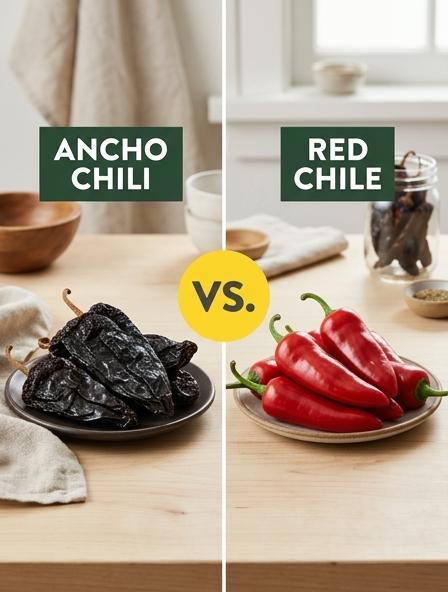
Comparative Flavor Profiles and Smoky Sweetness
Understanding the distinction between Ancho chili and generic Red Chile is essential for balancing heat and depth. The Ancho, a dried poblano, is famous for its mild, raisin-like sweetness and lingering smoky undertones. Conversely, most Red Chiles (such as New Mexican or Anaheim varieties) provide a sharper, more straightforward earthiness with a cleaner, more acidic spice profile.
| Characteristic | Ancho Chili | Red Chile |
|---|---|---|
| Primary Notes | Dried fruit, chocolate, smoke | Earthy, bright, peppery |
| Heat Intensity | Very Mild (1,000–1,500 SHU) | Mild to Medium (500–2,500 SHU) |
The Ancho's thick flesh adds significant body and a dark mahogany hue to sauces, while the thinner skin of the Red Chile offers a vibrant, fiery red color and a punchy kick. Home cooks often reach for Ancho when crafting a velvety, complex Mole, while they prefer the sharp bite of Red Chile for a traditional Sunday morning bowl of Chilaquiles.
Heat Intensity Variations and Family Palate Suitability
Navigating the spice levels between ancho chili and generic red chile is crucial for balancing flavor and heat. Ancho chilies, the dried version of poblano peppers, are prized for their mild, smoky, and slightly sweet profile. They typically register low on the Scoville scale, making them ideal for those sensitive to spice. Conversely, red chiles-particularly New Mexican or Hatch varieties-offer a broader spectrum of heat, ranging from mild to intensely biting.
- Ancho Chili: 1,000–1,500 SHU; focuses on depth and raisin-like sweetness.
- Red Chile: 500–10,000+ SHU; delivers a sharp, earthy, and pungent kick.
Because of these variations, ancho is the safer bet for communal dishes where young children or spice-averse guests are present. You might reach for the mild ancho when simmering a rich mole or a kid-friendly chili, ensuring everyone at the table enjoys the complex aromatics without overwhelming their taste buds.
Differences in Nutritional Content and Health Benefits
While both ancho and red chiles originate from the Capsicum annuum species, their nutritional densities vary based on maturity and drying processes. Ancho chiles, which are dried poblanos, are exceptionally rich in Vitamin A and fiber, supporting ocular health and digestion. Conversely, vibrant red chiles-especially New Mexican varieties-are celebrated for their staggering Vitamin C content and higher capsaicin levels.
- Capsaicin: Red chiles typically contain more, aiding in pain relief and metabolic speed.
- Antioxidants: Anchos provide high levels of riboflavin and potassium.
- Immunity: The beta-carotene in red chiles converted to Vitamin A strengthens the mucosal membranes.
Home cooks often reach for the vitamin-rich red chile to add a fiery kick to winter stews, while fitness enthusiasts prefer the fiber-dense ancho for a smoky, metabolic boost in post-workout mole sauces.
Contrast in Visual Impact and Sauce Coloration
The visual distinction between Ancho chiles and standard Red Chiles is striking and dictates the final aesthetic of a dish. Ancho chiles, which are dried poblanos, possess a deep, wrinkled skin that appears mahogany or nearly black. In contrast, traditional Red Chiles, such as New Mexico or Guajillo varieties, maintain a vibrant, translucent crimson or bright brick-red hue.
When these peppers are rehydrated and blended, they produce vastly different color profiles:
- Ancho Sauce: Results in a dense, dark-chocolate or midnight-purple palette.
- Red Chile Sauce: Delivers a glowing, fiery red or burnt-orange finish.
While Red Chile offers the iconic brightness associated with street tacos, the Ancho provides a moody, sophisticated depth. You might choose the Ancho when preparing a festive Oaxacan-style mole to achieve that legendary, ink-dark sauce that guests love for its rich and mysterious visual appeal.
Texture and Consistency Variations in Culinary Bases
The choice between ancho chili and standard red chile dramatically alters the viscosity of traditional sauces. Anchos, which are dried poblanos, feature thick, wrinkled skins that produce a dense, jammy paste when blended. This creates a natural thickening effect ideal for heavy, rustic sauces. Conversely, many red chile varieties, such as New Mexico or Guajillo, possess thinner skins resulting in a smoother, more fluid liquid base.
- Ancho Chili: Provides a rich, pulpy, and slightly gritty texture that clings to proteins.
- Red Chile: Delivers a refined, silky, and translucent consistency perfect for straining.
Understanding these structural differences allows cooks to layer flavors while precisely controlling the final mouthfeel of the dish. You might choose the heartier ancho paste for a deep, complex mole, while opting for a strained red chile sauce when you want a clean, elegant glaze for your holiday enchiladas.
Shelf Life and Quality Preservation for Dried Varieties
To maintain the distinct flavor profiles of Ancho and Red chiles, proper storage is essential to prevent the degradation of capsaicin and aromatic oils. Both varieties should be kept in a cool, dark environment to avoid solar bleaching and flavor loss. While dehydrated peppers can technically last indefinitely, their culinary quality and potency are best within the first six to twelve months.
- Ancho Chiles: These should feel leathery and slightly pliable; if they are brittle or crumble like dust, they have likely lost their essential oils.
- Red Chiles: Varieties like New Mexico or Guajillo are typically thinner-skinned and should maintain a deep, consistent color without pale spots or signs of mold.
Professional chefs often store their dried Anchos in airtight glass jars in the freezer to ensure that when it comes time to rehydrate them for a rich Sunday birria, the peppers release their full, complex sweetness.
Cooking Performance in Slow Cooked Recipes
In the realm of slow cooking, the structural differences between Ancho and standard Red chiles dictate the final texture and depth of a dish. Ancho chiles, which are dried poblanos, have a high sugar content and thick flesh. During long braises, they rehydrate into a rich, velvety pulp that naturally thickens sauces while imparting notes of raisin and chocolate. Conversely, many dried Red chiles-like New Mexico or Guajillo varieties-offer a thinner skin and a more straightforward, earthy acidity that remains bright even after hours of simmering.
- Ancho: Dissolves into a deep, smoky mahogany base with mild heat.
- Red Chile: Maintains a sharp, piquant profile that cuts through heavy fats.
Imagine a weekend project where you use Ancho chiles to create a dark, fork-tender beef short rib roast, or opt for Red chiles when a vibrant, spicy slow-cooked pork shoulder is the centerpiece of your family dinner.
Price Point and Market Availability for Household Budgets
For home cooks managing a grocery budget, the accessibility of these peppers is a significant factor. Ancho chilis, which are dried poblano peppers, are staple ingredients found in almost any international aisle. They are generally inexpensive and sold in large, lightweight bags. Generic red chiles, or specific varieties like New Mexico Red, may vary more in price depending on your proximity to the Southwest or whether you are purchasing specialty sun-dried pods.
- Ancho Chili: Highly affordable; widely available year-round in most supermarkets.
- Red Chile: Price fluctuates by region; specialty Hatch or Chimayó pods often command a premium.
While prices are comparable, shoppers often find that buying bulk bags of dried Anchos provides the most value for creating rich, authentic sauces on a modest budget. Many home chefs love keeping a large jar of Anchos in the pantry to add an instant, low-cost depth of flavor to Tuesday night chilis or enchilada sauces.
Geographic Origins and Traditional Culinary Roles
Ancho chilies and Red chilies represent distinct branches of the Capsicum annuum family tree, each rooted in specific regional traditions. The Ancho chili is a ripened and dried poblano pepper, tracing its heritage back to the state of Puebla, Mexico. It is prized for its raisin-like sweetness and smoky undertones, acting as a structural base for complex mole sauces and traditional salsas.
Conversely, "Red Chile" most often refers to the mature, sun-dried varieties of the New Mexico pepper. These are synonymous with the culinary identity of the Southwestern United States, particularly the Rio Grande Valley, offering an earthy profile that defines regional comfort foods.
- Ancho: Originates in Puebla, Mexico; essential for deep, dark salsas and moles.
- Red Chile: Originates in New Mexico; used primarily for enchilada sauces and stews.
You might choose the Ancho for a rich, mild Mexican wedding feast, but you'll likely prefer the bold, earthy heat of the New Mexican red chile when simmering a traditional pot of Sunday morning carne adovada.
Digestive Impact and Spice Tolerance Factors
Choosing between Ancho and various Red Chiles often comes down to individual spice tolerance and digestive sensitivity. Ancho chilies, which are ripened and dried poblanos, offer a mild heat profile ranking between 1,000 and 1,500 Scoville Heat Units. This lower capsaicin concentration makes them significantly gentler on the gastrointestinal tract than sharper Red Chile varieties.
- Ancho Chili: Low pungency; rich in natural sugars and fiber, reducing the likelihood of acid reflux.
- Red Chile (New Mexico/Hatch): Higher capsaicin levels (up to 5,000 SHU); can trigger sensitivity in individuals prone to heartburn.
The drying process of the Ancho concentrates its smoky sweetness rather than its bite, making it a staple for those who prioritize flavor depth over intensity. Home cooks often reach for Ancho when preparing a slow-cooked beef stew for a multi-generational family gathering to ensure everyone can enjoy the meal without digestive discomfort.
Ancho Chili vs Red Chile source and external links
- An Ancho Chili is a dried poblano pepper known for its mild heat and sweet, smoky flavor profile.
- Red Chile refers to ripened, dried peppers used to create the deep, earthy sauces foundational to Southwestern cuisine.
Understanding the distinction between ancho chili and red chile is essential for mastering authentic Mexican and Southwestern cuisines. While both are dried peppers, they are not interchangeable; an ancho is specifically a dried poblano, whereas "red chile" typically refers to ripened New Mexican varieties like the Anaheim. Ancho chiles offer a complex, sweet flavor profile reminiscent of raisins and chocolate with very mild heat intensity. In contrast, red chiles provide a brighter, earthier profile with a more pronounced spicy kick. Ultimately, selecting the right pepper depends on your culinary goals: use anchos for deep, smoky moles and adobos, or reach for red chiles to create vibrant, sharp sauces. Recognizing these nuances ensures your dishes achieve the perfect balance of smokiness, sweetness, and heat.