
All-Purpose Flour vs. Self-Rising Flour: The Differences in Leavening Performance, Protein Content, and Baked Texture.
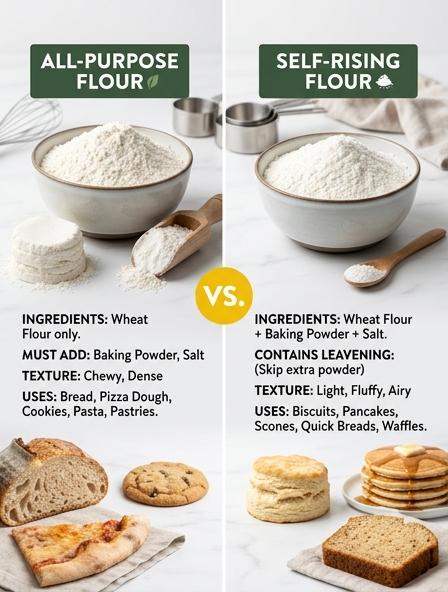
Textural Variations in Home Baked Goods
Understanding the textural impact of your flour choice is essential for baking success. All-purpose flour features a moderate protein content, fostering a strong gluten network that produces a chewy, substantial crumb. In contrast, self-rising flour is formulated with lower-protein wheat and integrated leavening agents, resulting in a significantly lighter and more porous texture.
The resulting differences are often categorized by these characteristics:
- All-Purpose: Provides the structural integrity needed for chewy cookies and crusty breads.
- Self-Rising: Yields a delicate, soft finish perfect for tender pastries and sponges.
Choosing between them dictates whether your bake is sturdy or pillowy. You might reach for the self-rising flour when you are craving those ultra-flaky, Southern-style buttermilk biscuits that pull apart effortlessly in your hands.
Health Impact of Sodium and Additives
The primary health distinction between all-purpose and self-rising flour lies in their chemical additives. All-purpose flour consists solely of milled wheat, offering a neutral base. Conversely, self-rising flour is fortified with salt and leavening agents, which can significantly impact dietary intake for those with specific health concerns.
- Sodium Intake: Self-rising flour contains approximately 1,500mg of sodium per cup, making it a hidden source of salt for those monitoring blood pressure.
- Leavening Agents: Additives like monocalcium phosphate and sodium bicarbonate are used for aeration, which may affect individuals on phosphorus-restricted diets.
- Additive Transparency: All-purpose flour allows for total control over the quality and quantity of leaveners like aluminum-free baking powder.
You might opt for all-purpose flour when baking for a family member on a low-sodium diet, as it allows you to substitute traditional salt with potassium-based alternatives or reduce it entirely.
Leavening Consistency and Rise Performance
The primary difference in performance stems from the integrated leavening agents found in self-rising flour. While all-purpose flour provides a blank slate for bakers to control their own ratios, self-rising flour contains a precise, factory-blended mixture of baking powder and salt. This ensures an even distribution that prevents "dead spots" or uneven peaking in the crumb structure.
| Performance Factor | All-Purpose Flour | Self-Rising Flour |
|---|---|---|
| Rise Source | External (Manual addition) | Internal (Pre-mixed) |
| Consistency | Varies by measurement | Highly predictable |
Southern bakers often reach for self-rising flour when making their signature Sunday biscuits to ensure a consistently tall, flaky rise that guests absolutely love.
Protein Content and Gluten Development
The primary distinction between all-purpose and self-rising flour lies in their protein concentrations, which directly influence gluten development. All-purpose flour typically features a protein content of 10% to 12%, offering a versatile balance of strength and tenderness. Conversely, self-rising flour is generally milled from softer wheat with a lower protein content of around 8% to 9%.
- All-Purpose: Higher protein builds a sturdy gluten network ideal for cookies and crusts.
- Self-Rising: Lower protein yields a weaker gluten structure, resulting in a softer, more delicate crumb.
Since gluten provides the structural web that traps air, these differences significantly affect the final texture of your baked goods. Home bakers often prefer self-rising flour when making fluffy Southern-style biscuits to achieve that signature light, airy lift and a tender bite that is difficult to master with standard all-purpose blends.
Chemical Reaction to Oven Heat
The fundamental difference in how these flours react to oven heat is determined by their chemical composition. Self-rising flour contains a built-in leavening agent, typically baking powder, which undergoes a dual-phase reaction. When exposed to the high temperatures of an oven, the acidic and alkaline components within the flour react to release carbon dioxide gas, causing the batter to expand and rise. In contrast, all-purpose flour is chemically inert on its own and relies entirely on external ingredients added to the recipe to achieve structural lift.
- Self-Rising Flour: Pre-mixed with salt and baking powder for automatic aeration during the baking process.
- All-Purpose Flour: Requires the manual addition of yeast, baking soda, or baking powder to react to heat.
You will love the reliable, tall lift of self-rising flour when you are whisking together a quick batch of fluffy Southern-style biscuits on a busy Sunday morning.
Performance Across Different Recipe Categories
The distinction between all-purpose and self-rising flour significantly impacts the structural integrity and crumb of your baked goods. Because self-rising flour contains a built-in leavening agent and salt, its performance varies by category:
- Biscuits and Scones: Self-rising flour is the gold standard, ensuring a consistent, airy lift and tender texture.
- Cookies and Brownies: All-purpose flour is preferred here; self-rising can cause cookies to puff too much, losing their signature chew.
- Yeast Breads: All-purpose is necessary, as the chemical leaveners in self-rising flour can interfere with the fermentation of the yeast.
- Pancakes and Muffins: Both work, but self-rising simplifies the process by eliminating the need for baking powder.
While all-purpose flour offers the versatility to control every ingredient, self-rising flour provides convenience for quick-leavened treats. You might reach for self-rising flour on a busy Saturday morning when your family is craving fluffy, golden-brown pancakes but you want to skip the measuring spoons.
Storage Stability and Freshness Duration
The primary difference in shelf life between all-purpose flour and self-rising flour lies in their chemical composition. All-purpose flour is highly stable, often remaining fresh for up to one year when stored in a cool, dry environment. Conversely, self-rising flour has a more limited duration because it contains leavening agents and salt.
- All-Purpose Flour: Lasts 6–12 months; contains no reactive additives.
- Self-Rising Flour: Best used within 4–6 months; baking powder loses potency over time.
Over time, the monocalcium phosphate or other leaveners in self-rising flour react with atmospheric moisture, causing the flour to lose its "lift." For the best results, store both types in airtight containers to prevent pest infestation and moisture absorption. You might choose to stock all-purpose flour as your reliable pantry staple, while buying self-rising flour in smaller batches specifically for seasonal treats like flaky buttermilk biscuits to ensure they reach their maximum height.
Internal Crumb Structure and Density
The internal architecture of baked goods varies significantly between these two flours. All-purpose flour yields a more stable, customizable crumb, allowing the baker to control density through manual additions of yeast or chemical leaveners. In contrast, self-rising flour contains pre-blended baking powder and salt, ensuring a consistent, airy lift and a lighter, more porous crumb structure.
- All-Purpose Flour: Produces a tighter, versatile crumb suitable for everything from chewy brownies to structured artisan breads.
- Self-Rising Flour: Delivers a fragile, high-volume crumb with low density, specifically engineered for quick-rise recipes.
You will appreciate the fluffy, pillowy interior of a self-rising biscuit when you are rushing to get a warm, effortless breakfast on the table for your family.
Influence on Flavor and Seasoning Balance
The fundamental difference in flavor between all-purpose and self-rising flour stems from the additives found in the latter. All-purpose flour is a neutral base, consisting purely of milled wheat. This provides a "blank canvas," allowing the natural flavors of butter, chocolate, or delicate spices to shine without interference. Conversely, self-rising flour contains a pre-mixed distribution of salt and leavening agents (typically baking powder).
This composition directly impacts your seasoning strategy. Because self-rising flour already contains roughly 1/4 to 1/2 teaspoon of salt per cup, failing to adjust your recipe can lead to an oversalted finished product. Bakers must weigh these differences carefully:
- All-Purpose: Total control over sodium levels and flavor nuances.
- Self-Rising: Provides a consistent, slightly tangy saltiness built into the crumb.
Southern bakers often prefer self-rising flour for traditional biscuits because the built-in salt and lift ensure a perfectly seasoned, fluffy result every single time without the need for extra measuring.
Visual Characteristics of Finished Dishes
The visual distinction between baked goods made with all-purpose flour versus self-rising flour is primarily defined by the "lift." Because self-rising flour contains pre-blended leavening agents, it produces a consistent height and airy structure. Conversely, all-purpose flour results are more variable, relying entirely on the quantity and age of external leaveners added by the baker.
- All-Purpose Flour: Typically results in a denser, flatter profile in recipes like cookies or shortbread, featuring a tight crumb and a more compact surface.
- Self-Rising Flour: Promotes an impressive, uniform rise and a porous, sponge-like texture with visible air pockets throughout the crumb.
The differences are most apparent in color and volume, as self-rising blends often yield a more aerated, pillowy look. Southern bakers often prefer self-rising flour when they want their signature biscuits to look exceptionally tall, fluffy, and golden on the breakfast table.
All-Purpose Flour vs Self-Rising Flour source and external links
- All-Purpose Flour is a versatile wheat flour suitable for most baking projects, including cookies, cakes, and breads.
- Self-Rising Flour is a convenience blend that contains pre-mixed baking powder and salt to help baked goods rise without additional leavening agents.