
All-Purpose Flour vs Plain Flour : Are They The Same? Protein Content, Gluten Strength, and Baking Results
Protein Content and Its Influence on Dough Structure
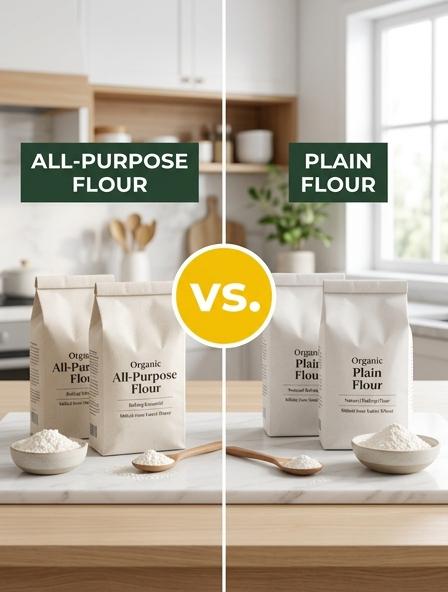
The primary distinction between all-purpose and plain flour lies in their protein percentages, which directly dictate the strength of the gluten network. Protein acts as the structural "glue" in baking; higher levels create more elasticity and chew, while lower levels produce a tender, delicate crumb.
- All-Purpose Flour: Generally contains 10% to 12% protein, providing enough stability for yeasted breads while remaining light enough for cookies.
- Plain Flour: Often ranges between 9% and 11% protein, making it ideal for pastries and biscuits where a softer texture is desired.
When these proteins hydrate and are kneaded, they form a scaffold that traps gases, allowing the dough to rise and maintain its shape. Home bakers love using a slightly higher-protein all-purpose flour when they want a chewy pizza crust that can support heavy toppings without collapsing.
Global Naming Differences in Common Baking Staples
Understanding regional terminology is essential for successful international baking. While the names differ, all-purpose flour and plain flour are essentially the same product: a versatile wheat flour with a medium protein content.
- United States & Canada: Commonly labeled as "All-Purpose Flour."
- UK, Australia & New Zealand: Referred to almost exclusively as "Plain Flour."
Both varieties typically contain between 9% and 12% protein and do not contain added leavening agents like baking powder. This mid-range protein level provides enough structure for bread while remaining tender enough for delicate pastries. Because they are functionally identical, they can be swapped 1:1 in any recipe without affecting the final texture or rise. You might find yourself reaching for plain flour when following a classic British scone recipe, only to realize it is the exact same staple you use for your favorite American chocolate chip cookies.
Gluten Strength and Its Effect on Pastry Flakiness
The primary distinction between all-purpose and plain flour often lies in their protein content, which directly influences gluten strength. When flour is hydrated, proteins bond to create an elastic network. While this provides essential structure for bread, excessive gluten development is the adversary of a delicate, flaky pastry.
- High Protein: Often found in North American all-purpose flour (10-12%), it creates a sturdier, chewier crumb.
- Low Protein: Common in UK plain flour (9-10%), it yields a more tender, friable texture.
Flakiness occurs when cold fat creates physical barriers between flour particles, producing steam pockets during baking. If the gluten network is too robust or overworked, the pastry becomes tough and leathery rather than light. Minimizing protein agitation ensures the fat can effectively separate the flour into distinct, crisp layers.
Imagine biting into a homemade apple pie where the crust shatters into buttery, paper-thin shards at the slightest touch-that is the magic of controlled gluten strength.
Comparing Nutritional Values of Milled Wheat Products
All-purpose flour and plain flour are essentially the same product, with names differing by region. Both are refined flours milled from the wheat endosperm, removing the fiber-rich bran and nutrient-dense germ. This results in a versatile protein content typically ranging between 9% and 12%, making them the standard for general baking.
While their macronutrient profiles are nearly identical, many brands enrich these flours with thiamin, riboflavin, niacin, and iron to compensate for nutrients lost during the milling process.
| Nutritional Component | Typical Amount (per 100g) |
|---|---|
| Protein | 10g – 11.5g |
| Carbohydrates | 76g |
| Dietary Fiber | 2.5g |
You might reach for this versatile staple when you want a single, reliable ingredient that offers enough gluten for a chewy pizza dough while remaining light enough for a batch of soft blueberry muffins.
Resulting Textures in Everyday Baked Goods
While the terms "All-Purpose Flour" and "Plain Flour" are often used interchangeably depending on your region, their protein content-typically ranging from 10% to 12%-is the primary driver of texture. This moderate gluten potential ensures that baked goods have enough structural integrity to hold their shape without becoming as tough as bread or as fragile as sponge cake.
- Cookies: Achieves a balanced "snap" on the edges with a soft, chewy interior.
- Cakes: Results in a sturdy, tight crumb that holds up well under heavy frosting or fruit fillings.
- Quick Breads: Provides a reliable rise and a moist, uniform density.
- Pie Crusts: Delivers a flaky, golden finish when the dough is handled minimally to limit gluten activation.
Home bakers love using this versatile flour when whipping up a Sunday morning batch of buttermilk pancakes, ensuring they stay light and fluffy enough to soak up maple syrup without falling apart.
Absorption Rates and Their Impact on Batter Consistency
While often used interchangeably, All-Purpose (AP) flour and plain flour can differ in their protein content, which directly influences water absorption rates. AP flour typically contains 10% to 12% protein, whereas some regional plain flours may sit slightly lower. Higher protein levels require more hydration to achieve the desired viscosity.
- High Absorption: Results in thicker, more stable batters that hold their shape.
- Low Absorption: Leads to runnier, more fluid consistencies.
- Gluten Development: Correct hydration ensures structural integrity without excessive toughness.
When swapping these flours, even a small variance in liquid uptake can alter the final crumb and moisture level of your bake. You might find that your signature pancake batter requires an extra splash of milk when switching to a high-protein all-purpose flour to maintain that perfectly pourable, smooth consistency your family loves.
Performance Metrics in Standard Home Ovens
In standard home ovens, the performance difference between All-Purpose (AP) flour and Plain flour is largely determined by protein concentration and gluten potential. While often used interchangeably across recipes, AP flour typically features a protein content of 10%–12%, whereas Plain flour often settles between 9%–11%. These levels dictate how dough reacts to the dry, radiant heat of a domestic oven.
- Structure: Higher protein in AP flour provides better lift and volume for yeasted goods.
- Texture: Lower protein in Plain flour results in a more tender, friable crumb for pastries.
- Browning: Both respond similarly to Maillard reactions, producing a golden-brown finish at 350°F (175°C).
Understanding these metrics ensures consistent results regardless of your oven's heating quirks. You might reach for All-Purpose flour when you want a chewy, reliable pizza crust, but opt for Plain flour when baking a delicate sponge cake that requires a soft, melt-in-the-mouth finish.
Shelf Life and Storage Requirements in the Kitchen
Because all-purpose flour and plain flour are functionally the same, they share identical storage requirements. To maintain quality and prevent the flour from absorbing moisture or kitchen odors, proper containment is essential. While the original paper packaging is breathable, it is not ideal for long-term preservation or pest prevention.
- Pantry Life: Typically 6 to 12 months when kept in a cool, dry place.
- Refrigeration: Extends freshness up to 1 year.
- Freezer Storage: Can last up to 2 years if sealed in moisture-proof containers.
To ensure the best results, transfer your flour into an airtight glass or plastic canister immediately after purchase. This protects the starch from oxidation and keeps common pantry pests, such as weevils, at bay. Home bakers love the convenience of reaching into a well-organized pantry to find their flour perfectly dry and scent-free, ready for a spontaneous batch of Sunday morning pancakes.
Processing Methods and Their Digestive Impact
All-purpose flour and plain flour are often used interchangeably, but their production methods significantly affect digestion. Both varieties are refined flours, meaning the wheat kernels undergo a milling process that removes the fiber-rich bran and the nutrient-dense germ, leaving only the starchy endosperm.
- Refining: This process creates a finer texture but increases the glycemic index, causing faster blood sugar spikes.
- Bleaching: Some flours are treated with benzoyl peroxide or chlorine gas, which can be harder on individuals with chemical sensitivities.
- Enrichment: Since milling strips nutrients, manufacturers often add synthetic B-vitamins and iron back into the flour.
The lack of dietary fiber means these flours move through the digestive tract quickly. Professional pastry chefs often choose unbleached plain flour when they want to achieve a soft, airy crumb in birthday cakes while ensuring the dough remains free from the chemical aftertastes that some sensitive palates might detect.
Viscosity Differences in Sauces and Gravies
When examining viscosity in culinary applications, all-purpose flour and plain flour are essentially identical. These terms are regional synonyms-"all-purpose" is standard in North America, while "plain flour" is used in the UK and Australia. Both contain a moderate protein content (typically 9% to 11%), which provides the starch necessary for effective thickening through gelatinization.
In sauces like béchamel or pan gravies, the thickening performance depends on how the starch granules swell and trap moisture. Because their compositions are so similar, they yield the same structural body and mouthfeel. Factors that actually impact viscosity include:
- Roux Color: Darker roux has less thickening power than white roux.
- Liquid Ratio: The volume of stock or milk relative to the flour.
- Heat Duration: Prolonged boiling can eventually break down starch chains.
Professional chefs love how a classic roux made with plain flour creates a silky, consistent sheen that perfectly clings to a ladle of holiday turkey gravy.
All-Purpose Flour vs Plain Flour source and external links
- All-purpose flour is a versatile, medium-protein wheat flour suitable for most baking recipes, and you can find detailed information regarding All-Purpose Flour through culinary resources.
- Commonly used in the United Kingdom and Australia, Plain Flour is a basic wheat flour that contains no added leavening agents.