
All Purpose Flour vs Cake Flour: The Differences in Protein Content, Crumb Texture, and Baking Performance.
Protein Levels and Gluten Development Potential
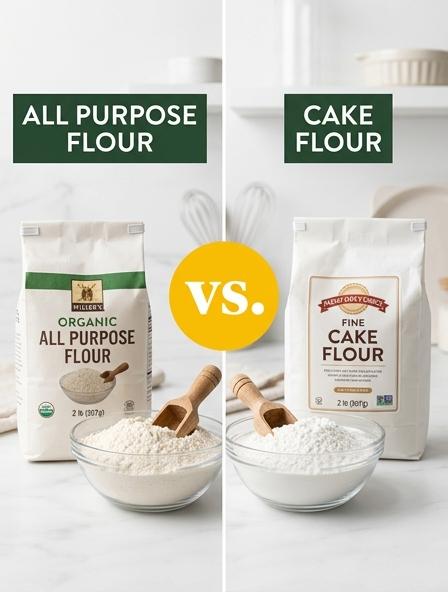
The fundamental distinction between all-purpose and cake flour is their protein concentration, which determines the strength of the gluten network. Protein acts as the structural framework in baking; higher levels create more elasticity and "chew."
| Flour Type | Protein % | Gluten Strength |
|---|---|---|
| All-Purpose Flour | 10% – 12% | Moderate/Strong |
| Cake Flour | 7% – 9% | Weak/Delicate |
All-purpose flour is a versatile mid-range option, providing enough structure for cookies and breads. Cake flour, however, is milled from soft wheat and often bleached to further weaken protein bonds. This inhibition of gluten development ensures a fine, tender crumb rather than a tough, bready texture.
You might choose all-purpose flour for a reliable batch of chewy chocolate chip cookies, but you will need cake flour when your goal is a light, airy chiffon cake that dissolves on the tongue.
Internal Crumb Structure and Tenderness Variations
The primary distinction between all-purpose and cake flour lies in protein content, which dictates the strength of the gluten network. Cake flour typically contains 7-9% protein, while all-purpose flour ranges from 10-12%. Lower protein results in less gluten formation, yielding a significantly softer, more fragile internal architecture.
- Cake Flour: Produces a fine, tight-knit, and velvety crumb that feels light on the palate.
- All-Purpose Flour: Creates a sturdier, more elastic structure with a slightly coarser crumb and more "chew."
Furthermore, cake flour is often bleached, a process that weakens proteins and allows the starch to absorb more moisture and sugar. This allows for a high-ratio rise without the structure collapsing. In contrast, all-purpose flour provides the structural integrity needed for heavier batters.
You might choose cake flour when crafting a delicate silken sponge, whereas all-purpose flour is the ideal choice for a robust birthday cake that needs to support heavy layers of buttercream.
Moisture Retention and Batter Hydration Characteristics
The primary difference in hydration between all-purpose and cake flour stems from protein content and starch quality. All-purpose flour contains more gluten-forming proteins (10-12%), which absorb liquid to create a sturdy, elastic network. In contrast, cake flour is lower in protein (7-9%) and typically undergoes a bleaching process. This chlorination modifies the starch granules, enabling them to bind significantly more water and liquid fats than unbleached varieties.
- All-Purpose Flour: High protein absorption creates structural stability and a characteristic chew.
- Cake Flour: Enhanced starch swelling ensures superior moisture retention and a fine, tender crumb.
Because of this unique hydration profile, cake flour can support higher ratios of sugar and liquid, preventing the batter from collapsing under its own weight. Home bakers love using this characteristic when crafting a velvet-textured vanilla sponge that remains incredibly soft and moist even several days after baking.
Nutritional Composition and Caloric Impact
The primary distinction between all-purpose flour and cake flour lies in their protein concentration and milling process. All-purpose flour is a versatile blend of hard and soft wheat, typically containing 10% to 12% protein. In contrast, cake flour is milled from soft wheat to a much finer consistency, yielding a lower protein content of approximately 7% to 9%. While both flours have a nearly identical caloric impact-averaging 364 calories per 100 grams-the bleaching process often used for cake flour slightly alters its pH level, improving its ability to hold moisture and sugar.
| Attribute | All-Purpose Flour | Cake Flour |
|---|---|---|
| Protein Content | 10% - 12% | 7% - 9% |
| Texture | Granular | Fine / Silky |
Bakers often choose the lower protein of cake flour to achieve an airy, tender crumb in a delicate sponge, while relying on the structural strength of all-purpose flour for a chewy, satisfying batch of homemade cookies.
Weight Ratios and Measurement Comparisons
Understanding the density difference between all-purpose and cake flour is crucial for consistent baking results. Cake flour is more finely milled and contains less protein, making it significantly lighter and fluffier than all-purpose flour. Because of this, measuring by volume (cups) rather than weight (grams) can lead to significant discrepancies in your recipes.
| Flour Type | Weight per Cup (approx.) | Protein Content |
|---|---|---|
| All-Purpose Flour | 120 grams | 10% – 12% |
| Cake Flour | 100 – 110 grams | 7% – 9% |
If you are substituting cake flour for all-purpose, you generally need to add an extra two tablespoons per cup to match the required structure. Professional bakers prefer using a digital scale to avoid the compression issues common with measuring cups.
Imagine achieving that perfectly airy, melt-in-your-mouth sponge cake by simply swapping your heavy all-purpose flour for precisely weighed cake flour.
Milling Fineness and Digestive Impact
The primary distinction between all-purpose and cake flour lies in their granulation and processing. Cake flour undergoes extensive milling to achieve an ultra-fine, silky consistency, whereas all-purpose flour retains a slightly coarser texture. This structural difference directly influences how our bodies metabolize the starch.
- Cake Flour: Its microscopic particle size increases the surface area for digestive enzymes, leading to faster glucose absorption.
- All-Purpose Flour: A denser protein matrix and larger grains result in a more moderate digestive pace.
While the finer milling of cake flour produces a superior rise and tender crumb, it also leads to a sharper glycemic response compared to its versatile, multi-purpose counterpart. Professional bakers prefer using cake flour when crafting a delicate chiffon cake to ensure that signature airy, light-as-a-cloud mouthfeel that guests love during celebrations.
External Browning and Aesthetic Outcomes
The protein concentration in flour is a primary catalyst for the Maillard reaction, the chemical process that creates surface browning and rich aromas. All-purpose flour, with its 10-12% protein content, facilitates a deep, golden-brown crust. Conversely, cake flour is typically bleached, which increases acidity and lowers protein to roughly 7-9%, significantly inhibiting browning for a more uniform, pale appearance.
- All-Purpose Flour: Promotes a rustic, bronzed exterior and a sturdy crust.
- Cake Flour: Produces a refined, ivory finish with a soft, delicate aesthetic.
You might reach for all-purpose flour when baking a batch of chewy chocolate chip cookies that require a toasted, golden edge, while opting for cake flour when crafting a snowy white chiffon cake that looks as light and airy as it feels.
Preservation Requirements and Shelf Life Stability
Both all-purpose and cake flour require specific environmental conditions to maintain their chemical integrity and baking performance. While all-purpose flour is highly stable due to its moderate protein levels, cake flour is often bleached, making it more sensitive to moisture and odors. To maximize shelf life, store both types in cool, dry, and dark locations to prevent rancidity and pest infestation.
- Standard Shelf Life: 6 to 12 months in a cool pantry.
- Extended Storage: Up to 2 years if kept in the freezer.
- Containment: Airtight glass or plastic containers prevent oxidation and flavor transfer.
You can ensure your delicate chiffon cakes never pick up unwanted cupboard smells by sealing your cake flour in a dedicated airtight canister immediately after every use.
Structural Resistance to Rising Agents
The primary difference in structural resistance between these flours is determined by their protein content. All-purpose flour contains roughly 10-12% protein, which develops a sturdy gluten network. This framework provides significant structural resistance, forcing leavening agents like baking powder to work harder to lift the heavy dough, resulting in a dense, chewy crumb.
- All-Purpose Flour: High protein creates a tight mesh that resists expansion.
- Cake Flour: Low protein (7-9%) creates a fragile web that yields easily to rising gases.
Because cake flour is chlorinated and low in protein, its structural "give" allows bubbles to expand fully without collapsing or becoming tough. This minimal resistance is why home bakers reach for cake flour when they want to create a sky-high, melt-in-your-mouth chiffon cake for a special celebration.
Performance Differences in Diverse Temperature Settings
Temperature significantly impacts how the protein structures in all-purpose and cake flour react during the baking process. All-purpose flour features a higher protein content, creating a resilient gluten network that withstands high heat and maintains its structural integrity. Conversely, cake flour is more sensitive to temperature fluctuations due to its lower protein levels and finer granulation, which can lead to a collapse if the oven environment is inconsistent.
- High Heat: All-purpose flour provides a sturdy, reliable rise; cake flour allows for rapid expansion and a delicate, airy crumb.
- Chilled Environments: All-purpose flour hydrates slower in cold doughs, while the fine particles of cake flour absorb liquids and fats more quickly during refrigeration.
You might choose the robust stability of all-purpose flour for a rustic bread baked in a scorching Dutch oven, whereas cake flour is the go-to for enthusiasts who want a velvet-soft sponge cake that requires a precise, gentle heat to bloom.
All Purpose Flour vs Cake Flour source and external links
- All-Purpose Flour is a versatile wheat flour with a medium protein content suitable for a wide range of recipes, including cookies, bread, and pastries.
- Cake Flour is finely milled from soft wheat and contains less protein to help create light, airy, and tender textures in delicate baked goods.
Understanding the fundamental distinctions between all-purpose flour and cake flour is essential for achieving professional-level baking results. The primary difference lies in the protein content: all-purpose flour typically contains 10-12% protein, fostering robust gluten development for a chewy, structural bite in cookies and breads. Conversely, cake flour features a lower 7-9% protein ratio and is finely milled, resulting in a tender, velvety crumb texture ideal for delicate sponges and pound cakes. While all-purpose flour offers unmatched versatility for general recipes, cake flour's specialized processing ensures a lighter, airier rise in sugar-rich desserts. Ultimately, selecting the correct flour based on its protein profile dictates the final crumb density and mouthfeel, making it the most critical variable in determining your bake's success.