
Alfredo Sauce vs Marinara: Which is Best for Nutritional Value, Preparation Efficiency, and Culinary Versatility?
Caloric Density and Nutrient Profiles for Weekly Meal Planning
Choosing between Alfredo and marinara significantly impacts your nutritional intake during weekly meal planning. Alfredo is a calorie-dense sauce, relying on heavy cream, butter, and parmesan cheese to deliver high fat content and calcium. Conversely, marinara is a heart-healthy, low-calorie alternative that is rich in antioxidants like lycopene and essential vitamins from simmered tomatoes.
| Nutrient Factor | Alfredo Sauce | Marinara Sauce |
|---|---|---|
| Caloric Density | High (Cream-based) | Low (Tomato-based) |
| Primary Benefits | Calcium, Protein | Vitamin C, Lycopene |
| Dietary Focus | Satiety, Bulking | Weight Management |
A fitness enthusiast might meal-prep with a zesty marinara to keep weekday lunches light and energizing, while a family looking for a rich, indulgent comfort meal will often gravitate toward the velvety texture of a classic Alfredo for Sunday dinner.
Preparation Time and Simmering Efficiency in the Kitchen
When comparing kitchen efficiency, Alfredo sauce is the undisputed champion of speed. It relies on a rapid emulsion of butter, cream, and Parmesan cheese, typically reaching its ideal consistency in under ten minutes. Conversely, a robust marinara requires a longer simmering period to break down the cellular structure of the tomatoes and mellow their natural acidity.
- Alfredo: Minimal prep; requires active whisking but very little heat time.
- Marinara: Passive cooking; benefits from 30–45 minutes of gentle bubbling to concentrate flavor.
While Alfredo offers an immediate solution for hunger, marinara rewards those who allow sugars and aromatics to meld over time. You might reach for the Alfredo during a busy weeknight rush, but you'll likely prefer the rich depth of a slow-bubbling marinara for a traditional Sunday family feast.
Balancing Heavy Textures and Acidic Flavor Profiles
Deciding between Alfredo and marinara involves a choice between luxury and brightness. Alfredo is a fat-based emulsion typically crafted from butter, heavy cream, and Parmesan cheese. This results in a dense, velvety texture that provides a high-calorie, savory satisfaction. Conversely, marinara is a tomato-based reduction that emphasizes acidity and herbal notes, offering a lighter, more refreshing palate.
- Alfredo: Best for "clinging" to wide, flat noodles like fettuccine.
- Marinara: Ideal for thin strands or as a vibrant base for meat-heavy dishes.
The culinary balance depends on your goal: Alfredo coats the tongue to mellow out saltier components, while the acidity in marinara cuts through richness to cleanse the palate. You might find yourself craving the decadent warmth of Alfredo for a cozy winter dinner, whereas a zesty marinara is what you choose for a light, energizing summer meal on the patio.
Refrigeration Longevity and Food Safety for Leftovers
Understanding the shelf life of pasta sauces is vital for food safety. Alfredo sauce, rich in dairy, butter, and cheese, is highly perishable and should be consumed within 3 to 4 days. Conversely, the high acidity found in tomato-based marinara naturally inhibits bacterial growth, extending its refrigeration life to 5 to 7 days.
| Sauce Type | Fridge Life | Main Risk Factor |
|---|---|---|
| Alfredo | 3-4 Days | Dairy Spoilage |
| Marinara | 5-7 Days | Mold Growth |
Always store leftovers in airtight containers and keep your refrigerator below 40°F to stay out of the bacterial "danger zone." Busy parents often prefer prepping a large batch of marinara on Sunday because its longer shelf life guarantees a safe, stress-free meal even by the following Friday.
Impact of Dairy Content Versus Plant Based Antioxidants
Choosing between Alfredo and Marinara involves a significant trade-off between caloric density and micronutrient profiles. Alfredo sauce is defined by its high dairy content, providing a rich source of calcium and protein, yet it is also high in saturated fats. Conversely, Marinara leverages plant-based antioxidants, primarily lycopene from tomatoes, which remains stable and becomes more bioavailable during the simmering process.
- Alfredo: Satiating and energy-dense, containing bone-supporting minerals.
- Marinara: Heart-healthy, low-calorie, and packed with vitamins A and C.
The metabolic impact varies; the fats in Alfredo slow carbohydrate digestion, while the acidity and fiber in Marinara support digestive health. While fitness enthusiasts often opt for the light, nutrient-rich profile of a red sauce during the week, many food lovers prefer the decadent, creamy embrace of a traditional Alfredo for a restorative weekend cheat meal.
Grocery Budget Considerations for Different Base Components
Choosing between white and red sauces often comes down to your weekly grocery allotment. Marinara is widely considered the more economical choice because its core components-canned tomatoes, garlic, and dried herbs-are shelf-stable and inexpensive when purchased in bulk.
| Sauce Type | Primary Cost Drivers | Price Category |
|---|---|---|
| Marinara | Tomatoes, Onion, Herbs | Budget-Friendly |
| Alfredo | Heavy Cream, Butter, Parmesan | Premium |
In contrast, Alfredo sauce relies on perishable, high-fat dairy products. Fresh heavy cream and authentic aged Parmesan cheese significantly drive up the cost per serving compared to vegetable-based alternatives. Many home cooks prefer whipping up a large pot of marinara for affordable weekday meal prepping, while reserving the rich, velvety indulgence of Alfredo for intimate date nights or special family celebrations.
Adhesion and Coating Performance Across Various Pasta Shapes
The physical properties of Alfredo and Marinara dictate how they interact with different pasta geometries. Alfredo is a high-viscosity, fat-based emulsion that relies on surface tension to cling to wide, flat areas. Without sufficient surface area, the heavy cream and cheese base tends to slide off the noodle. In contrast, Marinara is a thinner, acidic, water-based sauce that performs best when it can be trapped within hollow cavities or tangled in thin strands.
- Broad Ribbons: Ideal for Alfredo, as the wide surface of Fettuccine provides ample space for the viscous sauce to adhere.
- Tubular Shapes: Perfect for Marinara, as the hollow centers of Penne or Rigatoni capture the liquid and chunky tomato pieces.
- Thin Strands: Best suited for Marinara or oil-based sauces to prevent clumping.
For a perfect weeknight meal, home cooks often choose wide Pappardelle for Alfredo to ensure a silky, uniform coating, while opting for textured Penne Rigate with Marinara so the sauce clings to every exterior ridge and interior curve.
Managing Dietary Restrictions Related to Lactose and Acidity
Choosing between Alfredo and Marinara often involves balancing sensitivities to dairy and acid. Alfredo sauce is heavy in cream and cheese, posing a significant challenge for those with lactose intolerance. However, its fatty, alkaline profile is generally gentle on the stomach for people prone to acid reflux.
In contrast, Marinara is a natural choice for those avoiding dairy, but its high tomato content makes it highly acidic. This can exacerbate symptoms of GERD or heartburn.
- Alfredo: High lactose content; low acidity levels.
- Marinara: Naturally dairy-free; high acidity levels.
You might prefer the light, dairy-free nature of a Marinara for a vegan-friendly evening, but if tomato-based dishes cause you discomfort, the velvety texture of Alfredo offers a soothing, low-acid alternative.
Color Contrast and Visual Presentation on the Dinner Plate
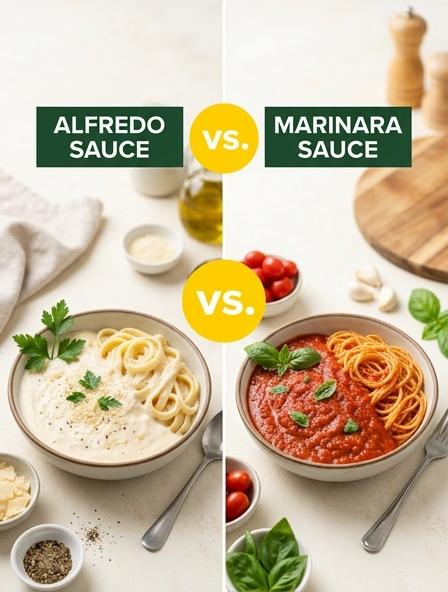
The choice between Alfredo and marinara significantly alters the aesthetic appeal of a meal. Alfredo sauce offers a sophisticated, monochromatic look, characterized by its creamy white ivory tones that blend seamlessly with pasta. Marinara, conversely, provides a bold, rustic energy with its deep crimson hues, creating a striking focal point on the plate.
- Alfredo: Provides a neutral backdrop that makes vibrant green garnishes, like fresh parsley or sautéed peas, stand out.
- Marinara: Delivers high-contrast visuals, especially when topped with white parmesan shavings or fresh basil leaves.
While Alfredo evokes a sense of modern elegance and richness, marinara suggests a traditional, hearty Mediterranean atmosphere. These colors influence diner perception, as bright reds often stimulate appetite while white sauces suggest indulgence and comfort.
You might choose the vibrant pop of a marinara for a casual family gathering to create an inviting, energetic table, whereas a sleek plate of fettuccine Alfredo is the go-to for a minimalist, upscale dinner party.
Versatility in Secondary Applications from Pizzas to Casseroles
Choosing between Alfredo and marinara often depends on the structural requirements of your dish. Marinara serves as a robust, acidic base that cuts through heavy fats, making it the gold standard for traditional lasagna and eggplant parmigiana. Conversely, Alfredo provides a velvety, lipid-rich binder ideal for white pizzas and indulgent seafood bakes.
- Marinara: Best for dipping sauces, meatball subs, and vegetable-forward stews.
- Alfredo: Excels in potato gratins, creamy chicken casseroles, and spinach-artichoke dips.
While marinara offers a lighter, herb-infused profile, Alfredo transforms simple starches into decadent comfort food. Both sauces extend far beyond pasta, acting as essential culinary foundations for creative leftovers and complex oven-baked meals. You might prefer the bright tang of a marinara-slathered thin-crust pizza, or perhaps you crave the richness of a chicken florentine casserole bound by a silky, garlic-infused Alfredo reduction.
Alfredo Sauce vs Marinara source and external links
- Alfredo sauce is a rich, creamy Italian pasta sauce primarily made from butter, heavy cream, and Parmesan cheese.
- Marinara sauce is a savory tomato-based sauce typically seasoned with garlic, onions, and aromatic herbs.