
Alfalfa Honey vs Manuka Honey: Comparing Nutrition, Flavor, and Antibacterial Properties Differences
Nutritional Comparison for Daily Family Wellness
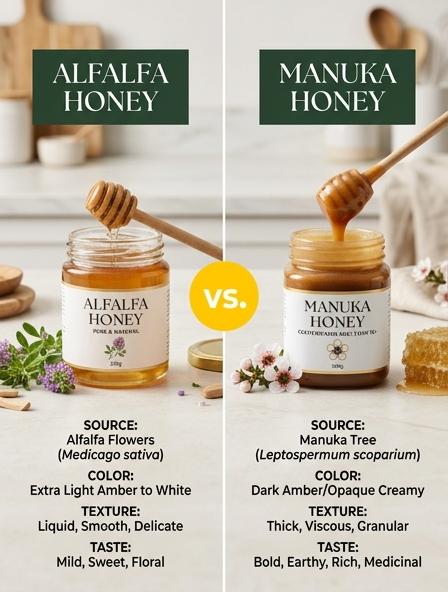
Choosing between Alfalfa and Manuka honey depends on your family's specific health goals. Alfalfa honey is prized for its mild flavor and high concentration of prebiotic oligosaccharides, which support digestive health and provide a clean energy boost. In contrast, Manuka honey is a medicinal powerhouse from New Zealand, famous for its high Methylglyoxal (MGO) levels that offer potent antibacterial and anti-inflammatory properties.
- Alfalfa Honey: Rich in vitamins and minerals like potassium; ideal for maintaining gut flora.
- Manuka Honey: Contains unique bioactive compounds; best for targeted immune support and wound healing.
While Alfalfa is a budget-friendly source of antioxidants for everyday kitchen use, Manuka serves as a concentrated therapeutic supplement. Active families often stir a spoonful of Alfalfa into their morning oatmeal for natural vitality, while reserving a jar of high-UMF Manuka in the medicine cabinet to quickly soothe a child's winter sore throat.
Flavor Impact in Sweet and Savory Home Cooking
Choosing between Alfalfa and Manuka honey significantly alters a dish's profile. Alfalfa honey is a culinary chameleon; its mild, delicately floral, and slightly grassy notes provide clean sweetness without overshadowing other ingredients. In contrast, Manuka honey delivers a bold, earthy punch with distinct medicinal and bitter undertones, making it a dominant force in any recipe.
- Alfalfa Honey: Best for light vinaigrettes, yogurt, and delicate white cakes.
- Manuka Honey: Ideal for robust glazes on charred meats or as a functional finishing element.
While Alfalfa acts as a transparent sweetener that preserves the integrity of fruits and spices, Manuka acts as a centerpiece flavor that stands up to heavy herbs like rosemary or garlic. You might prefer drizzling mild Alfalfa over a lemon sponge cake for a subtle lift, whereas a spoonful of potent Manuka is what people like most when glazing a savory rack of lamb for a complex, earthy finish.
Heat Stability and Enzyme Preservation During Baking
When comparing Alfalfa and Manuka honey for baking, heat stability is the deciding factor. Manuka honey is renowned for its bioactive compounds, including enzymes and Methylglyoxal (MGO). These elements are highly sensitive to thermal degradation; exposing Manuka to temperatures above 100°F (37°C) significantly diminishes its unique medicinal properties, making it an inefficient choice for the oven.
Alfalfa honey, while still containing natural enzymes, is primarily valued in the culinary world for its mild flavor and moisture-retaining glucose content. It withstands the baking process better because its value lies in its structural and flavor-enhancing role rather than therapeutic potency.
- Manuka Honey: Best consumed raw to preserve delicate bioactive markers.
- Alfalfa Honey: Preferred for high-heat recipes due to its neutral profile.
You might find that using Alfalfa honey in your cookie dough provides the perfect golden texture, while saving the precious Manuka honey for a raw finishing drizzle once the treats have cooled.
Antibacterial Properties and Immune System Support
When evaluating the therapeutic potential of Alfalfa and Manuka honey, the primary distinction lies in their bioactive concentration. Manuka honey is globally recognized for its high levels of Methylglyoxal (MGO), a compound providing superior non-peroxide antibacterial activity that is effective against various pathogens. Alfalfa honey, while possessing milder antibacterial traits, is prized for its prebiotic benefits which support gut health-a critical component of a robust immune system.
- Manuka Honey: Delivers potent, targeted antibacterial action ideal for fighting infections.
- Alfalfa Honey: Provides a gentle boost to the immune system through enzyme-rich, antioxidant support.
Health-conscious shoppers often keep a jar of high-MGO Manuka honey on hand as a natural remedy to soothe a sore throat or provide an immediate defense boost during the first signs of a seasonal cold.
Texture and Viscosity in Glazes and Marinades
The culinary performance of honey depends heavily on its physical structure. Alfalfa honey is known for its smooth, light texture and a tendency to crystallize into a fine-grained cream. This makes it exceptionally easy to incorporate into cold marinades or liquid dressings without leaving clumps. Conversely, Manuka honey is famous for its thixotropic properties, meaning it is naturally thicker, more viscous, and denser than most floral varieties.
- Alfalfa Honey: Provides a fluid consistency that blends quickly with oils and vinegars.
- Manuka Honey: Offers a tacky quality that creates a rich, lacquer-like finish on roasted proteins.
While Alfalfa offers a subtle sweetness that doesn't heavily alter a sauce's body, Manuka acts as a powerful binding agent that holds spices against the food surface throughout the high-heat cooking process. You might choose Alfalfa for a delicate lemon-herb chicken marinade, but reach for the thick Manuka when you want a deeply caramelized, golden crust on a holiday ham.
Price Point and Value for Regular Kitchen Use
When evaluating the cost-to-benefit ratio for your pantry, Alfalfa and Manuka honey serve very different roles. Alfalfa honey is widely available and budget-friendly, making it the superior choice for high-volume kitchen tasks. In contrast, Manuka honey commands a premium price-often five to ten times higher than Alfalfa-due to its specialized harvesting process and unique antibacterial properties (UMF/MGO ratings).
- Alfalfa Honey: High value for daily sweetening, mild flavor profile, and affordable bulk pricing.
- Manuka Honey: High cost, medicinal potency, and typically reserved for wellness applications rather than cooking.
For regular culinary use, Alfalfa honey offers the best economic value without compromising on texture or moisture retention in baked goods. While Manuka is a powerful therapeutic tool, its distinct earthy taste and high price point make it less practical for general recipes. You might prefer using Alfalfa honey as your go-to sweetener for a large family batch of overnight oats or morning tea, keeping the expensive Manuka tucked away for specific health needs.
Glycemic Index and Blood Sugar Impact on Health
The glycemic index (GI) of honey varies based on its floral source and fructose-to-glucose ratio. Alfalfa honey typically features a higher glucose content, which leads to faster crystallization and a moderate glycemic impact. This makes it an efficient source of readily available energy. Conversely, high-quality Manuka honey often has a lower GI, partly due to its complex chemical composition and unique phenolic compounds that may influence how the body processes its natural sugars.
- Alfalfa Honey: Moderate GI; provides a quick glucose boost for physical recovery.
- Manuka Honey: Lower GI; offers a slower insulin response combined with bioactive therapeutic properties.
While both varieties are superior to refined sugar, a fitness enthusiast might stir Alfalfa honey into a pre-workout smoothie for a clean energy lift, while a wellness seeker adds Manuka to their morning tea to maintain more stable blood sugar levels throughout the day.
Aroma and Sensory Contributions to Prepared Dishes
Choosing between Alfalfa and Manuka honey significantly alters the sensory profile of a culinary creation. Alfalfa honey is prized for its mild, delicate sweetness and faint floral aroma, often carrying subtle hints of fresh hay. In contrast, Manuka honey offers a robust, earthy, and slightly medicinal scent with a complex, bittersweet finish that lingers on the palate.
- Alfalfa Honey: Provides a "clean" sweetness that enhances ingredients without masking them.
- Manuka Honey: Delivers a pungent, woody depth that acts as a bold flavor anchor.
The culinary application depends entirely on the desired intensity of the honey's character. While Alfalfa's light profile makes it the perfect invisible sweetener for a delicate chamomile tea or fruit tart, adventurous home cooks often prefer drizzling Manuka honey over a sharp gorgonzola cheese plate to let its distinctive, medicinal richness create a sophisticated flavor contrast.
Shelf Life and Crystallization in the Household Pantry
Both Alfalfa and Manuka honey boast an indefinite shelf life when stored in a cool, dark pantry, but their physical transformations over time differ significantly. Alfalfa honey features a high glucose-to-fructose ratio, which causes it to crystallize rapidly into a fine, buttery texture. In contrast, Manuka honey is thixotropic-meaning it is naturally thick and gel-like-and tends to resist crystallization longer, eventually forming larger, coarser grains.
Key differences in their pantry behavior include:
- Alfalfa Honey: Quick to solidify; ideal for those who prefer a spreadable, creamed consistency.
- Manuka Honey: Stays viscous longer; maintains a dense, earthy integrity for many months.
To restore liquid clarity to either variety, gently warm the jar in a bowl of hot water. Imagine reaching for your jar of Alfalfa honey on a busy morning and finding its perfectly creamed texture easy to spread across warm sourdough toast without making a sticky mess.
Moisture Retention and Performance in Baked Goods
Understanding the hygroscopic properties of honey is essential for achieving the perfect bake. Both Alfalfa and Manuka honey function as natural humectants, binding water molecules to extend shelf-life and ensure a tender crumb. However, their performance differs based on viscosity and flavor intensity.
- Alfalfa Honey: Its mild, neutral profile and high sugar content make it ideal for light sponges where moisture is needed without overpowering delicate ingredients.
- Manuka Honey: With a higher viscosity and complex chemical structure, it provides a denser, more substantial texture in heavier breads or artisanal loaves.
While both varieties prevent staling effectively, gourmet pastry chefs frequently choose Alfalfa honey for its reliable ability to create soft, golden-brown crusts in everyday tea cakes, whereas Manuka is reserved for high-end use-cases like a rich, earthy glaze on a moist honey-drizzled cheesecake that demands a tacky, luxurious finish.
Alfalfa Honey vs Manuka Honey source and external links
- Alfalfa honey is a mild, light-colored honey produced from the purple blossoms of the alfalfa plant, frequently used as a natural sweetener in baking. Learn more about Alfalfa Honey.
- Manuka honey is produced in New Zealand and Australia from the nectar of the Manuka tree and is highly valued for its unique antibacterial properties. Visit the page for Manuka Honey.