
Active Dry Yeast vs Fresh Yeast : Comparing Performance, Shelf Life, and Flavor Differences
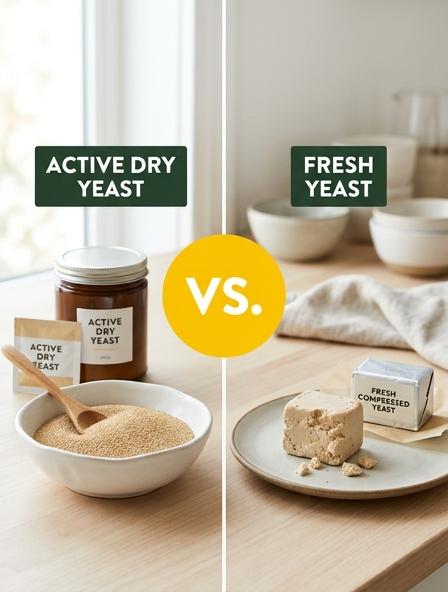
Comparing Rise Times of Granulated and Compressed Options
Understanding the metabolic differences between active dry yeast and fresh compressed yeast is essential for timing your bake. Active dry yeast consists of dormant, granulated cells that require a "blooming" step in warm water to activate. This rehydration process, combined with its protective coating, generally results in a slower, more controlled fermentation period.
In contrast, fresh yeast-often sold in compressed blocks-is a living organism with high moisture content. Because the cells are already active, it begins gas production immediately, often leading to a faster initial rise.
- Active Dry Yeast: Requires 5–10 minutes of rehydration; better for long-fermented doughs.
- Fresh Yeast: Immediate fermentation; provides a more vigorous rise in shorter windows.
You might reach for the shelf-stable convenience of active dry yeast for a casual weekend pizza, while a professional pastry chef would opt for fresh compressed yeast to ensure a rapid, airy lift in a delicate morning brioche.
Storage Longevity and Freshness for Different Baking Agents
The primary difference between active dry yeast and fresh yeast lies in their moisture content and shelf stability. Active dry yeast is a granulated form that has been dehydrated, allowing it to remain potent for up to two years when stored in a cool, dry environment. Once opened, it should be kept in the refrigerator to extend its life for several months.
- Active Dry Yeast: High stability, 12-24 month shelf life, requires refrigeration after opening.
- Fresh Yeast: High moisture, 2-3 week shelf life, must be stored in the refrigerator constantly.
Fresh yeast, often called compressed yeast, is highly perishable due to its 70% moisture content. While professional bakers prize it for its vibrant fermentation and rich aroma, it loses its leavening power quickly and is susceptible to mold. You might choose fresh yeast for a slow-fermented artisanal sourdough on a planned baking day, while keeping active dry packets as a reliable pantry staple for spontaneous homemade pizza.
Taste and Aroma Differences in Homemade Loaves
The choice between active dry yeast and fresh yeast fundamentally alters the olfactory and flavor profile of homemade bread. Fresh yeast, often preferred by professional bakers, imparts a rich, punchy, and slightly sweet aroma often described as "earthy" or "creamy." Because it is biologically active and moist, it produces a more complex fermented flavor during proofing.
Active dry yeast, while reliable, provides a more muted and neutral sensory experience. It is ideal for recipes where you want the flour or inclusions like herbs and seeds to take center stage without a heavy yeasty scent.
- Fresh Yeast: Intense, beer-like aroma; deeper flavor complexity.
- Active Dry Yeast: Clean, mild scent; predictable, neutral fermentation.
Home bakers typically prefer the convenience of active dry yeast for weekly sandwich loaves, while many enthusiasts insist on fresh yeast for the deep, nostalgic fragrance of a traditional Sunday brioche.
Nutritional Breakdown of Dehydrated and Living Varieties
While both yeast types derive from Saccharomyces cerevisiae, their nutritional density differs significantly based on moisture levels. Fresh yeast contains roughly 70% water, providing a rich source of natural B-complex vitamins, including riboflavin and folate, in their most biologically active state. In contrast, active dry yeast undergoes a dehydration process that concentrates its nutrient profile, leading to higher protein and fiber content by weight.
| Nutrient Factor | Active Dry Yeast | Fresh (Cake) Yeast |
|---|---|---|
| Vitamin Retention | Stable/Fortified | High/Natural |
| Caloric Density | Higher per gram | Lower per gram |
You may prefer the convenience of active dry yeast for spontaneous weekend pizza nights, whereas professional bakers often select fresh yeast to achieve the complex, tangy aromatic profile found in premium artisanal breads.
Effect on Dough Structure and Final Crumb Texture
The choice between fresh and active dry yeast significantly dictates the internal architecture of your bread. Fresh yeast, rich in moisture, initiates rapid fermentation, producing vigorous carbon dioxide bubbles that stretch gluten strands to create an exceptionally airy and open crumb. Conversely, active dry yeast consists of dormant granules that provide a more controlled fermentation, resulting in a sturdy, uniform dough structure with a consistent, fine-textured crumb.
- Fresh Yeast: Produces delicate cell walls and maximum volume for a light, pillowy feel.
- Active Dry Yeast: Offers a reliable, slightly denser bite ideal for structured sandwich loaves.
Professional bakers often reach for fresh yeast when they want to achieve that signature, cloud-like interior and explosive lift found in high-end brioche or artisanal baguettes.
Reliability During Slow Fermentation and Overnight Proofing
When managing extended fermentation times, the choice between active dry yeast and fresh yeast significantly impacts dough stability. Active dry yeast is often the more reliable candidate for overnight proofing due to its dormant nature and slower initial activity. This gradual gas release ensures the dough maintains its structural integrity over 12 to 24 hours.
- Active Dry Yeast: Offers a predictable, steady rise; less likely to exhaust sugars too early during cold retardation.
- Fresh Yeast: Highly metabolic and faster-acting, which increases the risk of over-proofing or dough collapse if not monitored closely.
While fresh yeast provides excellent leavening for immediate bakes, active dry yeast's resilience to temperature fluctuations makes it the gold standard for long-term flavor development. Home bakers love the peace of mind they get by prepping a batch of focaccia dough on Friday night, knowing it will be perfectly bubbly and ready for the oven by Saturday lunch.
Digestion Benefits and Gut Health Considerations
When comparing active dry yeast vs. fresh yeast, the primary gut health benefit stems from the fermentation process itself. Both yeasts act as biological leavening agents that help break down gluten proteins and phytic acid-an anti-nutrient that can interfere with mineral absorption. While active dry yeast is processed for stability, fresh yeast is often preferred for traditional, longer fermentation cycles which can enhance the bioavailability of nutrients.
- Reduced Phytic Acid: Fermentation helps neutralize compounds that block nutrient uptake.
- Improved Digestibility: Long-rise times allow yeast to "pre-digest" complex starches.
- Lower Glycemic Index: Slow-fermented breads typically have a more favorable impact on blood sugar.
While both types provide these benefits, the slower metabolic rate of fresh yeast is ideal for artisan methods that prioritize gut comfort. You might choose fresh yeast when baking a rustic, long-fermented boule for a family dinner to ensure everyone enjoys a delicious crust without the common bloating associated with quick-rise commercial breads.
Conversion Ratios for Ingredient Substitutions
Understanding the conversion ratio between active dry yeast and fresh yeast is essential for consistent baking results. Since fresh yeast, also known as cake yeast, contains significant moisture, it is less concentrated than granulated active dry yeast. To achieve the same leavening power, the standard rule follows a 1:3 ratio: use one part active dry yeast for every three parts of fresh yeast.
| If the recipe calls for: | Substitute with: |
|---|---|
| 30g Fresh Yeast | 10g Active Dry Yeast |
| 7g Active Dry Yeast | 21g Fresh Yeast |
Home bakers love this simple math when they want to recreate a traditional artisan bread recipe calling for fresh blocks but only have standard dry packets available in their pantry.
Temperature Control and Proper Activation Methods
Achieving the perfect rise depends heavily on thermal precision. Active Dry Yeast consists of dormant cells encapsulated in a protective coating, requiring rehydration in warm liquid-ideally between 105°F and 115°F-to trigger fermentation. Conversely, Fresh Yeast is "alive" and highly perishable, performing best in slightly cooler liquids ranging from 90°F to 95°F.
- Active Dry Yeast: Requires "proofing" in warm water with a pinch of sugar for 5–10 minutes until foamy.
- Fresh Yeast: Can be crumbled directly into dry ingredients or dissolved instantly in lukewarm liquids.
Temperatures exceeding 120°F will damage or kill the yeast cells, leading to dense, unrisen bread. You can ensure a bakery-quality result by using a digital thermometer to calibrate your water temperature before mixing your signature artisanal sourdough or festive brioche dough.
Budget Impact and Waste Prevention for Daily Baking
Choosing the right leavening agent is a critical decision for managing kitchen expenses and minimizing food waste. Active dry yeast is the superior choice for budget-conscious bakers due to its exceptional shelf stability; it remains viable for months when stored correctly. In contrast, fresh yeast is highly perishable, with a lifespan of only two to three weeks, often resulting in discarded product if production schedules shift.
- Active Dry Yeast: Ideal for bulk purchasing, reducing the cost per loaf significantly.
- Fresh Yeast: Requires constant refrigeration and carries a higher risk of spoilage.
Switching to a granulated format allows for precise measurements, ensuring that every gram contributes to a successful rise rather than ending up in the bin. You will find that keeping active dry yeast on hand is the most practical way to ensure you can bake a fresh batch of dinner rolls whenever the craving strikes without worrying about expired ingredients.
Active Dry Yeast vs Fresh Yeast source and external links
- Active dry yeast is a shelf-stable leavening agent consisting of coarse granules that must be dissolved in warm water to be activated before use, making Active Dry Yeast a reliable choice for many home bakers.
- Fresh yeast, also known as cake yeast, is a moist, highly perishable product preferred by many professional bakers for its potent fermentation and superior results in slow-rising doughs. Learn more about working with Fresh Yeast.