
Acai Berry vs Hibiscus : Comparing Nutrition, Flavor, and Culinary Application Differences
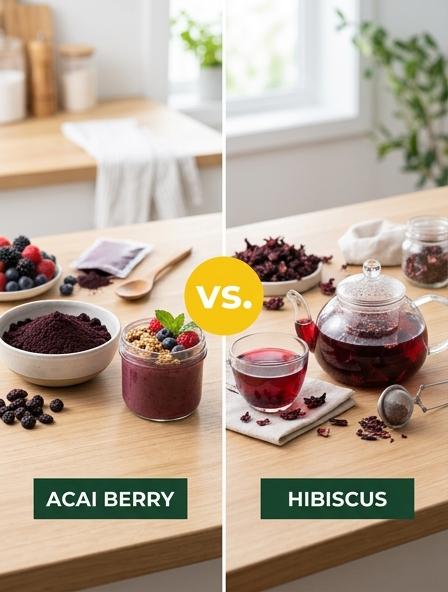
Acai Berry and Hibiscus Nutritional Profiles for Home Cooking
Integrating acai berry and hibiscus into your kitchen repertoire offers a powerful combination of antioxidants and essential micronutrients. While acai is a stone fruit known for its rare healthy fats, hibiscus is a botanical calyx prized for its tart acidity and mineral content.
| Feature | Acai Berry | Hibiscus |
|---|---|---|
| Key Nutrients | Omega-3, 6, 9 & Anthocyanins | Vitamin C, Iron & Flavonoids |
| Caloric Base | Healthy Fats/Low Sugar | Calorie-free/Organic Acids |
Acai supports heart and brain health through its unique lipid profile, making it a dense nutritional base. In contrast, hibiscus acts as a natural diuretic and immune booster due to its high concentration of organic acids. Home cooks typically reach for frozen acai to build a sustaining, antioxidant-packed breakfast bowl, whereas they use dried hibiscus to infuse a vibrant, tangy crimson syrup into refreshing artisanal sodas.
Flavor Impact Comparison in Sweet and Savory Dishes
Acai berries and hibiscus offer distinct culinary profiles that transform both sweet and savory recipes. Acai is characterized by its earthy, deep-cocoa undertones and mild bitterness, providing a rich mouthfeel and subtle berry notes. Conversely, hibiscus provides a sharp, cranberry-like acidity and floral brightness that adds a refreshing, tangy zing to any dish.
- Acai Berry: Earthy and nutty; adds "weight" to dessert bowls and depth to dark meat reductions.
- Hibiscus: Tart and floral; provides high-key acidity to syrups, vinaigrettes, and seafood glazes.
While acai grounds a recipe with its complex richness, hibiscus elevates it with a vibrant citrus-like punch. Many food enthusiasts prefer using acai to thicken a decadent morning smoothie, while professional chefs often drizzle a tart hibiscus reduction over grilled salmon to balance the protein's natural oils.
Performance Under Heat and Boiling Conditions in the Kitchen
The culinary utility of acai berry versus hibiscus is largely defined by their thermal stability. Acai is a delicate, fat-rich fruit that is best kept raw; boiling it causes rapid degradation of its volatile antioxidants and alters its earthy flavor profile. In contrast, hibiscus petals are structurally resilient and require heat to unlock their full potential.
- Acai Berry: High heat destroys anthocyanins and healthy omegas; best served frozen or chilled.
- Hibiscus: Boiling extracts deep crimson pigments and tart acidity; ideal for infusions and reductions.
While acai is the gold standard for refreshing, chilled smoothie bowls, home cooks prefer hibiscus when simmering vibrant, ruby-red syrups or steeping aromatic hot teas that retain their punchy flavor even at high temperatures.
Natural Pigment Intensity and Visual Food Presentation
Acai berries and hibiscus flowers are both powerhouse sources of anthocyanins, yet they offer vastly different visual aesthetics for culinary professionals and home cooks. Acai delivers a dense, opaque midnight-purple that creates a rich, moody foundation in thicker preparations. Conversely, hibiscus provides a brilliant, translucent ruby-red that can be diluted into soft pinks or concentrated into a neon magenta.
| Source | Dominant Hue | Visual Character |
|---|---|---|
| Acai Berry | Deep Indigo / Violet | Rich, earthy, and matte |
| Hibiscus | Crimson / Bright Pink | Vibrant, clear, and jewel-toned |
Home baristas often layer chilled hibiscus tea over a thick acai base to create a stunning ombre effect that transitions from dark royal purple to a glowing sunset red, making it a favorite for social media-worthy health drinks.
Antioxidant Content and Health Impact in Daily Recipes
Both acai and hibiscus are celebrated for their dense phytonutrient profiles, yet they impact health through different mechanisms. Acai berries are exceptionally high in anthocyanins and heart-healthy omega fats, which support brain function and combat oxidative stress. In contrast, hibiscus is a potent source of Vitamin C and organic acids, frequently used to support healthy blood pressure levels and liver detoxification.
- Acai: Best for nutrient-dense smoothie bowls and recovery snacks.
- Hibiscus: Ideal for calorie-free hydration and tart flavor profiles in teas.
While acai provides fat-soluble protection, hibiscus offers water-soluble antioxidants that assist metabolic wellness. Incorporating both ensures a wider spectrum of cellular protection across your daily meals. You might enjoy a chilled hibiscus infusion to stay hydrated during a summer afternoon, while someone seeking a sustained energy boost would likely reach for a deep purple acai bowl topped with granola.
Texture and Consistency in Purees versus Infusions
The physical profile of acai berry and hibiscus depends entirely on their preparation methods. Acai is most commonly served as a frozen puree, offering a dense, creamy, and slightly grainy mouthfeel due to its high healthy fat content. In contrast, hibiscus is primarily treated as a botanical infusion, resulting in a thin, watery liquid that is completely free of solids or pulp.
| Attribute | Acai Puree | Hibiscus Infusion |
|---|---|---|
| Consistency | Thick and spoonable | Fluid and light |
| Mouthfeel | Velvety/Rich | Astringent/Clean |
While the acai puree provides a substantial, meal-like structure, the hibiscus infusion acts as a refreshing hydrator. Many people love starting their morning with a heavy, spoonable acai bowl topped with granola, followed by a chilled hibiscus tea for a light, thirst-quenching afternoon lift.
Storage Life and Stability in the Home Pantry
The storage requirements for acai berry and hibiscus differ significantly due to their unique chemical compositions. Acai is rich in healthy omega fatty acids, making it highly susceptible to oxidation and rancidity. Consequently, acai is most commonly found as a freeze-dried powder, which typically maintains its quality for 6 to 12 months. In contrast, dried hibiscus calyces are remarkably hardy and shelf-stable, often retaining their tart flavor and deep color for up to two years.
- Acai Powder: Sensitive to light and heat; best stored in the refrigerator after opening to preserve antioxidants.
- Dried Hibiscus: Highly resistant to degradation; thrives in a standard airtight jar in a dark cupboard.
While hibiscus is a "set it and forget it" pantry staple, acai demands more diligent care to prevent nutrient loss. You might prefer keeping a bulk jar of hibiscus ready for effortless evening teas, while reserving a small, vacuum-sealed pouch of acai powder specifically for your weekend smoothie bowls to ensure peak freshness.
Acidity and pH Levels for Recipe Flavor Balancing
Achieving the perfect flavor balance requires understanding the distinct pH profiles of acai and hibiscus. Acai is relatively low in acidity, featuring an earthy, nutty profile with a pH level typically hovering around 5.0. This neutrality means acai often requires an added citrus component to "brighten" its deep, chocolatey undertones.
In contrast, hibiscus is highly acidic, containing potent malic and citric acids that drive its pH down to approximately 2.5. This makes it a natural acidifier for beverages and sauces.
| Ingredient | Average pH | Acid Impact |
|---|---|---|
| Acai Berry | 5.0 (Low Acid) | Mellow & Rich |
| Hibiscus | 2.5 (High Acid) | Tart & Sharp |
You can use hibiscus to provide a sharp, tangy counterpoint to sugary desserts, or lean on acai's mellow pH to build a creamy, velvet-textured smoothie bowl that won't curdle dairy components.
Caloric Density and Macronutrient Profiles for Family Meals
When balancing a family's nutritional needs, acai and hibiscus serve very different roles. Acai is a calorie-dense fruit, notable for its high concentration of heart-healthy fats and low sugar content, which provides sustained energy. Conversely, hibiscus is essentially a zero-calorie botanical, offering hydration and antioxidants without adding to the daily macronutrient load.
- Acai Berry: Rich in Omega-3, 6, and 9 fatty acids; approximately 70-100 calories per 100g serving.
- Hibiscus: Contains no significant fat, protein, or carbohydrates; nearly 0 calories when steeped as tea.
Choosing between them depends on your mealtime goals: acai adds substance, while hibiscus adds flavor and wellness benefits. You might blend frozen acai into a hearty breakfast bowl to keep the children full until lunch, then serve a refreshing hibiscus infusion during a warm afternoon to stay hydrated without any added sugars.
Preparation Requirements and Accessibility for Home Cooks
The culinary accessibility of acai versus hibiscus largely depends on your storage capacity and available kitchen appliances. Because fresh acai berries are highly perishable, they are primarily available as frozen pulp or freeze-dried powder, requiring a high-speed blender for proper reconstitution into bowls or smoothies.
- Acai Berry: Usually found in the freezer aisle; requires mechanical blending and constant cold storage.
- Hibiscus: Found in the tea or spice section; requires basic steeping in hot water and is shelf-stable.
In contrast, dried hibiscus flowers are ubiquitous and easy to store, making them more approachable for the casual cook without specialized equipment. You might reach for the simplicity of steeping a vibrant hibiscus tea during a busy afternoon, while reserving the labor-intensive acai blending for a nourishing, Instagram-worthy weekend brunch.
Acai Berry vs Hibiscus source and external links
- The Acai Berry is a nutrient-dense fruit from the Amazon rainforest known for its exceptionally high antioxidant levels.
- The Hibiscus is a genus of flowering plants widely celebrated for its vibrant blooms and its use in refreshing herbal teas.