
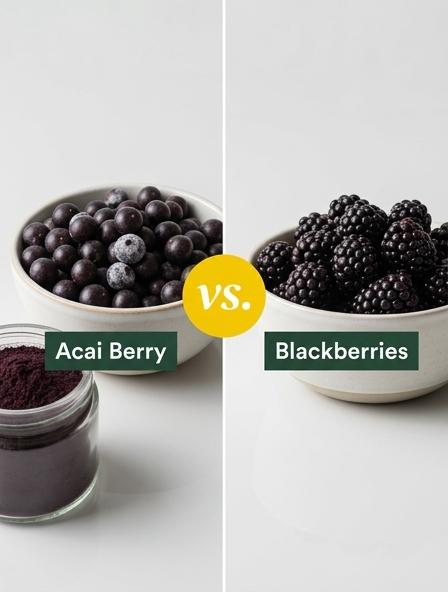
Acai Berry vs Blackberries : The Differences in Nutritional Density, Flavor Profiles, and Glycemic Impact.
Nutritional Density and Caloric Content
Comparing acai berries and blackberries reveals a significant difference in energy composition. Acai is uniquely calorie-dense for a fruit because it contains heart-healthy omega fatty acids, whereas blackberries are lower in calories and virtually fat-free.
- Acai Berry: High in antioxidants and healthy fats, providing approximately 70-80 calories per 100g.
- Blackberries: Excellent source of fiber and Vitamin C, offering roughly 43 calories per 100g.
While acai offers a more satiating nutritional profile, blackberries provide a higher volume of fruit for those monitoring strict daily caloric intake. Fitness enthusiasts often blend frozen acai pulp into thick bowls for a nutrient-dense breakfast, whereas busy professionals often prefer reaching for a bowl of chilled blackberries as a low-sugar, refreshing afternoon pick-me-up.
Flavor Profiles and Sweetness Levels
The sensory experience of acai berries differs sharply from blackberries due to their unique sugar concentrations and chemical compositions. Acai berries are famously low in sugar, yielding a sophisticated, earthy flavor profile with distinct undertones of unsweetened dark chocolate and nuts. In contrast, blackberries offer a more traditional fruit experience, blending a sharp, tangy acidity with a deep, jammy sweetness that intensifies as the fruit ripens.
- Acai Berry: Savory, bitter-sweet, and oily with very low natural sugar.
- Blackberry: Tart, succulent, and high in natural fructose.
While fitness enthusiasts often reach for acai to create a low-glycemic, earthy smoothie bowl, home bakers typically prefer the bright, syrupy burst of blackberries for a classic summer cobbler or tart.
Structural Integrity Under High Heat
The culinary performance of acai berries versus blackberries under high heat is determined by their physical composition. Blackberries feature a fibrous structure with multiple juice-filled drupelets held together by pectin. This biological makeup allows them to retain a degree of structural integrity during baking or reduction, though they eventually soften into a thick, jam-like consistency.
In contrast, acai berries consist of approximately 80% seed, meaning only the thin skin and pulp are utilized. Because acai is typically processed into a frozen puree or powder before reaching consumers, it lacks an independent cellular framework to withstand heat. Furthermore, acai's high healthy fat content makes its delicate flavor profile susceptible to degradation when boiled or baked.
- Blackberries: High pectin levels help maintain shape in pies and crumbles.
- Acai: Lacks fibrous body; better suited for raw or chilled applications.
You might find that blackberries provide the perfect structural "pop" in a hot summer galette, while acai is far better suited for a refreshing, unheated smoothie bowl.
Vitamin and Mineral Concentration
While both fruits are nutritional powerhouses, their vitamin and mineral profiles serve different health goals. Acai berries are unique for their high Vitamin A content and significant calcium levels, which are rarely found in such concentrations in other berries. In contrast, blackberries are superior sources of Vitamin C and Vitamin K, providing essential support for immune defense and bone metabolism.
| Nutrient Focus | Acai Berry | Blackberry |
|---|---|---|
| Top Vitamin | Vitamin A (Retinol) | Vitamin C & K |
| Key Mineral | Calcium & Copper | Manganese |
| Special Feature | Fat-soluble absorption | High dietary fiber |
Health-conscious shoppers often reach for acai pulp to enrich their morning smoothie bowls for skin health, while hikers frequently carry fresh blackberries as a hydrating, Vitamin C-packed snack for immediate energy on the trail.
Natural Coloring Strength in Recipes
When evaluating natural coloring strength, both acai berries and blackberries utilize powerful anthocyanins to provide deep purple hues. However, the concentration and final aesthetic result differ based on the fruit's physical density and preparation.
- Acai Berry: Typically used as a freeze-dried powder or thick frozen puree, acai offers an intense, ink-like violet. Its low water content creates a dense, opaque color that can easily transform a white base into a dark, midnight purple.
- Blackberries: These berries produce a vibrant, more translucent magenta or deep plum. Due to their high juice content, they provide a "berry-red" undertone that is often lighter and more jewel-toned than the earthy, dark profile of acai.
While acai is the gold standard for achieving a moody, deep-purple aesthetic in smoothie bowls, blackberries are superior for creating brilliant, reddish-purple glazes. You can create a stunning visual contrast in your breakfast parfaits by layering the ink-heavy density of acai pulp against the bright, translucent swirls of fresh blackberry juice.
Frozen Versus Fresh Performance
In the debate between acai and blackberries, the nutritional performance of the fruit depends heavily on its state. Acai berries are highly perishable due to their high healthy fat content, meaning they are almost exclusively available as flash-frozen pulp in global markets. This freezing process is essential for stabilizing their potent anthocyanins. Blackberries, however, offer more flexibility, maintaining high levels of fiber and Vitamin C whether they are plucked fresh or harvested for the freezer aisle.
| Feature | Acai (Frozen) | Blackberries (Fresh/Frozen) |
|---|---|---|
| Nutrient Retention | Excellent via flash-freeze | High in both states |
| Best Culinary Use | Smoothie bowls and purees | Baking, salads, and snacking |
For a refreshing summer treat, many people love layering juicy, fresh blackberries over Greek yogurt, while using frozen acai bricks to blend a thick, chilled energy bowl after a morning run.
Fiber Content and Digestive Benefits
Both acai berries and blackberries are nutritional powerhouses for digestive health, though their fiber profiles differ significantly. Blackberries are renowned for their high fiber density, providing roughly 5 grams per 100-gram serving. This combination of soluble and insoluble fiber helps regulate bowel movements and supports a healthy gut microbiome.
Acai berries, while slightly lower in fiber at approximately 2 to 3 grams per serving, offer a unique advantage by combining fiber with heart-healthy monounsaturated fats. This pairing can slow digestion and improve nutrient absorption compared to other fruits.
- Blackberries: Excellent for maximizing daily fiber intake and promoting gut motility.
- Acai Berries: Great for a balanced intake of fiber and healthy omega fatty acids.
You might prefer topping your morning Greek yogurt with fresh blackberries for a high-fiber crunch or using frozen acai pulp to create a creamy, satiating smoothie bowl that supports smooth digestion throughout your busy workday.
Market Price and Seasonal Availability
The price point and accessibility of acai berries versus blackberries are largely determined by geography and perishability. Acai is considered a premium superfood; because it spoils within 48 hours of harvest in the Amazon, it must be processed into frozen purée or powder. This logistics chain keeps its market price consistently high and its availability limited to processed forms year-round. Blackberries, however, follow a traditional seasonal cycle with significant price fluctuations.
| Factor | Acai Berry | Blackberry |
|---|---|---|
| Availability | Year-round (Processed) | Peak Summer (Fresh) |
| Relative Cost | High / Premium | Low to Moderate |
You might prefer the convenience of frozen acai packets for a consistent morning routine, but find yourself loading up on fresh blackberries when they are abundant and affordable at your local farmer's market in July.
Texture Differences in Various States
The structural composition of acai berries and blackberries creates distinct mouthfeels depending on how they are consumed. Blackberries are aggregate fruits composed of small, juice-filled drupelets, while acai berries are drupes where 80% of the fruit is a hard, inedible seed.
- Fresh State: Blackberries provide a soft, plump, and juicy pop with tiny, crunchy seeds. Fresh acai has a thin, oily skin and very little pulp, making it almost impossible to eat like a traditional berry.
- Frozen/Puree: Acai is most commonly found as a frozen pulp, which has a thick, creamy, and slightly grainy consistency due to its high healthy fat content. Frozen blackberries remain whole and firm, releasing juice only upon thawing.
- Dried/Powdered: Acai is typically processed into a fine, silk-like powder, whereas dried blackberries are chewy and fibrous.
You might choose the dense, sorbet-like richness of a blended acai bowl for a filling breakfast, whereas the chunky, succulent texture of whole blackberries is what people love in a summer fruit salad.
Glycemic Impact and Sugar Ratios
When analyzing the metabolic influence of these fruits, the sugar-to-fiber ratio is the defining factor. Acai berries are unique in the fruit world because they contain virtually zero grams of sugar, resulting in a negligible glycemic load. Blackberries, while slightly higher in natural sugars at approximately 7 grams per cup, remain a low-glycemic choice (GI of 25) due to their impressive fiber content which slows glucose absorption.
- Acai Berry: Exceptionally low sugar; rich in heart-healthy fats that further stabilize insulin response.
- Blackberries: Low glycemic index; high in pectin and soluble fiber to prevent post-meal blood sugar spikes.
While both support stable energy levels, the lack of fructose makes acai superior for strict carbohydrate restriction. If you are managing a ketogenic diet or strictly monitoring insulin sensitivity, choosing an unsweetened acai puree allows you to enjoy a nutrient-dense smoothie without any risk of breaking your metabolic fast.
Acai Berry vs Blackberries source and external links
- The acai berry is a small, dark purple fruit native to the Amazon rainforest that is widely celebrated for its high antioxidant levels. Learn more about the Acai Berry.
- Blackberries are nutrient-dense aggregate fruits that grow on brambles and are rich in vitamins, minerals, and fiber. Find more information about Blackberries.